Patrinia
9 species in the reference · family Caprifoliaceae · 9 with a habitat climate · 9 grown, per iNaturalist
About the genus
Patrinia is a genus of herbaceous plants in the honeysuckle family (Caprifoliaceae). It includes 14 species native to grassy mountain habitats from eastern European Russia to China, Siberia, Korea, and Japan. These are unassuming clump-forming perennial plants having thin, erect stems with few leaves and bearing a terminal inflorescence with yellow or white flowers.
Quoted from Wikipedia, "Patrinia", its opening paragraph, revision 1365197253, read 2026-11-08, CC BY-SA 4.0.
Where Patrinia is native
| Manchuria | 6 |
|---|---|
| China South-Central | 5 |
| China Southeast | 5 |
| Japan | 5 |
| Mongolia | 5 |
| China North-Central | 4 |
| Inner Mongolia | 4 |
| Altay | 3 |
| Amur | 3 |
| Chita | 3 |
| Khabarovsk | 3 |
| Korea | 3 |
Species native to each region. A species counts in every region it is native to. Native ranges: Kew's World Checklist of Vascular Plants (Govaerts et al., CC BY 4.0), file of 4 June 2026.
9 species
Patrinia
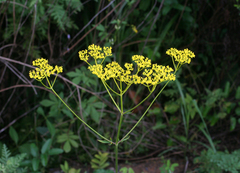 Patrinia scabiosifolia Eastern valerian Photo: CC BY, Oleg Kosterin
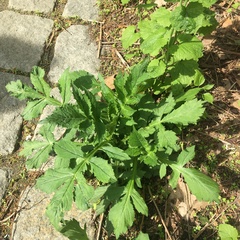 Patrinia villosa White-flower golden lace Photo: CC0, Daniel Atha
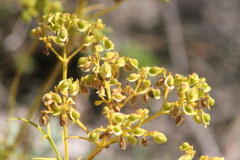 Patrinia intermedia Photo: CC BY, Maxim Shashkov
 Patrinia gibbosa Photo: CC BY-SA, Qwert1234
 Patrinia triloba Photo: CC BY, Σ64
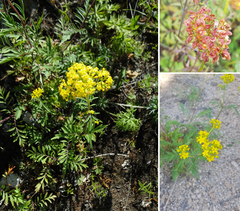 Patrinia rupestris Photo: CC BY, Urgamal Magsar
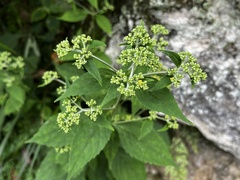 Patrinia monandra One stamen golden lace Photo: CC BY, 黃美滿
 Patrinia heterophylla Photo: CC BY, Averater
 Patrinia sibirica Photo: CC BY, Oleg Kosterin
Grown: iNaturalist's observations of the species marked captive or cultivated; "not counted" where the species list does not count it. Native ranges: Kew's World Checklist of Vascular Plants (Govaerts et al., CC BY 4.0), file of 4 June 2026. Grown: iNaturalist's observations marked captive or cultivated, counted 17 October 2026 (the species list's count). Habitat climate known: the species page has a habitat climate, read from CHELSA's monthly climate and NASA POWER's daily extremes at its well-placed wild records inside Kew's native range; each page says its own sources and days. Record low: the lowest night in NASA POWER's daily series at the habitat's typical spot, as the species page gives it, held in °C to a tenth and shown in your units; each page says its own years and day read. Counts as the reference built on 19 November 2026 holds them. The CSV holds every result, not only this page's.