Pittosporum
56 species in the reference · family Pittosporaceae · 41 with a habitat climate · 54 grown, per iNaturalist, 2 not counted
About the genus
Pittosporum ( or ) is a genus of about 250 species of flowering plants in the family Pittosporaceae. Plants in the genus Pittosporum are shrubs or trees with leaves arranged alternately along the stems. The flowers are arranged singly or in cymes, with white to yellow petals fused at the base forming a short tube, with stamens that are free from each other. The fruit is a capsule with a single locule that opens to reveal angular seeds.
Quoted from Wikipedia, "Pittosporum", its opening paragraph, revision 1383299641, read 2026-11-08, CC BY-SA 4.0.
Where Pittosporum is native
| New Zealand North | 17 |
|---|---|
| New Zealand South | 9 |
| Queensland | 9 |
| China Southeast | 8 |
| China South-Central | 7 |
| New Caledonia | 7 |
| New South Wales | 7 |
| Hawaii | 5 |
| Taiwan | 5 |
| Victoria | 5 |
| Jawa | 3 |
| Lesser Sunda Is. | 3 |
Species native to each region. A species counts in every region it is native to. Native ranges: Kew's World Checklist of Vascular Plants (Govaerts et al., CC BY 4.0), file of 4 June 2026.
56 species
Pittosporum
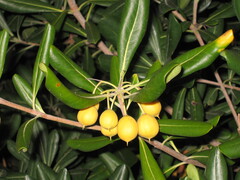 Pittosporum tobira Japanese cheesewood Photo: CC BY, zebedeugalinha
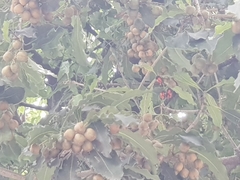 Pittosporum undulatum Australian cheesewood Photo: CC BY-SA, Martín Sánchez Vilchis
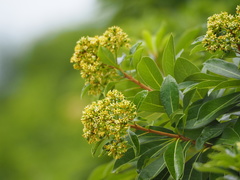 Pittosporum pentandrum Taiwanese cheesewood Photo: CC0, 葉子
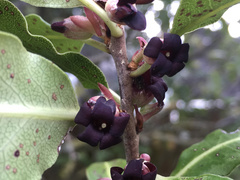 Pittosporum tenuifolium Kohuhu Photo: CC BY, Jon Sullivan
Pittosporum crassifolium Karo Photo: CC BY, Jon Sullivan
Pittosporum eugenioides Lemonwood Photo: CC BY, Jon Sullivan
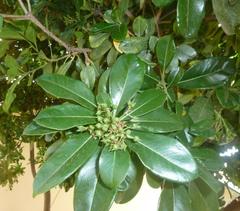 Pittosporum viridiflorum Cape cheesewood Photo: CC BY-SA, M Kriek
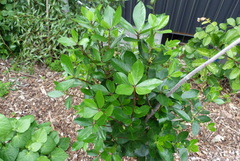 Pittosporum cornifolium Perching kohukohu Photo: CC BY-SA, Colin Meurk
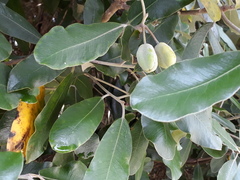 Pittosporum ralphii Ralph's desertwillow Photo: CC BY, Doug Miller
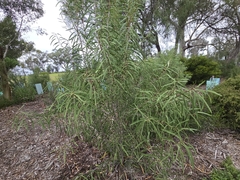 Pittosporum angustifolium Weeping pittosporum Photo: CC BY, Josh
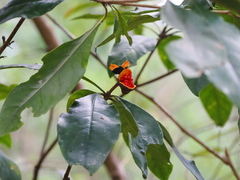 Pittosporum revolutum Brisbane-laurel Photo: CC BY, Lucas Christofides
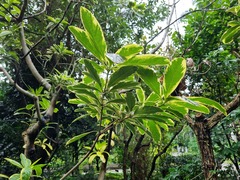 Pittosporum moluccanum Photo: CC BY, Cesar Ormazabal
 Pittosporum heterophyllum Photo: CC BY, A. Barra
 Pittosporum obcordatum Heart-leaved Kohuhu Photo: CC BY, John Barkla
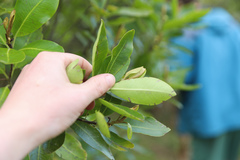 Pittosporum colensoi Photo: CC BY, Jordyn Ashcroft
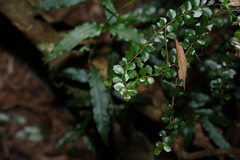 Pittosporum multiflorum Orange thorn Photo: CC BY-SA, Greg Tasney
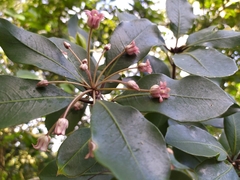 Pittosporum umbellatum Photo: CC BY, Paul Bell-Butler
Pittosporum cherrieri Photo: CC BY-SA, Coordination Endemia
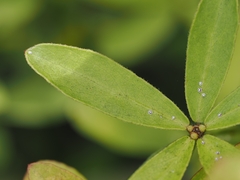 Pittosporum pimeleoides Photo: CC BY, Angus Campbell
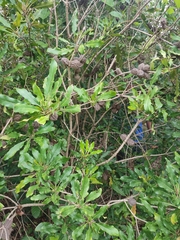 Pittosporum brevispinum Photo: CC0, Isabelle Soccioi
 Pittosporum patulum Pitpat Photo: CC BY, John Barkla
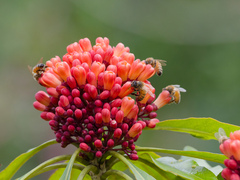 Pittosporum coccineum Photo: CC BY, Donald Davesne
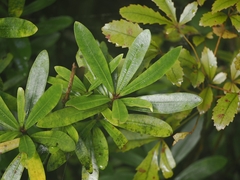 Pittosporum kirkii Photo: CC BY, Angus Campbell
- no open photograph on file Pittosporum tanianum
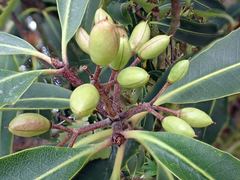 Pittosporum dallii Kahurangi pittosporum Photo: CC0, Peter de Lange
 Pittosporum ferrugineum Rusty Pittosporum Photo: CC BY-SA, Mark Marathon
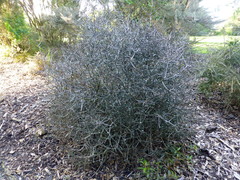 Pittosporum anomalum Photo: CC BY, Murray NZ
 Pittosporum fairchildii Fairchild's Kohuhu Photo: CC BY-SA, Krzysztof Ziarnek, Kenraiz
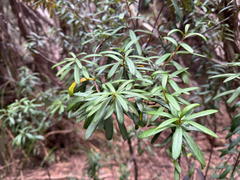 Pittosporum bicolor Banyalla Photo: CC BY, Caleb Catto
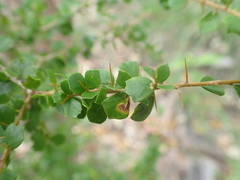 Pittosporum spinescens Large-fruited Orange Thorn Photo: CC0, Stuart
 Pittosporum turneri Tent pole tree Photo: CC BY, John Barkla
 Pittosporum hosmeri Kona cheesewood Photo: CC BY, David Eickhoff from Pearl City, Hawaii…
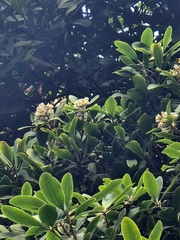 Pittosporum coriaceum Madeira Pittosporum Photo: CC BY, Vítor Jorge
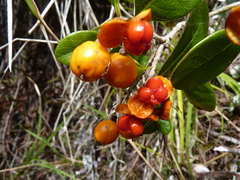 Pittosporum senacia Photo: CC BY, Adrien Jailloux
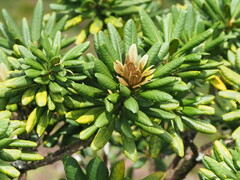 Pittosporum confertiflorum Ho'awa Photo: CC BY, Kevin Faccenda
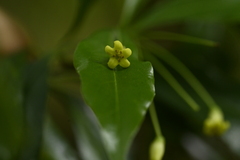 Pittosporum illicioides Photo: CC BY, 曾昱承 Yu-Cheng Zeng
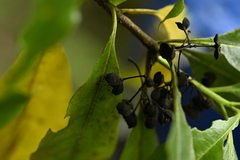 Pittosporum daphniphylloides Photo: CC BY, 曾昱承 Yu-Cheng Zeng
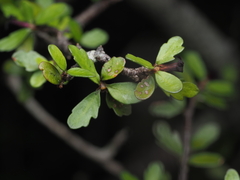 Pittosporum divaricatum Photo: CC BY, Saryu Mae 前 朝琉
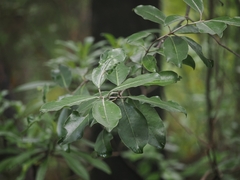 Pittosporum huttonianum Photo: CC BY, Angus Campbell
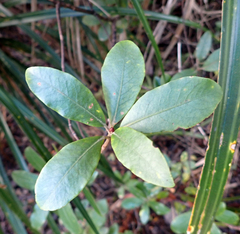 Pittosporum ellipticum Photo: CC0, Peter de Lange
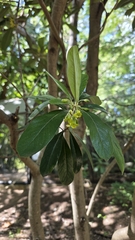 Pittosporum pancheri Photo: CC BY, Genevieve Early
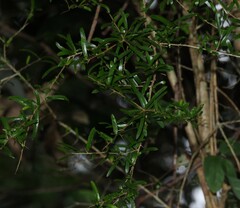 Pittosporum viscidum Black-fruited thornbush Photo: CC BY-SA, Greg Tasney
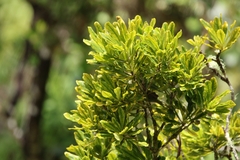 Pittosporum glabrum Koolau Range cheesewood Photo: CC0, Damien Wallace
 Pittosporum halophilum Photo: CC BY, David Eickhoff from Pearl City, Hawaii…
 Pittosporum napaliense Royal cheesewood Photo: CC BY, David Eickhoff from Pearl City, Hawaii…
- no open photograph on file Pittosporum viburnifolium
 Pittosporum brevicalyx Photo: CC0, Daderot
- no open photograph on file Pittosporum collinum
Grown: iNaturalist's observations of the species marked captive or cultivated; "not counted" where the species list does not count it. Native ranges: Kew's World Checklist of Vascular Plants (Govaerts et al., CC BY 4.0), file of 4 June 2026. Grown: iNaturalist's observations marked captive or cultivated, counted 17 October 2026 (the species list's count). Habitat climate known: the species page has a habitat climate, read from CHELSA's monthly climate and NASA POWER's daily extremes at its well-placed wild records inside Kew's native range; each page says its own sources and days. Record low: the lowest night in NASA POWER's daily series at the habitat's typical spot, as the species page gives it, held in °C to a tenth and shown in your units; each page says its own years and day read. Counts as the reference built on 19 November 2026 holds them. The CSV holds every result, not only this page's.