Pleroma
9 species in the reference · family Melastomataceae · 8 with a habitat climate · 9 grown, per iNaturalist
About the genus
Pleroma (Koine Greek: πλήρωμα, literally "fullness") generally refers to the totality of divine powers. It is used in Christian theological contexts, as well as in Gnosticism. The term also appears in the Epistle to the Colossians, which is traditionally attributed to Paul the Apostle. The word is used 17 times in the New Testament. More on Wikipedia
Quoted from Wikipedia, "Pleroma", its opening paragraph, revision 1365691722, read 2026-11-08, CC BY-SA 4.0.
Where Pleroma is native
| Brazil Southeast | 9 |
|---|---|
| Brazil South | 4 |
| Bolivia | 2 |
| Brazil Northeast | 1 |
| Brazil West-Central | 1 |
| French Guiana | 1 |
Species native to each region. A species counts in every region it is native to. Native ranges: Kew's World Checklist of Vascular Plants (Govaerts et al., CC BY 4.0), file of 4 June 2026.
9 species
Pleroma
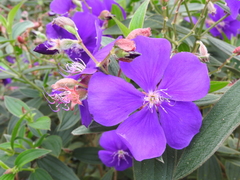 Pleroma urvilleanum Princess flower Photo: CC BY, Alexis López Hernández
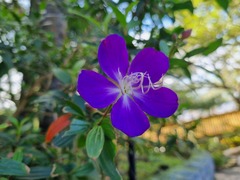 Pleroma semidecandrum Glory bush Photo: CC BY, Cesar Ormazabal
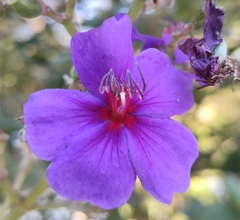 Pleroma heteromallum Silverleafed princess flower Photo: CC BY, Letícia Dias Martins
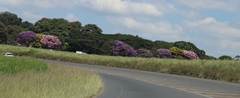 Pleroma granulosum Brazilian Glorytree Photo: CC BY-SA, Tony Rebelo
 Pleroma mutabile Brazilian Glory Bush Photo: CC BY, Daniel A. Monsalve Ortiz
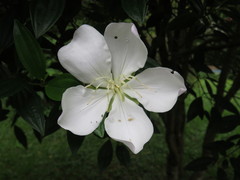 Pleroma sellowianum Photo: CC BY, Diogo Luiz
- no open photograph on file Pleroma gaudichaudianum
- no open photograph on file Pleroma estrellense
- no open photograph on file Pleroma foveolatum
Grown: iNaturalist's observations of the species marked captive or cultivated; "not counted" where the species list does not count it. Native ranges: Kew's World Checklist of Vascular Plants (Govaerts et al., CC BY 4.0), file of 4 June 2026. Grown: iNaturalist's observations marked captive or cultivated, counted 17 October 2026 (the species list's count). Habitat climate known: the species page has a habitat climate, read from CHELSA's monthly climate and NASA POWER's daily extremes at its well-placed wild records inside Kew's native range; each page says its own sources and days. Record low: the lowest night in NASA POWER's daily series at the habitat's typical spot, as the species page gives it, held in °C to a tenth and shown in your units; each page says its own years and day read. Counts as the reference built on 19 November 2026 holds them. The CSV holds every result, not only this page's.