Polygonatum
33 species in the reference · family Asparagaceae · 26 with a habitat climate · 25 grown, per iNaturalist, 8 not counted
About the genus
Polygonatum , also known as King Solomon's-seal, Solomon's seal, or sealwort, is a genus of flowering plants. In the APG III classification system, it is placed in the family Asparagaceae, subfamily Convallarioideae (formerly the family Ruscaceae). It has also been classified in the former family Convallariaceae and, like many lilioid monocots, was formerly classified in the lily family, Liliaceae. The genus is distributed throughout the temperate Northern Hemisphere. More on Wikipedia
Quoted from Wikipedia, "Polygonatum", its opening paragraph, revision 1371721953, read 2026-11-08, CC BY-SA 4.0.
Where Polygonatum is native
| China South-Central | 11 |
|---|---|
| China North-Central | 9 |
| East Himalaya | 9 |
| China Southeast | 8 |
| Inner Mongolia | 8 |
| Korea | 8 |
| Nepal | 8 |
| Manchuria | 7 |
| Japan | 6 |
| Myanmar | 6 |
| Primorye | 5 |
| Tibet | 5 |
Species native to each region. A species counts in every region it is native to. Native ranges: Kew's World Checklist of Vascular Plants (Govaerts et al., CC BY 4.0), file of 4 June 2026.
33 species
Polygonatum
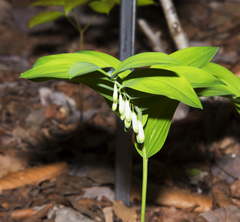 Polygonatum multiflorum Solomon's-seal Photo: CC BY, Seig
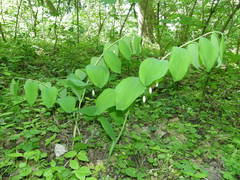 Polygonatum odoratum Angular Solomon's-seal Photo: CC BY, Oleksandr Shynder
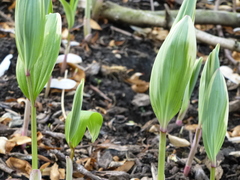 Polygonatum biflorum King Solomon's-seal Photo: CC0, Ira Gershenhorn
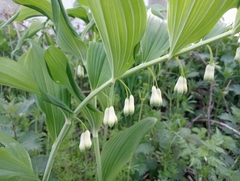 Polygonatum × hybridum Garden Solomon's-seal Photo: CC BY, Andrés Romero Bravo
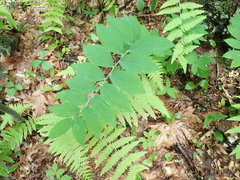 Polygonatum pubescens Hairy Solomon's-seal Photo: CC0, Lynn Harper
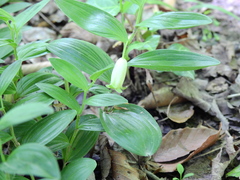 Polygonatum humile Dwarf Solomon’s seal Photo: CC0, Yann Kemper
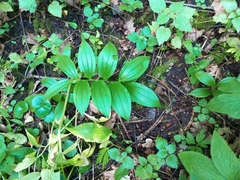 Polygonatum latifolium Broadleaf Solomon's seal Photo: CC BY, Viktoria Kosmirak
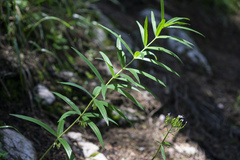 Polygonatum verticillatum Whorled Solomon's-seal Photo: CC BY, Conrad Altmann
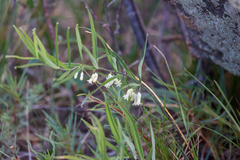 Polygonatum sibiricum Siberian solomon's-seal Photo: CC BY, Tom Field
 Polygonatum arisanense Photo: CC BY, Cheng-Tao Lin
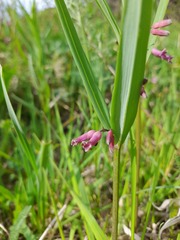 Polygonatum roseum Photo: CC BY, Yeskendir Satekov
- no open photograph on file Polygonatum cyrtonema
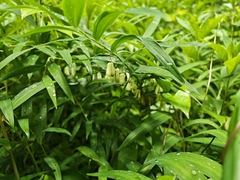 Polygonatum falcatum Moniliform-rhizome solomon’s seal Photo: CC BY, WATANABE Hitoshi 渡辺仁
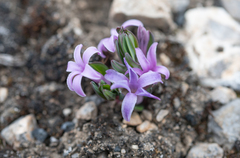 Polygonatum hookeri Photo: CC BY, Morten Ross
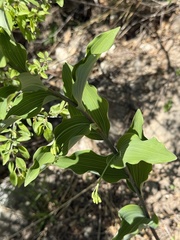 Polygonatum macropodum Photo: CC BY, Jane Charlen
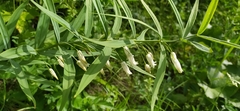 Polygonatum sewerzowii Photo: CC0, Алексей Ябс
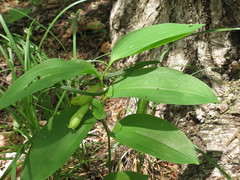 Polygonatum × desoulavyi Anmyeon wide-bract solomon’s seal Photo: CC BY, Repina Tatyana
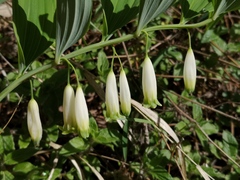 Polygonatum glaberrimum Photo: CC BY, Todd Boland
 Polygonatum kingianum Photo: CC0, Daderot
- no open photograph on file Polygonatum filipes
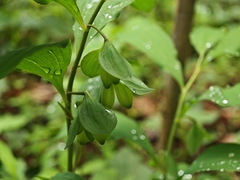 Polygonatum involucratum Wide-bract solomon’s seal Photo: CC BY, WATANABE Hitoshi 渡辺仁
- no open photograph on file Polygonatum zanlanscianense
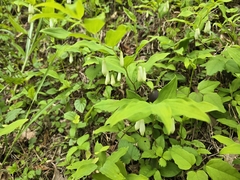 Polygonatum lasianthum Korean solomon’s seal Photo: CC BY, WATANABE Hitoshi 渡辺仁
 Polygonatum oppositifolium Photo: CC0, Daderot
- no open photograph on file Polygonatum stenophyllum Narrow-leaf solomon’s seal
- no open photograph on file Polygonatum brevistylum
- no open photograph on file Polygonatum cathcartii
 Polygonatum cirrhifolium Photo: CC BY-SA, peganum
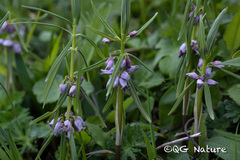 Polygonatum curvistylum Photo: CC BY, Wang.QG
- no open photograph on file Polygonatum geminiflorum
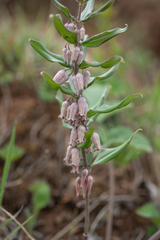 Polygonatum prattii Photo: CC BY, Morten Ross
- no open photograph on file Polygonatum singalilense
- no open photograph on file Polygonatum stewartianum
Grown: iNaturalist's observations of the species marked captive or cultivated; "not counted" where the species list does not count it. Native ranges: Kew's World Checklist of Vascular Plants (Govaerts et al., CC BY 4.0), file of 4 June 2026. Grown: iNaturalist's observations marked captive or cultivated, counted 17 October 2026 (the species list's count). Habitat climate known: the species page has a habitat climate, read from CHELSA's monthly climate and NASA POWER's daily extremes at its well-placed wild records inside Kew's native range; each page says its own sources and days. Record low: the lowest night in NASA POWER's daily series at the habitat's typical spot, as the species page gives it, held in °C to a tenth and shown in your units; each page says its own years and day read. Counts as the reference built on 19 November 2026 holds them. The CSV holds every result, not only this page's.