Rhipsalis
35 species in the reference · family Cactaceae · 21 with a habitat climate · 28 grown, per iNaturalist, 7 not counted
About the genus
Rhipsalis ( RIP-suh-lis) is a genus of epiphytic flowering plants in the cactus family, typically known as mistletoe cacti. They are found in parts of Central America, the Caribbean and northern regions of South America. One species, Rhipsalis baccifera also inhabits locations in Africa and Asia, and is the only cactus species naturally occurring in the Old World. This is the largest and most widely distributed genus of epiphytic cacti (those which live on other plants without damaging them).
Quoted from Wikipedia, "Rhipsalis", its opening paragraph, revision 1330003742, read 2026-11-08, CC BY-SA 4.0.
Where Rhipsalis is native
| Brazil Southeast | 29 |
|---|---|
| Brazil South | 19 |
| Brazil Northeast | 11 |
| Bolivia | 6 |
| Brazil West-Central | 5 |
| Argentina Northeast | 4 |
| Paraguay | 4 |
| Peru | 4 |
| Surinam | 4 |
| Ecuador | 3 |
| Argentina Northwest | 2 |
| Colombia | 2 |
Species native to each region. A species counts in every region it is native to. Native ranges: Kew's World Checklist of Vascular Plants (Govaerts et al., CC BY 4.0), file of 4 June 2026.
35 species
Rhipsalis
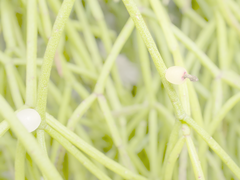 Rhipsalis baccifera Mistletoe cactus Photo: CC BY, Slunky
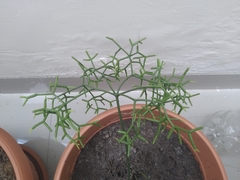 Rhipsalis cereuscula Rice cactus Photo: CC0, Alfredo F. Fuentes Claros
 Rhipsalis teres Photo: CC0, Kahio Tiberio Mazon
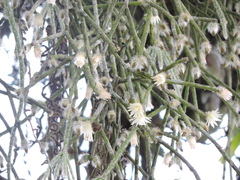 Rhipsalis pilocarpa Photo: CC BY, Fabrício Mil Homens Riella
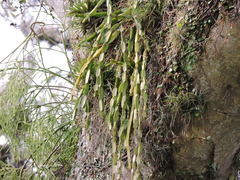 Rhipsalis paradoxa Chain Cactus Photo: CC BY, Fabrício Mil Homens Riella
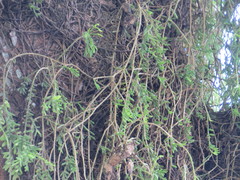 Rhipsalis mesembryanthoides Photo: CC BY, Victor Farjalla Pontes
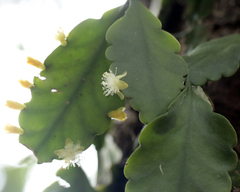 Rhipsalis pachyptera Photo: CC0, Paula Romano
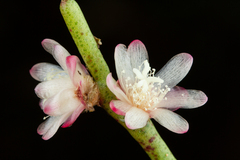 Rhipsalis floccosa Photo: CC BY, Pedro Alvaro Neves
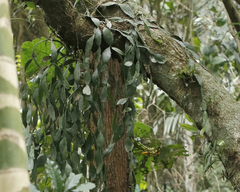 Rhipsalis elliptica Photo: CC0, Paula Romano
 Rhipsalis ewaldiana Photo: CC BY-SA, Sadambio
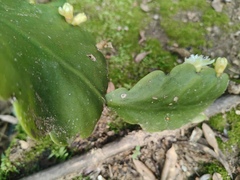 Rhipsalis crispata Photo: CC BY, Diogo Luiz
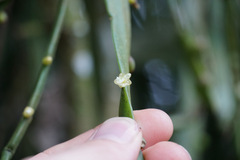 Rhipsalis micrantha Photo: CC BY, Connor Connolly-Moyls
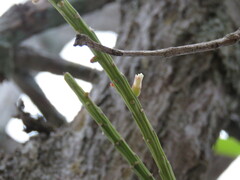 Rhipsalis lindbergiana Photo: CC BY, Pablo Cauã da Silva Toledo
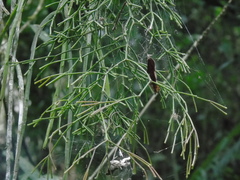 Rhipsalis clavata Photo: CC BY, Gabriel Jovêncio Ribeiro
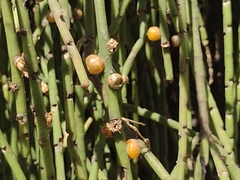 Rhipsalis puniceodiscus Photo: CC BY, Clarice Dorocinski
 Rhipsalis burchellii Photo: CC BY-SA, Frank Vincentz
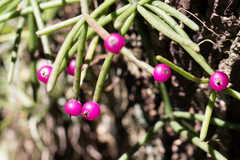 Rhipsalis neves-armondii Photo: CC0, Frank Thomas Sautter
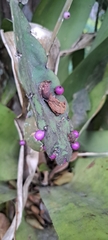 Rhipsalis russellii Photo: CC BY, Marcio Santos Ferreira
 Rhipsalis campos-portoana Photo: CC BY-SA, salchu
 Rhipsalis oblonga Photo: Public domain, David Midgley
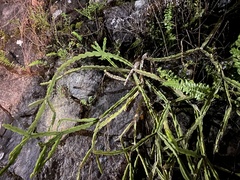 Rhipsalis pentaptera Photo: CC BY, Pedro Alvaro Neves
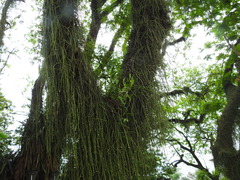 Rhipsalis shaferi Photo: CC BY, Cecilia Fer Díaz
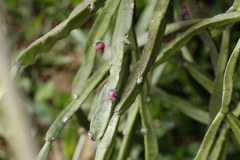 Rhipsalis trigona Photo: CC0, Paula Romano
 Rhipsalis cereoides Photo: CC BY-SA, Krzysztof Ziarnek, Kenraiz
 Rhipsalis cuneata Photo: CC BY, Krzysztof Ziarnek, Kenraiz
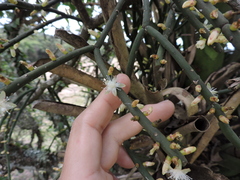 Rhipsalis grandiflora Photo: CC BY, Fabrício Mil Homens Riella
 Rhipsalis pacheco-leonis Photo: CC BY, Victor Farjalla Pontes
 Rhipsalis sulcata Photo: CC BY-SA, Sadambio
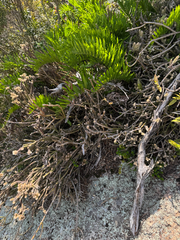 Rhipsalis dissimilis Photo: CC BY, Pedro Alvaro Neves
 Rhipsalis goebeliana Photo: CC BY-SA, Sadambio
- no open photograph on file Rhipsalis hileiabaiana
 Rhipsalis hoelleri Photo: CC BY-SA, W. Barthlott, University of Bonn
- no open photograph on file Rhipsalis juengeri
- no open photograph on file Rhipsalis occidentalis
- no open photograph on file Rhipsalis rhombea
Grown: iNaturalist's observations of the species marked captive or cultivated; "not counted" where the species list does not count it. Native ranges: Kew's World Checklist of Vascular Plants (Govaerts et al., CC BY 4.0), file of 4 June 2026. Grown: iNaturalist's observations marked captive or cultivated, counted 17 October 2026 (the species list's count). Habitat climate known: the species page has a habitat climate, read from CHELSA's monthly climate and NASA POWER's daily extremes at its well-placed wild records inside Kew's native range; each page says its own sources and days. Record low: the lowest night in NASA POWER's daily series at the habitat's typical spot, as the species page gives it, held in °C to a tenth and shown in your units; each page says its own years and day read. Counts as the reference built on 19 November 2026 holds them. The CSV holds every result, not only this page's.