Ribes
78 species in the reference · family Grossulariaceae · 69 with a habitat climate · 65 grown, per iNaturalist, 13 not counted
About the genus
Ribes ( RY-beez) is a genus of approximately 200 known species of flowering plants, predominantly native to the temperate regions of the Northern Hemisphere. Ribes is the sole genus in the plant family Grossulariaceae. The genus includes species commonly referred to as redcurrants, blackcurrants, whitecurrants, and gooseberries. Several species are cultivated both for their edible fruit and as ornamental plants in horticulture. More on Wikipedia
Quoted from Wikipedia, "Ribes", its opening paragraph, revision 1383074611, read 2026-11-08, CC BY-SA 4.0.
Where Ribes is native
| California | 23 |
|---|---|
| Oregon | 17 |
| Washington | 15 |
| British Columbia | 14 |
| China North-Central | 13 |
| China South-Central | 13 |
| Alberta | 12 |
| Idaho | 12 |
| Colorado | 11 |
| Montana | 11 |
| Nevada | 11 |
| Primorye | 11 |
Species native to each region. A species counts in every region it is native to. Native ranges: Kew's World Checklist of Vascular Plants (Govaerts et al., CC BY 4.0), file of 4 June 2026.
78 species
Ribes
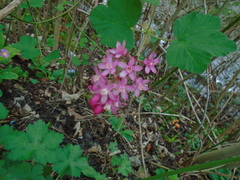 Ribes sanguineum Flowering currant Photo: CC BY, Lesley Marrion-Cole
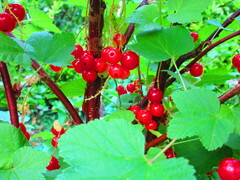 Ribes rubrum Red currant Photo: CC BY, Matthieu Trotignon
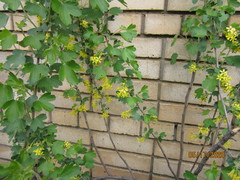 Ribes aureum Golden currant Photo: CC0, Svetlana Polevova
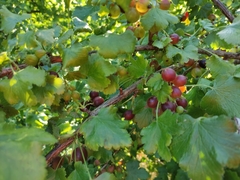 Ribes uva-crispa Gooseberry Photo: CC BY, Ihor
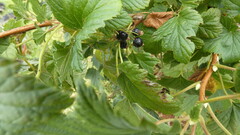 Ribes nigrum Black currant Photo: CC BY, Bob
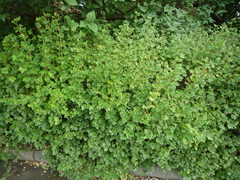 Ribes alpinum Mountain currant Photo: CC BY, Oleksandr Shynder
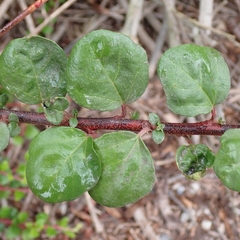 Ribes viburnifolium Santa Catalina Island currant Photo: CC0, John Cowles
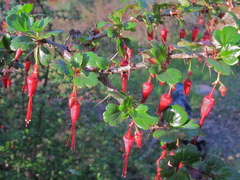 Ribes speciosum Fuchsia-flowered gooseberry Photo: CC BY, John Hibbard
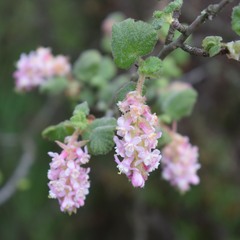 Ribes malvaceum Chaparral currant Photo: CC0, Anne Parsons
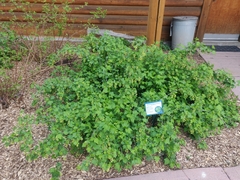 Ribes americanum Wild black currant Photo: CC BY, Alexander Wentworth
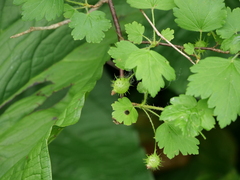 Ribes cynosbati American gooseberry Photo: CC BY, Alexandria Szakacs
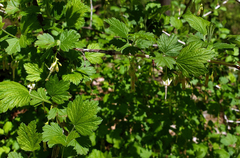 Ribes missouriense Wild gooseberry Photo: CC BY, aarongunnar
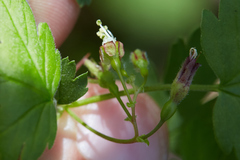 Ribes divaricatum Coastal black gooseberry Photo: CC BY, Ken-ichi Ueda
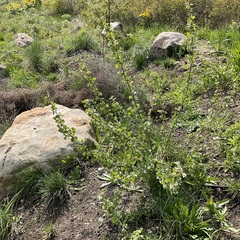 Ribes cereum Wax currant Photo: CC0, Daryl Nolan
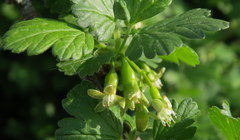 Ribes hirtellum Hairy-stem gooseberry Photo: CC0, Adam Kranz
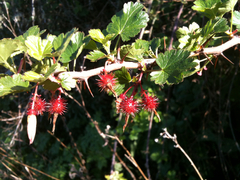 Ribes californicum Hillside gooseberry Photo: CC BY, Ken-ichi Ueda
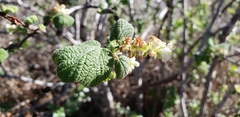 Ribes indecorum White-flower currant Photo: CC0, Elizabeth
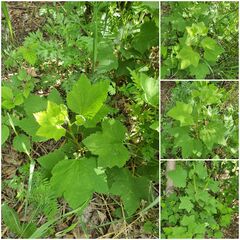 Ribes spicatum Downy currant Photo: CC BY, Urgamal Magsar
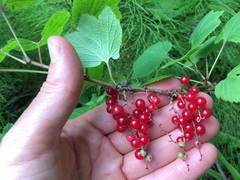 Ribes triste Swamp red currant Photo: CC BY, Derek
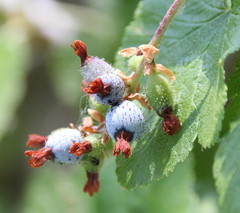 Ribes nevadense Mountain pink currant Photo: CC BY, Millie Basden
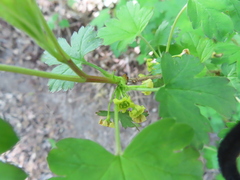 Ribes fasciculatum Winter-berry currant Photo: CC BY, Eric Schmidt
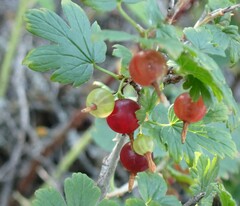 Ribes oxyacanthoides Canadian gooseberry Photo: CC BY, mfeaver
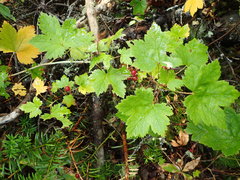 Ribes glandulosum Skunk currant Photo: CC0, Allan Harris
 Ribes diacantha Siberian currant Photo: CC BY, Urgamal Magsar
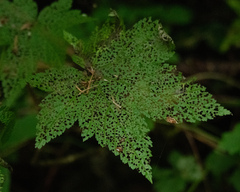 Ribes bracteosum Stink currant Photo: CC BY, Casey H. Richart
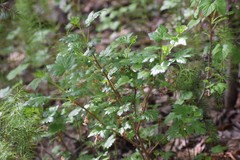 Ribes lacustre Swamp currant Photo: CC BY, Syd Cannings
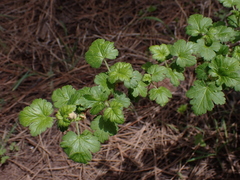 Ribes lobbii Gummy gooseberry Photo: CC BY, Nolan Exe
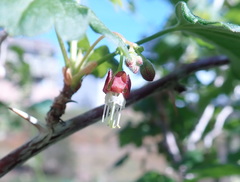 Ribes menziesii Canyon gooseberry Photo: CC BY, Henrik Kibak
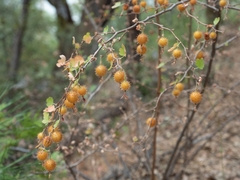 Ribes roezlii Sierra gooseberry Photo: CC0, Eugene Eric Kim
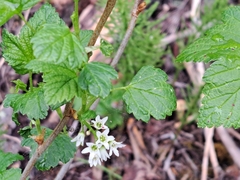 Ribes hudsonianum Northern black currant Photo: CC BY, Syd Cannings
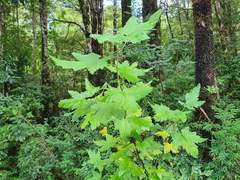 Ribes magellanicum Patagonian wild currant Photo: CC BY, Cesar Ormazabal
 Ribes glaciale Photo: CC BY-SA, Jerzy Opioła
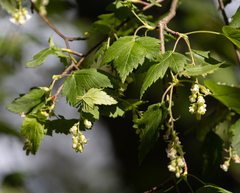 Ribes ciliatum Photo: CC BY, avocat
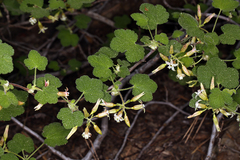 Ribes viscosissimum Sticky currant Photo: CC BY, Steve Matson
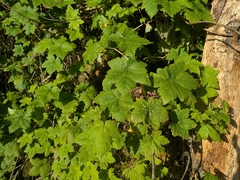 Ribes laxiflorum Trailing black currant Photo: CC0, Laura Holloway
 Ribes laurifolium Laurel - leaved Currant Photo: CC BY-SA, peganum from Small Dole, England
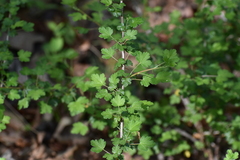 Ribes echinellum Miccosukee gooseberry Photo: CC BY, Ryan Watson
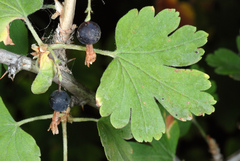 Ribes inerme White-stemmed gooseberry Photo: CC BY-SA, Douglas Goldman
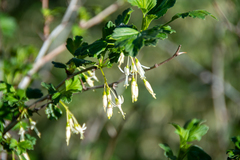 Ribes niveum Snowy gooseberry Photo: CC BY, Daniel Patterson
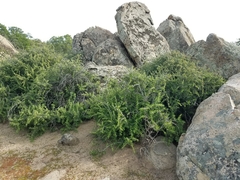 Ribes quercetorum Oak gooseberry Photo: CC BY, Alan Rockefeller
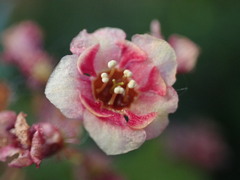 Ribes montigenum Photo: CC BY, Jared Shorma
 Ribes multiflorum Manyflower currant Photo: CC BY-SA, Salicyna
- no open photograph on file Ribes davidii
 Ribes mandshuricum Manchurian currant Photo: CC BY, Pauline Carmel Joy Eje
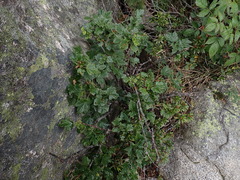 Ribes petraeum Currant Photo: CC BY, Rafael Carbonell Font
 Ribes thacherianum Santa Cruz Island gooseberry Photo: CC BY, Steve Matson
 Ribes aciculare Photo: CC BY, Nina Filippova
 Ribes punctatum Photo: CC BY, Nicolás Lavandero
Grown: iNaturalist's observations of the species marked captive or cultivated; "not counted" where the species list does not count it. Native ranges: Kew's World Checklist of Vascular Plants (Govaerts et al., CC BY 4.0), file of 4 June 2026. Grown: iNaturalist's observations marked captive or cultivated, counted 17 October 2026 (the species list's count). Habitat climate known: the species page has a habitat climate, read from CHELSA's monthly climate and NASA POWER's daily extremes at its well-placed wild records inside Kew's native range; each page says its own sources and days. Record low: the lowest night in NASA POWER's daily series at the habitat's typical spot, as the species page gives it, held in °C to a tenth and shown in your units; each page says its own years and day read. Counts as the reference built on 19 November 2026 holds them. The CSV holds every result, not only this page's.