Robinia
6 species in the reference · family Fabaceae · 4 with a habitat climate · 6 grown, per iNaturalist
About the genus
Robinia is a genus of flowering plants in the family Fabaceae, tribe Robinieae, native to North America. Commonly known as locusts, they are deciduous trees and shrubs growing 4–25 metres (13–82 ft) tall. The leaves are pinnate with 7–21 oval leaflets. The flowers are white or pink, in usually pendulous racemes. More on Wikipedia
Quoted from Wikipedia, "Robinia", its opening paragraph, revision 1313773446, read 2026-11-08, CC BY-SA 4.0.
Where Robinia is native
| North Carolina | 5 |
|---|---|
| South Carolina | 4 |
| Tennessee | 4 |
| Georgia | 3 |
| Virginia | 3 |
| Alabama | 2 |
| Arizona | 1 |
| California | 1 |
| Colorado | 1 |
| Kentucky | 1 |
| Maryland | 1 |
| Mexico Northeast | 1 |
Species native to each region. A species counts in every region it is native to. Native ranges: Kew's World Checklist of Vascular Plants (Govaerts et al., CC BY 4.0), file of 4 June 2026.
6 species
Robinia
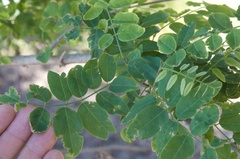 Robinia pseudoacacia False acacia Photo: CC BY, Jon Sullivan
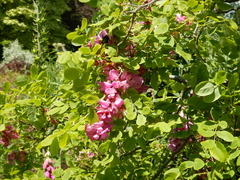 Robinia hispida Rose acacia Photo: CC BY, Matt Lavin
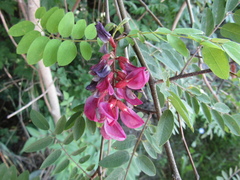 Robinia viscosa Clammy locust Photo: CC BY, Oleksandr Shynder
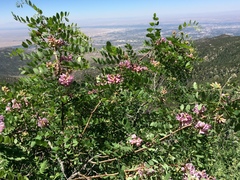 Robinia neomexicana New Mexico locust Photo: CC BY, Matt Lavin
 Robinia × ambigua Photo: CC BY, Екатерина Гущина
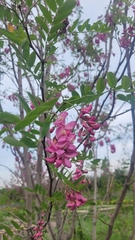 Robinia × margaretta Margarett's locust Photo: CC BY, Pavel Smirnov
Grown: iNaturalist's observations of the species marked captive or cultivated; "not counted" where the species list does not count it. Native ranges: Kew's World Checklist of Vascular Plants (Govaerts et al., CC BY 4.0), file of 4 June 2026. Grown: iNaturalist's observations marked captive or cultivated, counted 17 October 2026 (the species list's count). Habitat climate known: the species page has a habitat climate, read from CHELSA's monthly climate and NASA POWER's daily extremes at its well-placed wild records inside Kew's native range; each page says its own sources and days. Record low: the lowest night in NASA POWER's daily series at the habitat's typical spot, as the species page gives it, held in °C to a tenth and shown in your units; each page says its own years and day read. Counts as the reference built on 19 November 2026 holds them. The CSV holds every result, not only this page's.