Sanguisorba
16 species in the reference · family Rosaceae · 16 with a habitat climate · 15 grown, per iNaturalist, 1 not counted
About the genus
Sanguisorba is a genus of flowering plants in the family Rosaceae native to the temperate regions of the Northern Hemisphere. The common name is burnet.
Quoted from Wikipedia, "Sanguisorba", its opening paragraph, revision 1370282126, read 2026-11-08, CC BY-SA 4.0.
Where Sanguisorba is native
| Japan | 7 |
|---|---|
| Korea | 6 |
| China North-Central | 5 |
| Primorye | 5 |
| British Columbia | 4 |
| Inner Mongolia | 4 |
| Italy | 4 |
| Manchuria | 4 |
| Mongolia | 4 |
| Washington | 4 |
| Alaska | 3 |
| Buryatiya | 3 |
Species native to each region. A species counts in every region it is native to. Native ranges: Kew's World Checklist of Vascular Plants (Govaerts et al., CC BY 4.0), file of 4 June 2026.
16 species
Sanguisorba
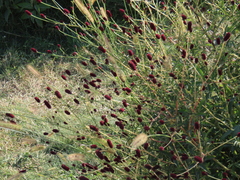 Sanguisorba officinalis Great burnet Photo: CC BY, Oleksandr Shynder
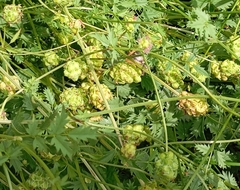 Sanguisorba minor Small burnet Photo: CC BY, Xavier JAPIOT
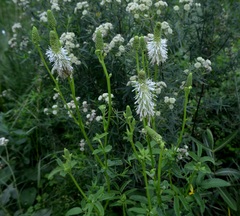 Sanguisorba canadensis White burnet Photo: CC0, Evan Barker
 Sanguisorba occidentalis Photo: CC BY, Ed Alverson
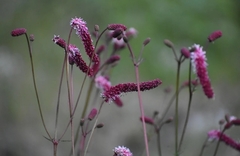 Sanguisorba tenuifolia Asian burnet Photo: CC BY, Валерия Ковалева
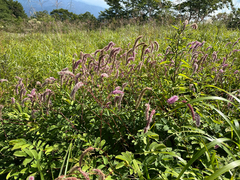 Sanguisorba hakusanensis Korean mountain burnet Photo: CC BY, Yoshihiro Tokue
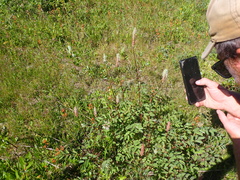 Sanguisorba stipulata Sitka burnet Photo: CC0, Steph Brulot-Sawchyn
 Sanguisorba obtusa Alpine burnet Photo: CC BY-SA, Stan Shebs
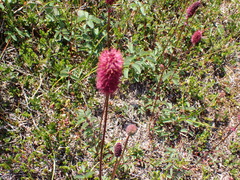 Sanguisorba menziesii Menzies' burnet Photo: CC0, Randal
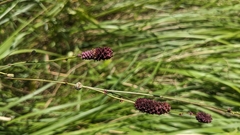 Sanguisorba longifolia Photo: CC BY, Cheng-Te Hsu
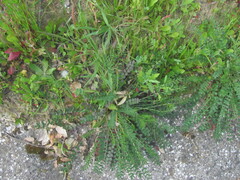 Sanguisorba verrucosa Photo: CC BY, zebedeugalinha
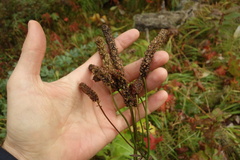 Sanguisorba alpina Photo: CC BY, Aleksei Baushev
- no open photograph on file Sanguisorba menendezii
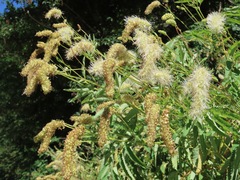 Sanguisorba dodecandra Photo: CC BY, Marco Mussita
 Sanguisorba magnifica Photo: CC BY-SA, peganum from Small Dole, England
- no open photograph on file Sanguisorba japonensis
Grown: iNaturalist's observations of the species marked captive or cultivated; "not counted" where the species list does not count it. Native ranges: Kew's World Checklist of Vascular Plants (Govaerts et al., CC BY 4.0), file of 4 June 2026. Grown: iNaturalist's observations marked captive or cultivated, counted 17 October 2026 (the species list's count). Habitat climate known: the species page has a habitat climate, read from CHELSA's monthly climate and NASA POWER's daily extremes at its well-placed wild records inside Kew's native range; each page says its own sources and days. Record low: the lowest night in NASA POWER's daily series at the habitat's typical spot, as the species page gives it, held in °C to a tenth and shown in your units; each page says its own years and day read. Counts as the reference built on 19 November 2026 holds them. The CSV holds every result, not only this page's.