Scilla
88 species in the reference · family Asparagaceae · 26 with a habitat climate · 19 grown, per iNaturalist, 69 not counted
About the genus
Scilla is a genus of about 30 to 80 species of bulb-forming perennial herbaceous plants in the family Asparagaceae, subfamily Scilloideae. Sometimes called the squills in English, they are native to woodlands, subalpine meadows, and seashores throughout Europe, Africa and the Middle East. A few species are also naturalized in Australasia and North America. Their flowers are usually blue, but white, pink, and purple types are known; most flower in early spring, but a few are autumn-flowering. More on Wikipedia
Quoted from Wikipedia, "Scilla", its opening paragraph, revision 1376637067, read 2026-11-08, CC BY-SA 4.0.
Where Scilla is native
| Turkey | 24 |
|---|---|
| Angola | 9 |
| Spain | 7 |
| Greece | 6 |
| Lebanon-Syria | 6 |
| Central African Republic | 5 |
| Sicilia | 5 |
| Transcaucasus | 5 |
| Yugoslavia | 5 |
| Zaïre | 5 |
| Cyprus | 4 |
| Czechoslovakia | 4 |
Species native to each region. A species counts in every region it is native to. Native ranges: Kew's World Checklist of Vascular Plants (Govaerts et al., CC BY 4.0), file of 4 June 2026.
88 species
Scilla
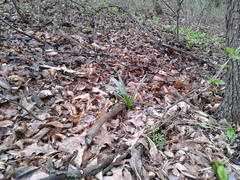 Scilla siberica Siberian squill Photo: CC BY, Oleksandr Shynder
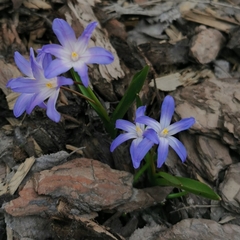 Scilla luciliae Boissier's Glory-of-the-snow Photo: CC BY, Наташа Мартынова
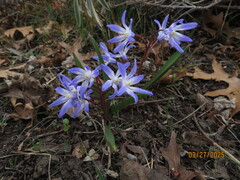 Scilla forbesii Glory-of-the-snow Photo: CC0, Steve Wells
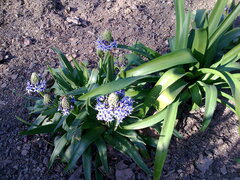 Scilla peruviana Portuguese squill Photo: CC BY, zebedeugalinha
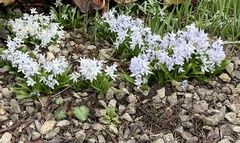 Scilla mischtschenkoana Mishchenko squill Photo: CC BY, Lauren Ware
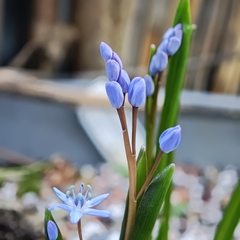 Scilla bifolia Alpine squill Photo: CC BY, Evelyn Gussmann
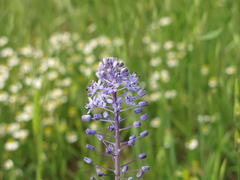 Scilla hyacinthoides Hyacinth bluebell Photo: CC BY, Nachman bones
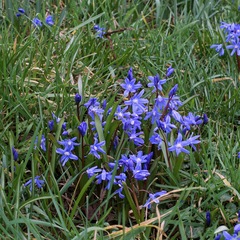 Scilla sardensis Lesser glory-of-the-snow Photo: CC BY, Andrew Tree
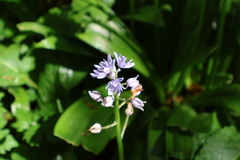 Scilla lilio-hyacinthus Pyrenean Squill Photo: CC0, thibautv
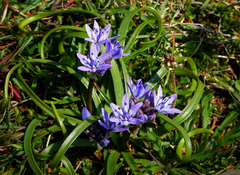 Scilla verna Spring squill Photo: CC BY, Paul Lewis
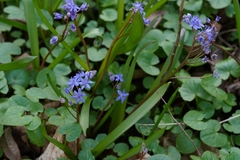 Scilla vindobonensis Photo: CC BY, Brenda Black
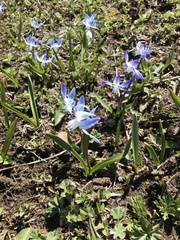 Scilla rosenii Photo: CC BY, Yuliana Leshchenko
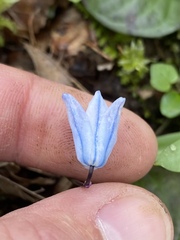 Scilla monanthos Photo: CC BY, Илья Руденко
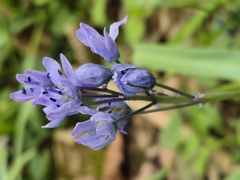 Scilla bithynica Turkish Squill Photo: CC BY, Mark Wall
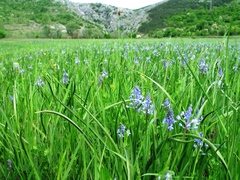 Scilla litardierei Dalmatian Scilla Photo: CC BY, Flora_DUMO
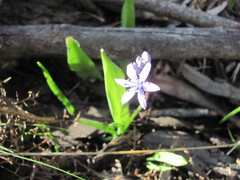 Scilla monophyllos Single-Leaved Squill Photo: CC BY, zebedeugalinha
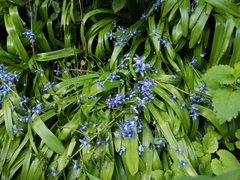 Scilla amoena Star-hyacinth Photo: CC BY, Jens-Christian Svenning
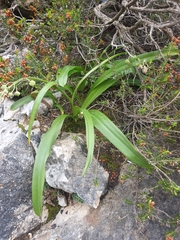 Scilla messeniaca Greek Squill Photo: CC BY, connyklein
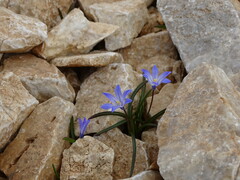 Scilla nana Dwarf Glory-of-the-snow Photo: CC BY-SA, Grzegorz Grzejszczak
- no open photograph on file Scilla achtenii
- no open photograph on file Scilla africana
- no open photograph on file Scilla albanica
- no open photograph on file Scilla albinervis
- no open photograph on file Scilla alinihatiana
- no open photograph on file Scilla andria
- no open photograph on file Scilla antunesii
- no open photograph on file Scilla arenaria
- no open photograph on file Scilla arsusiana
- no open photograph on file Scilla begoniifolia
- no open photograph on file Scilla benguellensis
- no open photograph on file Scilla bilgineri
- no open photograph on file Scilla buchananii
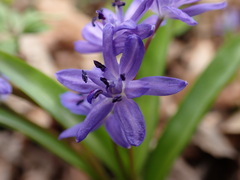 Scilla buekkensis Photo: CC BY, Milan Chytrý
- no open photograph on file Scilla bussei
- no open photograph on file Scilla chlorantha
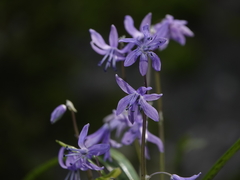 Scilla cilicica Cilician Squill Photo: CC BY, Dmitry Babin
- no open photograph on file Scilla congesta
- no open photograph on file Scilla cretica Cretan Glory-of-the-snow
- no open photograph on file Scilla cydonia
- no open photograph on file Scilla dimartinoi
- no open photograph on file Scilla dualaensis
- no open photograph on file Scilla engleri
- no open photograph on file Scilla flaccidula
- no open photograph on file Scilla gabunensis
- no open photograph on file Scilla gracillima
- no open photograph on file Scilla hakkariensis
- no open photograph on file Scilla hildebrandtii
- no open photograph on file Scilla huanica
Grown: iNaturalist's observations of the species marked captive or cultivated; "not counted" where the species list does not count it. Native ranges: Kew's World Checklist of Vascular Plants (Govaerts et al., CC BY 4.0), file of 4 June 2026. Grown: iNaturalist's observations marked captive or cultivated, counted 17 October 2026 (the species list's count). Habitat climate known: the species page has a habitat climate, read from CHELSA's monthly climate and NASA POWER's daily extremes at its well-placed wild records inside Kew's native range; each page says its own sources and days. Record low: the lowest night in NASA POWER's daily series at the habitat's typical spot, as the species page gives it, held in °C to a tenth and shown in your units; each page says its own years and day read. Counts as the reference built on 19 November 2026 holds them. The CSV holds every result, not only this page's.