Selenicereus
22 species in the reference · family Cactaceae · 19 with a habitat climate · 19 grown, per iNaturalist, 3 not counted
About the genus
Selenicereus, from Ancient Greek σελήνη (selḗnē), meaning "moon", and Latin cēreus, meaning "candle", sometimes known as moonlight cactus, is a genus of epiphytic, lithophytic, and terrestrial cacti, found in Mexico, Central America, the Caribbean and northern South America. The term night-blooming cereus is also sometimes used, but this is also used for many night-blooming cacti, including Epiphyllum and Peniocereus. In 2017, the genus Hylocereus was brought into synonymy with Selenicereus. A number of species of Selenicereus produce fruit that is eaten. More on Wikipedia
Quoted from Wikipedia, "Selenicereus", its opening paragraph, revision 1377907857, read 2026-11-08, CC BY-SA 4.0.
Where Selenicereus is native
| Mexico Southwest | 10 |
|---|---|
| Mexico Gulf | 9 |
| Mexico Southeast | 9 |
| Mexico Northeast | 7 |
| Mexico Central | 6 |
| Costa Rica | 5 |
| Guatemala | 5 |
| Colombia | 4 |
| Honduras | 4 |
| Nicaragua | 4 |
| Panama | 4 |
| Belize | 3 |
Species native to each region. A species counts in every region it is native to. Native ranges: Kew's World Checklist of Vascular Plants (Govaerts et al., CC BY 4.0), file of 4 June 2026.
22 species
Selenicereus
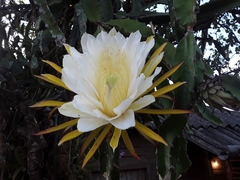 Selenicereus undatus Nightblooming Cactus Photo: CC BY, J. L. Gómez-Hechavarría
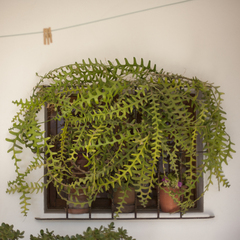 Selenicereus anthonyanus Fishbone cactus Photo: CC BY, Tim Johnson
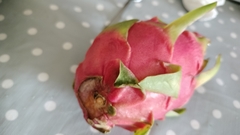 Selenicereus costaricensis Photo: CC BY, Nico Hernandez
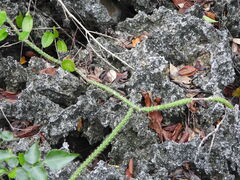 Selenicereus grandiflorus Queen of the night Photo: CC BY, Jared Shorma
 Selenicereus triangularis Photo: CC0, Zoltán Stekkelpak
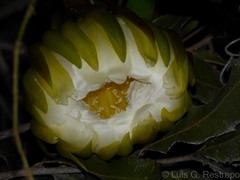 Selenicereus megalanthus Photo: CC BY, Luis G Restrepo
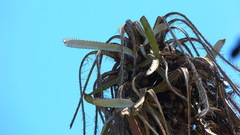 Selenicereus ocamponis Photo: CC BY, nasua
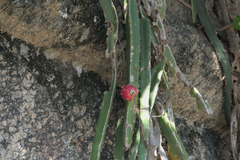 Selenicereus setaceus Photo: CC0, filipeprates
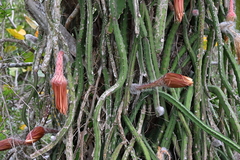 Selenicereus pteranthus Princess of the night Photo: CC0, Vince Hale
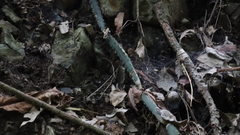 Selenicereus monacanthus Nightblooming Cereus Photo: CC BY, Raúl A. Ruiz M.
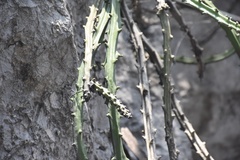 Selenicereus hamatus Photo: CC BY, P Gonzalez Zamora
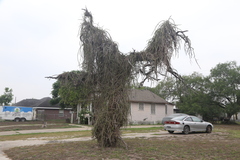 Selenicereus spinulosus Vinelike moonlight cactus Photo: CC BY, Reid Hardin
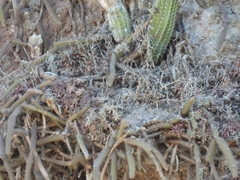 Selenicereus vagans Photo: CC0, Sinaloa Silvestre
 Selenicereus validus Photo: CC BY-SA, Michael Wolf
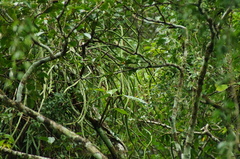 Selenicereus inermis Photo: CC BY, Carlos Domínguez-Rodríguez
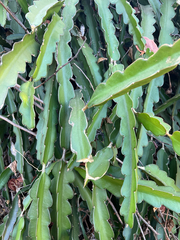 Selenicereus guatemalensis Photo: CC0, Chris Wyse
- no open photograph on file Selenicereus stenopterus
 Selenicereus nelsonii Photo: Public domain, Nathaniel Lord Britton, Joseph Nelson…
 Selenicereus tonduzii Ballerina-flower Photo: Public domain, Nathaniel Lord Britton, Joseph Nelson…
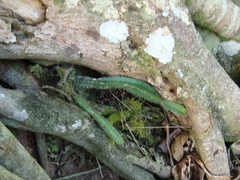 Selenicereus glaber Photo: CC BY, Alexis López Hernández
- no open photograph on file Selenicereus minutiflorus
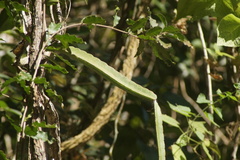 Selenicereus purpusii Photo: CC BY, Carlos Domínguez-Rodríguez
Grown: iNaturalist's observations of the species marked captive or cultivated; "not counted" where the species list does not count it. Native ranges: Kew's World Checklist of Vascular Plants (Govaerts et al., CC BY 4.0), file of 4 June 2026. Grown: iNaturalist's observations marked captive or cultivated, counted 17 October 2026 (the species list's count). Habitat climate known: the species page has a habitat climate, read from CHELSA's monthly climate and NASA POWER's daily extremes at its well-placed wild records inside Kew's native range; each page says its own sources and days. Record low: the lowest night in NASA POWER's daily series at the habitat's typical spot, as the species page gives it, held in °C to a tenth and shown in your units; each page says its own years and day read. Counts as the reference built on 19 November 2026 holds them. The CSV holds every result, not only this page's.