Sibbaldia
5 species in the reference · family Rosaceae · 5 with a habitat climate · 5 grown, per iNaturalist
About the genus
Sibbaldia is a genus of flowering plants of the family Rosaceae, with a circumpolar distribution, including the high Arctic. The type species is Sibbaldia procumbens. It is also in the Rosoideae subfamily.
Quoted from Wikipedia, "Sibbaldia", its opening paragraph, revision 1345653551, read 2026-11-08, CC BY-SA 4.0.
Where Sibbaldia is native
| Alberta | 2 |
|---|---|
| Bulgaria | 2 |
| China South-Central | 2 |
| East Himalaya | 2 |
| Greenland | 2 |
| Kirgizistan | 2 |
| Labrador | 2 |
| Nepal | 2 |
| New Hampshire | 2 |
| Newfoundland | 2 |
| Northwest Territories | 2 |
| Nunavut | 2 |
Species native to each region. A species counts in every region it is native to. Native ranges: Kew's World Checklist of Vascular Plants (Govaerts et al., CC BY 4.0), file of 4 June 2026.
5 species
Sibbaldia
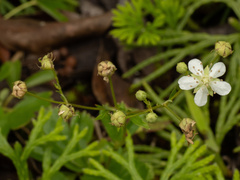 Sibbaldia tridentata Three-toothed cinquefoil Photo: CC BY-SA, Turner Brockman
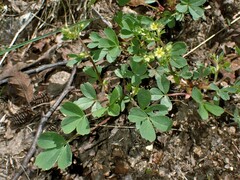 Sibbaldia procumbens Creeping sibbaldia Photo: CC BY, Louis Imbeau
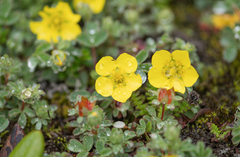 Sibbaldia cuneifolia Photo: CC BY, Morten Ross
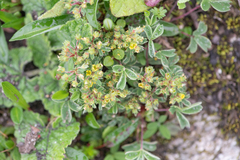 Sibbaldia cuneata Photo: CC BY, Morten Ross
 Sibbaldia parviflora Photo: CC BY, Dmitriy Bochkov
Grown: iNaturalist's observations of the species marked captive or cultivated; "not counted" where the species list does not count it. Native ranges: Kew's World Checklist of Vascular Plants (Govaerts et al., CC BY 4.0), file of 4 June 2026. Grown: iNaturalist's observations marked captive or cultivated, counted 17 October 2026 (the species list's count). Habitat climate known: the species page has a habitat climate, read from CHELSA's monthly climate and NASA POWER's daily extremes at its well-placed wild records inside Kew's native range; each page says its own sources and days. Record low: the lowest night in NASA POWER's daily series at the habitat's typical spot, as the species page gives it, held in °C to a tenth and shown in your units; each page says its own years and day read. Counts as the reference built on 19 November 2026 holds them. The CSV holds every result, not only this page's.