Soldanella
10 species in the reference · family Primulaceae · 10 with a habitat climate · 4 grown, per iNaturalist, 6 not counted
About the genus
The genus Soldanella, commonly known in English as snowbell, includes about 15 species of flowering plants native to European mountains, from the Pyrenees, the Apennines, the Alps, the Carpathians and the Balkans. They grow in woods, damp pastures and rocky landscapes from 500–3,000 m (1,600–9,800 ft) above sea level, often in hollows which hold snow into late spring and early summer. The name Soldanella means "little coins" in Italian.
Quoted from Wikipedia, "Soldanella", its opening paragraph, revision 1370227281, read 2026-11-08, CC BY-SA 4.0.
Where Soldanella is native
| Yugoslavia | 6 |
|---|---|
| Austria | 5 |
| Bulgaria | 5 |
| Italy | 5 |
| Germany | 4 |
| Romania | 4 |
| Albania | 3 |
| Czechoslovakia | 3 |
| Poland | 3 |
| Ukraine | 3 |
| France | 2 |
| Greece | 2 |
Species native to each region. A species counts in every region it is native to. Native ranges: Kew's World Checklist of Vascular Plants (Govaerts et al., CC BY 4.0), file of 4 June 2026.
10 species
Soldanella
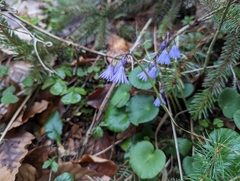 Soldanella montana Mountain Snowbell Photo: CC BY, Elias
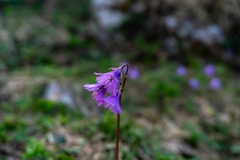 Soldanella alpina Photo: CC BY, Philipp Pavelka
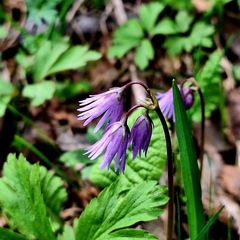 Soldanella carpatica Carpathian snowbell Photo: CC BY, Marek Hrušovský
 Soldanella minima Least Snowbell Photo: CC BY-SA, Emanuele Santarelli
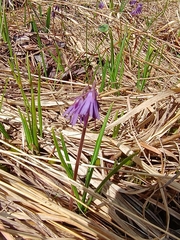 Soldanella chrysosticta Photo: CC BY, Vladimír Nemček
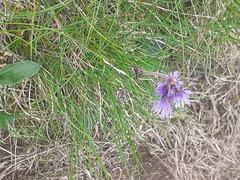 Soldanella hungarica Hungarian Snowbell Photo: CC BY, Anne Heckmann
 Soldanella major Photo: CC BY, rainerburkard
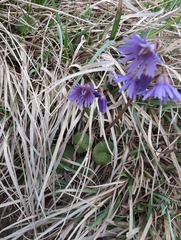 Soldanella pindicola Photo: CC0, Quentin Groom
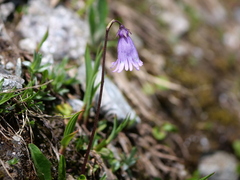 Soldanella pusilla Dwarf Snowbell Photo: CC BY, Wolfgang Jauch
 Soldanella villosa Pyrenean Snowbell Photo: CC BY-SA, peganum
Grown: iNaturalist's observations of the species marked captive or cultivated; "not counted" where the species list does not count it. Native ranges: Kew's World Checklist of Vascular Plants (Govaerts et al., CC BY 4.0), file of 4 June 2026. Grown: iNaturalist's observations marked captive or cultivated, counted 17 October 2026 (the species list's count). Habitat climate known: the species page has a habitat climate, read from CHELSA's monthly climate and NASA POWER's daily extremes at its well-placed wild records inside Kew's native range; each page says its own sources and days. Record low: the lowest night in NASA POWER's daily series at the habitat's typical spot, as the species page gives it, held in °C to a tenth and shown in your units; each page says its own years and day read. Counts as the reference built on 19 November 2026 holds them. The CSV holds every result, not only this page's.