Spermacoce
7 species in the reference · family Rubiaceae · 7 with a habitat climate · 6 grown, per iNaturalist, 1 not counted
About the genus
Spermacoce or false buttonweed is a genus of flowering plants in the family Rubiaceae. It comprises about 275 species found throughout the tropics and subtropics. Its highest diversity is found in the Americas, followed by Africa, Australia and Asia. It can be used for the treatment of eczema by rubbing the leaves on the affected part.
Quoted from Wikipedia, "Spermacoce", its opening paragraph, revision 1354652654, read 2026-11-08, CC BY-SA 4.0.
Where Spermacoce is native
| Peru | 6 |
|---|---|
| Belize | 5 |
| Bolivia | 5 |
| Brazil North | 5 |
| Brazil Northeast | 5 |
| Colombia | 5 |
| Costa Rica | 5 |
| Ecuador | 5 |
| El Salvador | 5 |
| Guatemala | 5 |
| Honduras | 5 |
| Mexico Gulf | 5 |
Species native to each region. A species counts in every region it is native to. Native ranges: Kew's World Checklist of Vascular Plants (Govaerts et al., CC BY 4.0), file of 4 June 2026.
7 species
Spermacoce
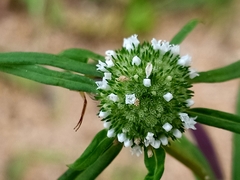 Spermacoce verticillata Shrubby false buttonweed Photo: CC BY-SA, Ong Jyh Seng
 Spermacoce remota Woodland false buttonweed Photo: CC BY, Ricard Busquets Reverte
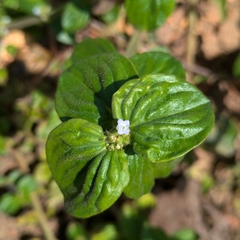 Spermacoce latifolia Oval-leaf false buttonweed Photo: CC BY, Paulmathi Vinod
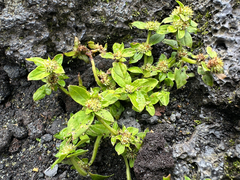 Spermacoce exilis Pacific false buttonweed Photo: CC BY-SA, Nick T.
 Spermacoce dasycephala False buttonweed Photo: CC BY, Gonzalo Roget
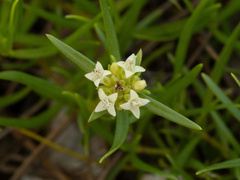 Spermacoce neoterminalis Photo: CC BY-SA, Turner Brockman
 Spermacoce tenuior River False Buttonweed Photo: CC BY, José Belem Hernández Díaz
Grown: iNaturalist's observations of the species marked captive or cultivated; "not counted" where the species list does not count it. Native ranges: Kew's World Checklist of Vascular Plants (Govaerts et al., CC BY 4.0), file of 4 June 2026. Grown: iNaturalist's observations marked captive or cultivated, counted 17 October 2026 (the species list's count). Habitat climate known: the species page has a habitat climate, read from CHELSA's monthly climate and NASA POWER's daily extremes at its well-placed wild records inside Kew's native range; each page says its own sources and days. Record low: the lowest night in NASA POWER's daily series at the habitat's typical spot, as the species page gives it, held in °C to a tenth and shown in your units; each page says its own years and day read. Counts as the reference built on 19 November 2026 holds them. The CSV holds every result, not only this page's.