Syringa
12 species in the reference · family Oleaceae · 8 with a habitat climate · 11 grown, per iNaturalist, 1 not counted
About the genus
Syringa is a genus of 12 currently recognized species of flowering woody plants in the olive family known colloquially as lilacs. They are native to woodland and scrub from southeastern Europe to eastern Asia, and widely and commonly cultivated in temperate areas elsewhere.
Quoted from Wikipedia, "Syringa", its opening paragraph, revision 1382290487, read 2026-11-08, CC BY-SA 4.0.
Where Syringa is native
| China North-Central | 7 |
|---|---|
| China South-Central | 7 |
| Inner Mongolia | 5 |
| Korea | 4 |
| Manchuria | 4 |
| Qinghai | 4 |
| China Southeast | 3 |
| Tibet | 3 |
| Pakistan | 2 |
| Primorye | 2 |
| Romania | 2 |
| West Himalaya | 2 |
Species native to each region. A species counts in every region it is native to. Native ranges: Kew's World Checklist of Vascular Plants (Govaerts et al., CC BY 4.0), file of 4 June 2026.
12 species
Syringa
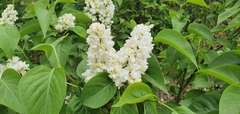 Syringa vulgaris Common lilac Photo: CC BY, Julien Lepage
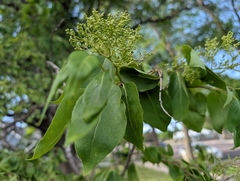 Syringa reticulata Japanese tree lilac Photo: CC BY, Jeff Hansen
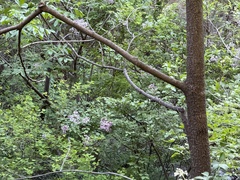 Syringa pubescens Daphne lilac Photo: CC BY, Jane Charlen
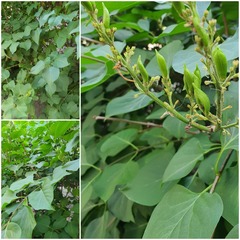 Syringa josikaea Hungarian lilac Photo: CC BY, Urgamal Magsar
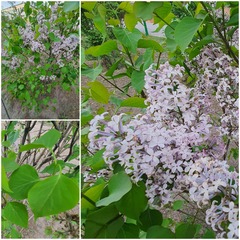 Syringa oblata Photo: CC BY, Urgamal Magsar
 Syringa persica Persian lilac Photo: CC BY-SA, Krzysztof Ziarnek, Kenraiz
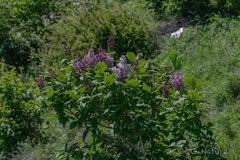 Syringa villosa Villous lilac Photo: CC BY, Wang.QG
Syringa komarowii Nodding Lilac Photo: CC BY, Perry Gunnar Larsen
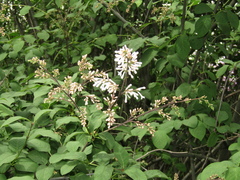 Syringa tomentella Photo: CC BY, Oleksandr Shynder
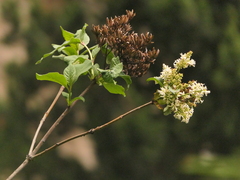 Syringa emodi Himalayan Lilac Photo: CC BY, Sagnik Dutta Roy
 Syringa pinnatifolia Photo: CC BY, Collin Knopp-Schwyn
- no open photograph on file Syringa pinetorum
Grown: iNaturalist's observations of the species marked captive or cultivated; "not counted" where the species list does not count it. Native ranges: Kew's World Checklist of Vascular Plants (Govaerts et al., CC BY 4.0), file of 4 June 2026. Grown: iNaturalist's observations marked captive or cultivated, counted 17 October 2026 (the species list's count). Habitat climate known: the species page has a habitat climate, read from CHELSA's monthly climate and NASA POWER's daily extremes at its well-placed wild records inside Kew's native range; each page says its own sources and days. Record low: the lowest night in NASA POWER's daily series at the habitat's typical spot, as the species page gives it, held in °C to a tenth and shown in your units; each page says its own years and day read. Counts as the reference built on 19 November 2026 holds them. The CSV holds every result, not only this page's.