Tillandsia
200 species in the reference · family Bromeliaceae · 165 with a habitat climate · 159 grown, per iNaturalist, 41 not counted
About the genus
Tillandsia is a genus of around 650 species of evergreen, perennial flowering plants in the family Bromeliaceae, native to the forests, mountains and deserts of the Neotropics, from northern Mexico and the southeastern United States to Mesoamerica and the Caribbean to central Argentina. Their leaves, more or less silvery in color, are covered with specialized cells (trichomes) capable of rapidly absorbing water that gathers on them.
Quoted from Wikipedia, "Tillandsia", its opening paragraph, revision 1382187986, read 2026-11-08, CC BY-SA 4.0.
Where Tillandsia is native
| Mexico Southwest | 70 |
|---|---|
| Bolivia | 52 |
| Mexico Southeast | 50 |
| Peru | 48 |
| Guatemala | 45 |
| Mexico Gulf | 44 |
| Colombia | 39 |
| Ecuador | 39 |
| Honduras | 39 |
| Argentina Northwest | 38 |
| Mexico Central | 38 |
| Argentina Northeast | 35 |
Species native to each region. A species counts in every region it is native to. Native ranges: Kew's World Checklist of Vascular Plants (Govaerts et al., CC BY 4.0), file of 4 June 2026.
200 species
Tillandsia
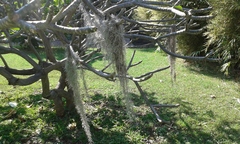 Tillandsia usneoides Spanish moss Photo: CC BY, Floyd A. Reed
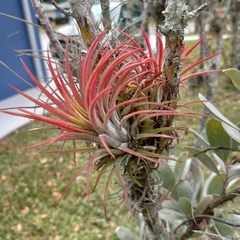 Tillandsia ionantha Blushing Bride Photo: CC BY-SA, Ramon and Suzanne Vargas
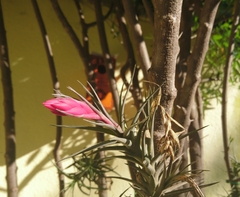 Tillandsia aeranthos Photo: CC BY, Romi Galeota Lencina
 Tillandsia recurvata Ballmoss Photo: CC BY, Victor Engel
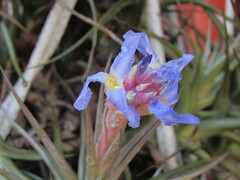 Tillandsia bergeri Photo: CC BY, Bruno Avilez
 Tillandsia utriculata Spreading air plant Photo: CC0, Zoltán Stekkelpak
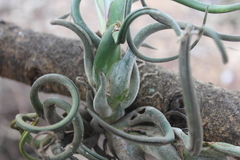 Tillandsia caput-medusae Octopus plant Photo: CC BY, Ricard Busquets Reverte
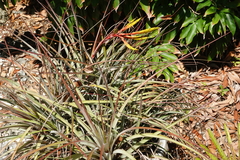 Tillandsia fasciculata Giant Air Plant Photo: CC BY, Claire Herzog
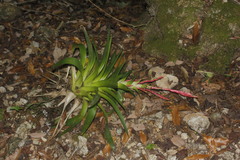 Tillandsia deppeana Photo: CC BY-SA, Juan Cruzado Cortés
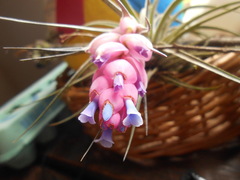 Tillandsia stricta Upright airplant Photo: CC BY-SA, Giovanni Marques de Castro
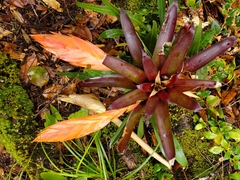 Tillandsia multicaulis Swamp fire Photo: CC BY, Jonathan Curley
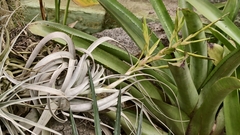 Tillandsia xerographica Shirley Temple Airplant Photo: CC BY, fmunoz
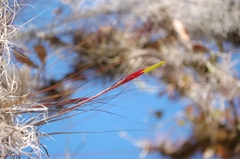 Tillandsia schiedeana Photo: CC BY, Neptalí Ramírez Marcial
 Tillandsia andreana Photo: CC BY-SA, James Steakley
 Tillandsia imperialis Imperial airplant Photo: CC BY, harrier
 Tillandsia erubescens Photo: CC BY, Arturo Castro Castro
 Tillandsia bulbosa Bulbous airplant Photo: CC BY, Alex Popovkin
 Tillandsia baileyi Reflexed airplant Photo: CC BY, Reid Hardin
 Tillandsia brachycaulos Photo: CC BY, Ricard Busquets Reverte
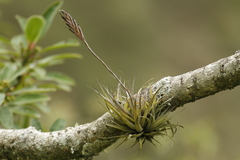 Tillandsia incarnata Photo: CC BY, Julien Renoult
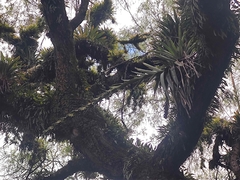 Tillandsia pastensis Photo: CC BY, Cajá-manga
 Tillandsia balbisiana Northern needleleaf Photo: CC BY, Annika Lindqvist
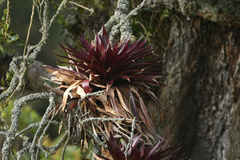 Tillandsia complanata Photo: CC BY, Julien Renoult
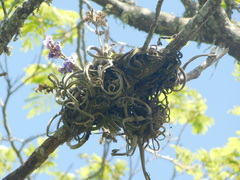 Tillandsia duratii Photo: CC0, Sebastián Gómez Barboza Silveira
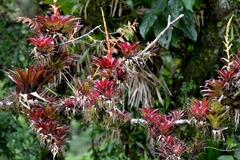 Tillandsia guatemalensis Pink quill Photo: CC BY, Daniel Pineda Vera
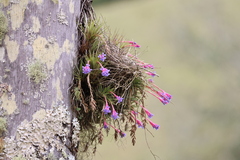 Tillandsia tenuifolia Narrowleaf airplant Photo: CC BY, Jessica Souza
 Tillandsia capitata Photo: CC BY, Ricardo Betancourt Sánchez
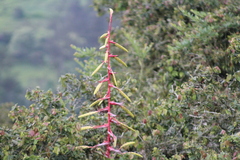 Tillandsia fendleri Photo: CC BY, Martha Lucia Ortiz-Moreno
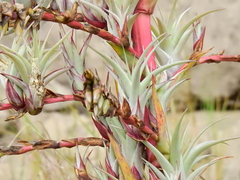 Tillandsia secunda Photo: CC BY, Esteban Poveda
 Tillandsia tectorum Fuzzy air plant Photo: CC BY, sandy-espinozaf
 Tillandsia gardneri Photo: CC BY, Lek Khauv
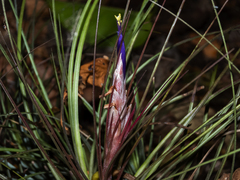 Tillandsia juncea Photo: CC BY, Elkin Meriño Florez
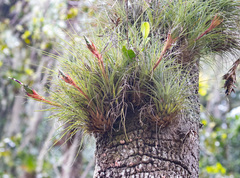 Tillandsia punctulata Mexican black torch plant Photo: CC BY, avocat
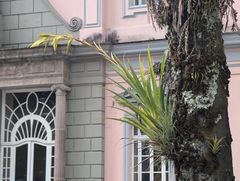 Tillandsia lajensis Photo: CC0, Zoltán Stekkelpak
 Tillandsia bartramii Bartram's airplant Photo: CC BY, Laura Gaudette
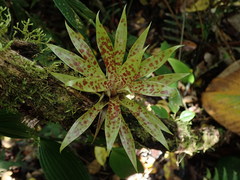 Tillandsia biflora Photo: CC BY, Nolan Exe
 Tillandsia butzii Photo: CC BY, Neptalí Ramírez Marcial
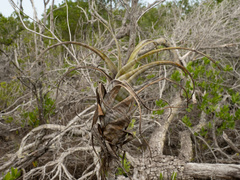 Tillandsia flexuosa Twisted airplant Photo: CC BY-SA, Turner Brockman
 Tillandsia streptophylla Silvery Wild Pine Photo: CC BY, Reid Hardin
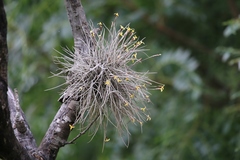 Tillandsia capillaris Photo: CC BY, Andy Jordan
 Tillandsia intermedia Photo: CC BY, Xavier Alejandro Caratachea Navarro
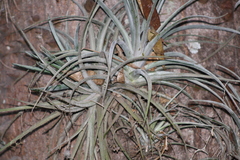 Tillandsia pohliana Photo: CC BY, Ronaldo Pedrão
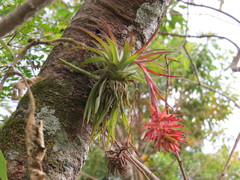 Tillandsia geminiflora Photo: CC BY, Victor Farjalla Pontes
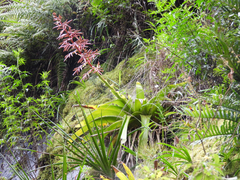 Tillandsia machupicchuensis Photo: CC0, Allan Harris
 Tillandsia seleriana Photo: CC BY, Neptalí Ramírez Marcial
 Tillandsia latifolia Photo: CC BY, GREGORY ANTHONY PAUCA TANCO
 Tillandsia recurvifolia Photo: CC0, demianlescano
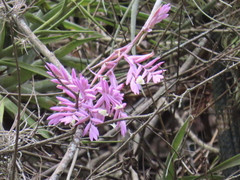 Tillandsia straminea Photo: CC BY, Viktor
Grown: iNaturalist's observations of the species marked captive or cultivated; "not counted" where the species list does not count it. Native ranges: Kew's World Checklist of Vascular Plants (Govaerts et al., CC BY 4.0), file of 4 June 2026. Grown: iNaturalist's observations marked captive or cultivated, counted 17 October 2026 (the species list's count). Habitat climate known: the species page has a habitat climate, read from CHELSA's monthly climate and NASA POWER's daily extremes at its well-placed wild records inside Kew's native range; each page says its own sources and days. Record low: the lowest night in NASA POWER's daily series at the habitat's typical spot, as the species page gives it, held in °C to a tenth and shown in your units; each page says its own years and day read. Counts as the reference built on 19 November 2026 holds them. The CSV holds every result, not only this page's.