Viscum
9 species in the reference · family Santalaceae · 7 with a habitat climate · 9 grown, per iNaturalist
About the genus
Viscum is a genus of over 100 species of mistletoes, native to temperate and tropical regions of Europe, Africa, Asia and Australasia. Traditionally, the genus has been placed in its own family Viscaceae, but recent genetic research by the Angiosperm Phylogeny Group shows this family to be correctly placed within a larger circumscription of the sandalwood family, Santalaceae. Its name is the origin of the English word viscous, after the Latin viscum, a sticky bird lime made from the plants' berries.
Quoted from Wikipedia, "Viscum", its opening paragraph, revision 1333719804, read 2026-11-08, CC BY-SA 4.0.
Where Viscum is native
| Cape Provinces | 4 |
|---|---|
| China South-Central | 4 |
| China Southeast | 3 |
| East Himalaya | 3 |
| Myanmar | 3 |
| Nepal | 3 |
| Vietnam | 3 |
| China North-Central | 2 |
| Hainan | 2 |
| Lebanon-Syria | 2 |
| Morocco | 2 |
| Namibia | 2 |
Species native to each region. A species counts in every region it is native to. Native ranges: Kew's World Checklist of Vascular Plants (Govaerts et al., CC BY 4.0), file of 4 June 2026.
9 species
Viscum
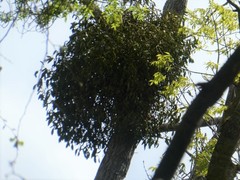 Viscum album European mistletoe Photo: CC0, pete_gateley
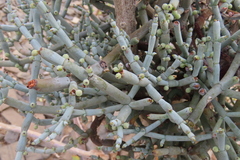 Viscum capense Photo: CC0, dune_ninja
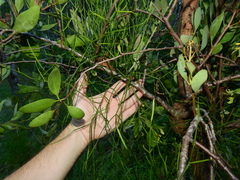 Viscum articulatum Photo: CC BY, Samuel Frankel
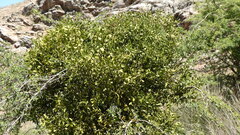 Viscum cruciatum Red-berried Mistletoe Photo: CC BY, frangp
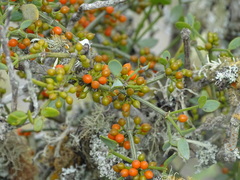 Viscum rotundifolium Photo: CC BY, Shaun Swanepoel
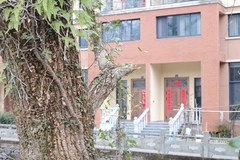 Viscum coloratum Korean mistletoe Photo: CC BY, 王天
 Viscum minimum Mini Mistletoe Photo: CC BY-SA, Frank Vincentz
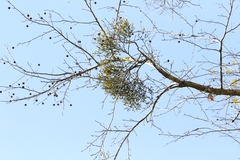 Viscum liquidambaricola Photo: CC0, Agnes Trekker
 Viscum crassulae Stonecrop Mistletoe Photo: CC BY-SA, SAplants
Grown: iNaturalist's observations of the species marked captive or cultivated; "not counted" where the species list does not count it. Native ranges: Kew's World Checklist of Vascular Plants (Govaerts et al., CC BY 4.0), file of 4 June 2026. Grown: iNaturalist's observations marked captive or cultivated, counted 17 October 2026 (the species list's count). Habitat climate known: the species page has a habitat climate, read from CHELSA's monthly climate and NASA POWER's daily extremes at its well-placed wild records inside Kew's native range; each page says its own sources and days. Record low: the lowest night in NASA POWER's daily series at the habitat's typical spot, as the species page gives it, held in °C to a tenth and shown in your units; each page says its own years and day read. Counts as the reference built on 19 November 2026 holds them. The CSV holds every result, not only this page's.