
Felicia uliginosa Grau
Cited as Kew's World Checklist cites it, Felicia uliginosa Grau: GBIF's backbone key for this page carries the name with another author, (J.M.Wood & M.S.Evans) Grau.


 5 photographs ›
About the genus · Felicia
The name Felicia derives from the Latin adjective felix, meaning "happy, lucky", though in the neuter plural form felicia it literally means "happy things" and often occurred in the phrase tempora felicia, "happy times". The sense of it as a feminine personal name appeared in post-Classical use and is of uncertain origin. It is associated with saints, poets, astronomical objects, plant genera, fictional characters, and animals, especially cats.
Quoted from Wikipedia, "Felicia", CC BY-SA 4.0.
Cultivation
Climate across the habitat
Natural habitat
How this section is made
Photographs


Photographs: peganum from Henfield, England, CC BY-SA 2.0, via Wikimedia Commons (4).
Related
Other Felicia 14 in the reference
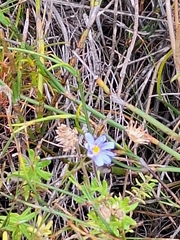 Felicia aethiopica African Felicia Photo: CC BY, Adele SL
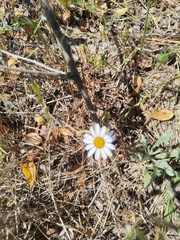 Felicia amelloides Blue marguerite Photo: CC BY, Jared Zachary Herman
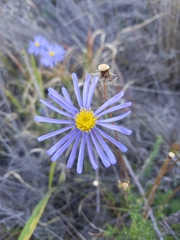 Felicia amoena Soft Felicia Photo: CC BY, Christiaan Viljoen
 Felicia bergeriana Kingfisher daisy Photo: CC BY-SA, Noeleen du Toit
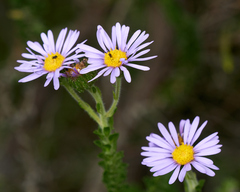 Felicia echinata Dune Felicia Photo: CC BY, Glynn Morris
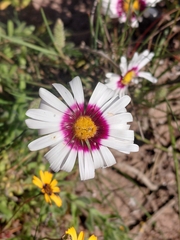 Felicia elongata Saldanha Bay Daisy Photo: CC BY-SA, Brian du Preez
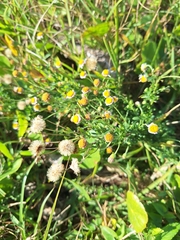 Felicia erigeroides Michaelmas Felicia Photo: CC BY, Andreas De Beer
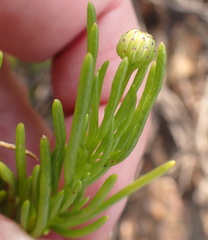 Felicia filifolia Fine Felicia Photo: CC BY-SA, Nicola van Berkel
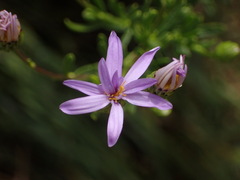 Felicia fruticosa Bush Felicia Photo: CC BY, Cricket Raspet
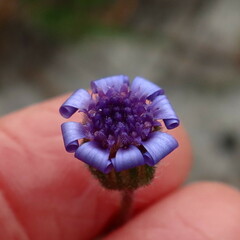 Felicia heterophylla Pureblue Felicia Photo: CC BY, Diana Studer
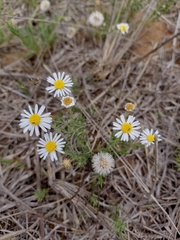 Felicia muricata Pale Felicia Photo: CC BY-SA, Brian du Preez
 Felicia petiolata Lesotho Felicia Photo: CC BY-SA, yakovlev.alexey from Moscow, Russia all 15 ›
Names & registers
Also known as Aster uliginosus. (GBIF Backbone)
The record
Every figure here is derived from public data by a stated rule and names its source; nothing about this species is written for its page by a person or by AI, apart from the marked, credited quotations. How →
Where this page came from built 2026-10-22
gbif.species answeredasked 2026-10-22GBIF's key 5388899 is Felicia uliginosa (J.M.Wood & M.S.Evans) Grau; the page links Kew's Felicia uliginosa Grau, and the name is cited as Kew cites itgbif.synonyms answeredasked 2026-10-22gbif.vernacular answeredasked 2026-10-22names fetched 2026-10-22wcvp.distribution answeredas of 2026-06-04gbif.occurrences answeredas of 2026-10-21GBIF occurrence download https://doi.org/10.15468/dl.hbdw64, of 2026-10-21climate nothing to reportasked 2026-10-2212 in-range records, none placed to within 10 kmwikidata answeredasked 2026-10-22wikipedia nothing to reportasked 2026-10-22Wikipedia redirects Felicia uliginosa to Solidago uliginosainat.photos.wild nothing to reportasked 2026-10-22from iNaturalist's open data of 2026-09-27: research-grade observations with an open-licence photograph, the 24 whose photographs iNaturalist received last (the open data holds no votes); filled 2026-10-22inat.photos.cultivated not askedgbif.media nothing to reportasked 2026-10-22commons answeredasked 2026-10-22openalex not askednot yet asked for this reference; a later fill takes the papers from OpenAlex's snapshotEvery source is recorded as having answered, reported nothing, refused, failed, not been asked, or answered twice where one answer is taken (“not taken: two items answered”), and, for a source asked when this page was built, when: the figures are as the source held them that day; a source read from a file (Kew's World Checklist, a GBIF download) says "as of" the file's day instead; a row carried from an earlier build of the page names that build instead. Only “nothing to report” is ever shown as an absence. Records came from 3 datasets via GBIF.org; each carries its own licence.