
Myosotis petiolata Hook.f.
Cited as Kew's World Checklist cites it, Myosotis petiolata Hook.f.: GBIF's backbone key for this page carries the name with another author, Hook.fil.


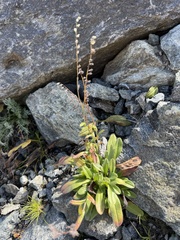
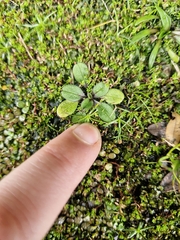
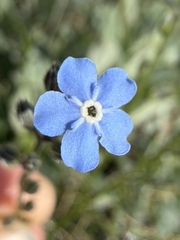
 4 photographs ›
Summary
Myosotis petiolata is a species of flowering plant in the family Boraginaceae, endemic to the Hawkes Bay region of the North Island of New Zealand. Joseph Dalton Hooker described the species in 1853. Plants of this species of forget-me-not are perennial rosettes with ebracteate inflorescences and white corollas with exserted stamens.
Quoted from Wikipedia, "Myosotis petiolata", CC BY-SA 4.0.
About the genus · Myosotis
Myosotis is a genus of flowering plants in the borage family Boraginaceae. In the Northern Hemisphere, they are colloquially known as forget-me-nots or scorpion grasses. The forget-me-not is the official flower of Alaska.
Quoted from Wikipedia, "Myosotis", CC BY-SA 4.0.
Cultivation
Climate across the habitat
Natural habitat
How this section is made
Photographs


Photographs: Stitchbird2, CC BY-SA 4.0, via Wikimedia Commons (3).
Related
Other Myosotis 34 in the reference
 Myosotis alpestris Alpine forget-me-not Photo: CC BY, Katrin Simon
 Myosotis antarctica Boraginaceae Photo: CC BY, Irisa Hudson
 Myosotis arvensis Field forget-me-not Photo: CC BY, Ondřej Křivan
 Myosotis asiatica Asian forget-me-not Photo: CC BY, Matt Berger
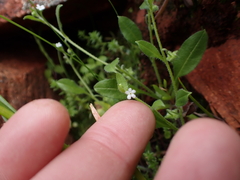 Myosotis australis Australian forget-me-not Photo: CC BY, Em Lamond
 Myosotis azorica Azorean Forget-me-not Photo: CC BY-SA, C T Johansson
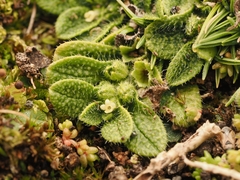 Myosotis brevis Tiny forget-me-not Photo: CC BY, Angus Campbell
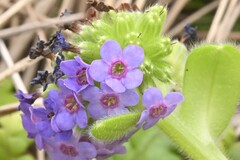 Myosotis capitata Boraginaceae Photo: CC BY, Saryu Mae 前 朝琉
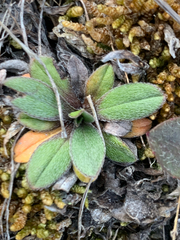 Myosotis colensoi Boraginaceae Photo: CC BY, Liadan Dickie
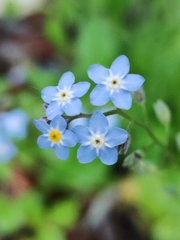 Myosotis decumbens Boraginaceae Photo: CC BY, Ljaž
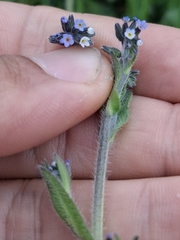 Myosotis discolor Changing forget-me-not Photo: CC BY, Sean T
 Myosotis eximia Boraginaceae Photo: CC BY-SA, Mike Dickison all 35 ›
Names & registers
Also known as Exarrhena petiolata. (GBIF Backbone)
The record
Every figure here is derived from public data by a stated rule and names its source; nothing about this species is written for its page by a person or by AI, apart from the marked, credited quotations. How →
Where this page came from built 2026-10-22
gbif.species answeredasked 2026-10-22GBIF's key 5660826 is Myosotis petiolata Hook.fil.; the page links Kew's Myosotis petiolata Hook.f., and the name is cited as Kew cites itgbif.synonyms answeredasked 2026-10-22gbif.vernacular answeredasked 2026-10-22names fetched 2026-10-22wcvp.distribution answeredas of 2026-06-04gbif.occurrences answeredas of 2026-10-21GBIF occurrence download https://doi.org/10.15468/dl.hbdw64, of 2026-10-21climate nothing to reportasked 2026-10-22only 1 distinct land cell of the climate grid holds an in-range record placed to within 10 km; three are needed for an envelopewikidata answeredasked 2026-10-22wikipedia answeredasked 2026-10-22inat.photos.wild nothing to reportasked 2026-10-22from iNaturalist's open data of 2026-09-27: research-grade observations with an open-licence photograph, the 24 whose photographs iNaturalist received last (the open data holds no votes); filled 2026-10-22inat.photos.cultivated not askedgbif.media nothing to reportasked 2026-10-22commons answeredasked 2026-10-22openalex not askednot yet asked for this reference; a later fill takes the papers from OpenAlex's snapshotEvery source is recorded as having answered, reported nothing, refused, failed, not been asked, or answered twice where one answer is taken (“not taken: two items answered”), and, for a source asked when this page was built, when: the figures are as the source held them that day; a source read from a file (Kew's World Checklist, a GBIF download) says "as of" the file's day instead; a row carried from an earlier build of the page names that build instead. Only “nothing to report” is ever shown as an absence. Records came from 5 datasets via GBIF.org; each carries its own licence.