Aeonium
40 species in the reference · family Crassulaceae · 34 with a habitat climate · 33 grown, per iNaturalist, 7 not counted
About the genus
Aeonium, the tree houseleeks, is a genus of about 35 species of succulent, subtropical plants of the family Crassulaceae. Many species are popular in horticulture. The genus name comes from the ancient Greek αἰώνιος / aiōnios (ageless). While most of them are native to the Canary Islands, some are found in Madeira, Cape Verde, Morocco, in East Africa (Ethiopia, Somalia, Uganda, Tanzania and Kenya) and Yemen.
Quoted from Wikipedia, "Aeonium", its opening paragraph, revision 1354821710, read 2026-11-08, CC BY-SA 4.0.
Where Aeonium is native
| Canary Is. | 33 |
|---|---|
| Ethiopia | 2 |
| Kenya | 2 |
| Madeira | 2 |
| Tanzania | 2 |
| Uganda | 2 |
| Yemen | 2 |
| Cape Verde | 1 |
| Djibouti | 1 |
| Eritrea | 1 |
| Morocco | 1 |
| Somalia | 1 |
Species native to each region. A species counts in every region it is native to. Native ranges: Kew's World Checklist of Vascular Plants (Govaerts et al., CC BY 4.0), file of 4 June 2026.
40 species
Aeonium
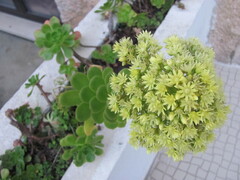 Aeonium arboreum Tree aeonium Photo: CC BY, zebedeugalinha
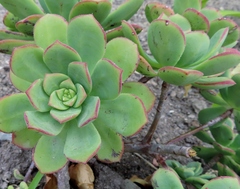 Aeonium haworthii Haworth's aeonium Photo: CC BY, linkie
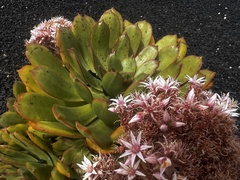 Aeonium lancerottense Photo: CC BY, Mark Richman
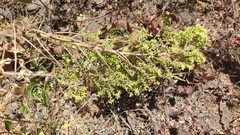 Aeonium canariense Canary Aeonium Photo: CC BY, fmunoz
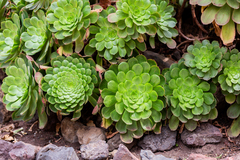 Aeonium glandulosum Disc House-leek Photo: CC BY, João D'Andretta
 Aeonium urbicum Photo: CC0, Simon Tonge
 Aeonium tabuliforme Photo: CC BY-SA, Micha Baum
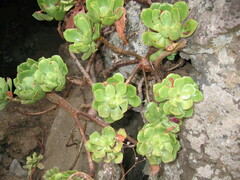 Aeonium glutinosum Viscid Houseleek Photo: CC BY, zebedeugalinha
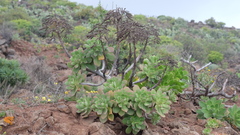 Aeonium percarneum Photo: CC BY, fmunoz
 Aeonium ciliatum Photo: CC BY, Jens-Christian Svenning
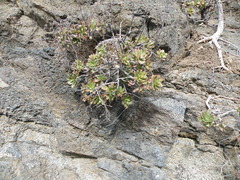 Aeonium decorum Photo: CC BY, amantedarmanin
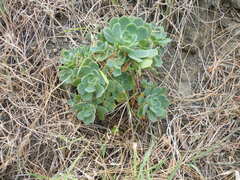 Aeonium castello-paivae Castello-Paiva-Aeonium Photo: CC BY, amantedarmanin
 Aeonium undulatum Giant Aeonium Photo: CC BY, Rudyard
 Aeonium davidbramwellii Photo: CC0, famkoe
 Aeonium spathulatum Photo: CC BY, Christian Berg
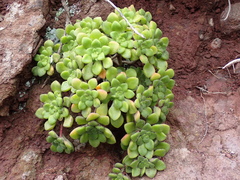 Aeonium lindleyi Photo: CC BY, Andreas Taeger
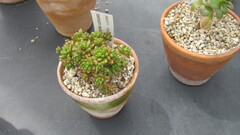 Aeonium sedifolium Photo: CC BY, zebedeugalinha
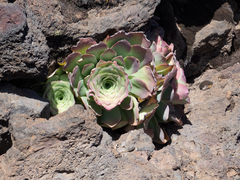 Aeonium aureum Photo: CC BY, Juan Rodríguez
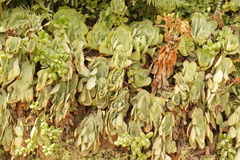 Aeonium cuneatum Tenerife Aeonium Photo: CC BY, Alex Press
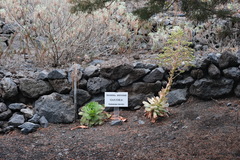 Aeonium hierrense Photo: CC BY, fmunoz
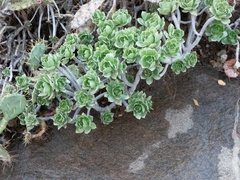 Aeonium balsamiferum Balsam aeonium Photo: CC BY, Juan Rodríguez
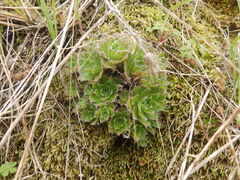 Aeonium simsii Sims' Aeonium Photo: CC BY, amantedarmanin
 Aeonium × mascaense Photo: CC BY-SA, James Steakley
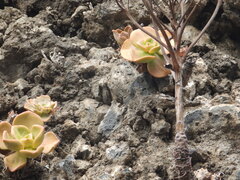 Aeonium nobile Edles Aeonium Photo: CC BY, amantedarmanin
 Aeonium dodrantale Photo: CC BY-SA, Opuntia
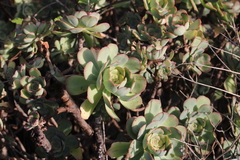 Aeonium gomerense Photo: CC BY, Javier Sánchez Álvarez
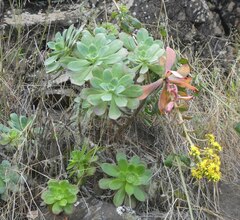 Aeonium gorgoneum Cape Verde Tree Houseleek Photo: CC BY, Malcolm Gould
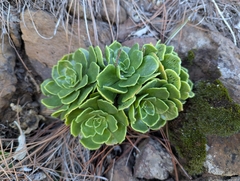 Aeonium smithii Smith's Aeonium Photo: CC BY, Elias
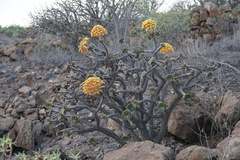 Aeonium rubrolineatum Photo: CC BY, Connor Connolly-Moyls
 Aeonium leucoblepharum Photo: CC BY, Jean Jacques Godon
 Aeonium aizoon Photo: CC BY-SA, Krzysztof Ziarnek, Kenraiz
 Aeonium goochiae Mrs. Goochs Aeonium Photo: CC0, Ina Siebert
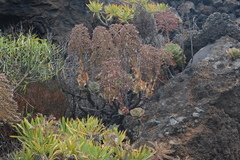 Aeonium valverdense Valverde-Aeonium Photo: CC BY, fmunoz
 Aeonium appendiculatum Photo: CC BY-SA, Gomeron
- no open photograph on file Aeonium × burchardii
- no open photograph on file Aeonium calderense
- no open photograph on file Aeonium lavranosii-newtonii
- no open photograph on file Aeonium liui
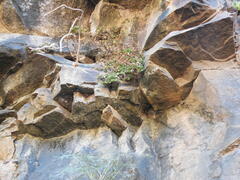 Aeonium saundersii Saunders' Aeonium Photo: CC BY, amantedarmanin
- no open photograph on file Aeonium stuessyi
Grown: iNaturalist's observations of the species marked captive or cultivated; "not counted" where the species list does not count it. Native ranges: Kew's World Checklist of Vascular Plants (Govaerts et al., CC BY 4.0), file of 4 June 2026. Grown: iNaturalist's observations marked captive or cultivated, counted 17 October 2026 (the species list's count). Habitat climate known: the species page has a habitat climate, read from CHELSA's monthly climate and NASA POWER's daily extremes at its well-placed wild records inside Kew's native range; each page says its own sources and days. Record low: the lowest night in NASA POWER's daily series at the habitat's typical spot, as the species page gives it, held in °C to a tenth and shown in your units; each page says its own years and day read. Counts as the reference built on 19 November 2026 holds them. The CSV holds every result, not only this page's.