Asplenium
85 species in the reference · family Aspleniaceae · 75 with a habitat climate · 68 grown, per iNaturalist, 17 not counted
About the genus
Asplenium is a genus of about 700 species of ferns, often treated as the only genus in the family Aspleniaceae, though other authors consider Hymenasplenium separate, based on molecular phylogenetic analysis of DNA sequences, a different chromosome count, and structural differences in the rhizomes. The type species for the genus is Asplenium marinum.
Quoted from Wikipedia, "Asplenium", its opening paragraph, revision 1361858615, read 2026-11-08, CC BY-SA 4.0.
Where Asplenium is native
| China South-Central | 16 |
|---|---|
| Italy | 15 |
| Taiwan | 15 |
| France | 14 |
| Morocco | 14 |
| Tanzania | 14 |
| Tibet | 14 |
| China Southeast | 13 |
| Japan | 13 |
| Kenya | 13 |
| Mexico Southwest | 13 |
| New Zealand North | 13 |
Species native to each region. A species counts in every region it is native to. Native ranges: Kew's World Checklist of Vascular Plants (Govaerts et al., CC BY 4.0), file of 4 June 2026.
85 species
Asplenium
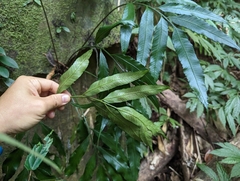 Asplenium formosae Showy spleenwort Photo: CC BY, 潘立傑 LICHIEH_PAN
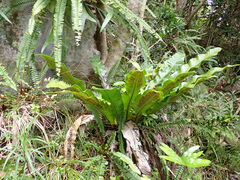 Asplenium goudeyi Dwarf Bird's Nest Fern Photo: CC BY, Leon Perrie
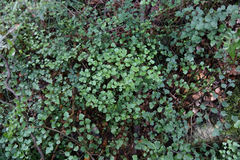 Asplenium hookerianum Photo: CC BY, John Barkla
- no open photograph on file Asplenium nigripes
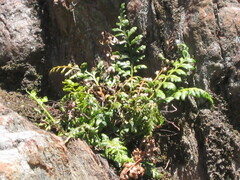 Asplenium obovatum Lanceolate Spleenwort Photo: CC BY, zebedeugalinha
- no open photograph on file Asplenium stolonipes
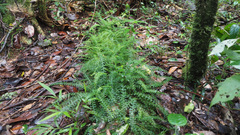 Asplenium dregeanum Drège's Spleenwort Photo: CC BY, Borja Fierro-Leva
 Asplenium × ebenoides Scott's spleenwort Photo: CC BY, Nathan Aaron
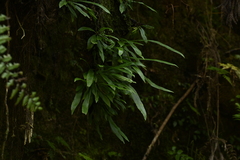 Asplenium ensiforme Photo: CC BY, 曾昱承 Yu-Cheng Zeng
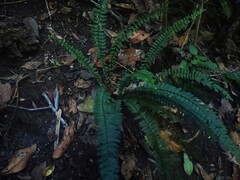 Asplenium lunulatum Halfmoon Fern Photo: CC BY-SA, Nanna Joubert
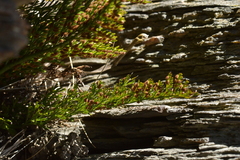 Asplenium richardii Matua Kaponga Photo: CC BY-SA, Christopher Stephens
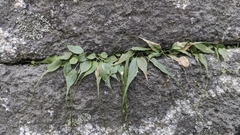 Asplenium ruprechtii Asian walking fern Photo: CC BY, Cheng-Te Hsu
 Asplenium surrogatum Photo: CC BY-SA, Poyt448, Peter Woodard
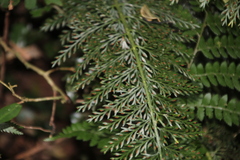 Asplenium theciferum Carrot Fern Photo: CC0, Erwin Sieben
 Asplenium cristatum Parsley spleenwort Photo: CC BY, Zac Peterson
 Asplenium cuneifolium Serpentine black spleenwort Photo: CC BY, Erwin Gruber
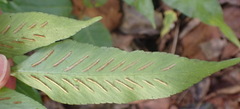 Asplenium gemmiferum Mother Fern Photo: CC BY-SA, Nicola van Berkel
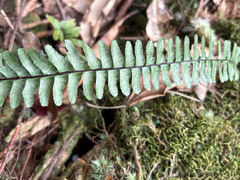 Asplenium normale Rainforest spleenwort Photo: CC BY, 黃美滿
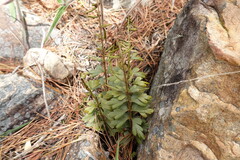 Asplenium praemorsum Egyptian Spleenwort Photo: CC BY, Eric Schmidt
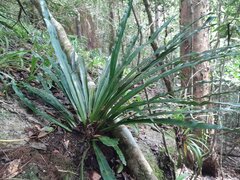 Asplenium simplicifrons Narrow-leaf bird's-nest fern Photo: CC BY-SA, Steve Fitzgerald
- no open photograph on file Asplenium actiniopteroides
- no open photograph on file Asplenium africanum
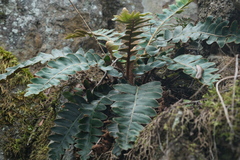 Asplenium aureum Golden Rustyback Fern Photo: CC BY, fmunoz
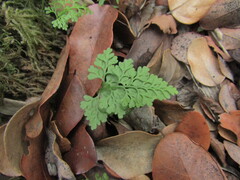 Asplenium dareoides Photo: CC BY, Bruno Avilez
- no open photograph on file Asplenium erosum Auricled spleenwort
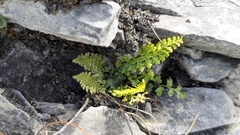 Asplenium exiguum Little spleenwort Photo: CC BY, Cheng-Te Hsu
 Asplenium harpeodes Photo: CC BY-SA, julianazuluaga-carrero
- no open photograph on file Asplenium khullarii
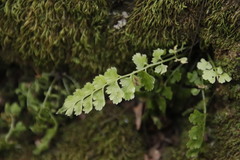 Asplenium laciniatum Photo: CC BY-SA, Tony Rebelo
- no open photograph on file Asplenium mauritiensis
 Asplenium myriophyllum Limestone spleenwort Photo: Public domain, Daderot
- no open photograph on file Asplenium nesii
- no open photograph on file Asplenium poolii
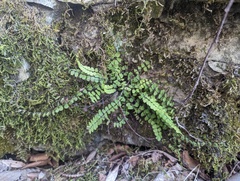 Asplenium quadrivalens Limestone maidenhair spleenwort Photo: CC BY, Ryan Sorrells
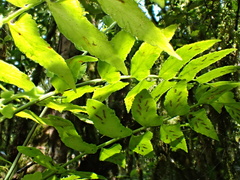 Asplenium salicifolium Willowleaf spleenwort Photo: CC0, Jean-Paul Boerekamps
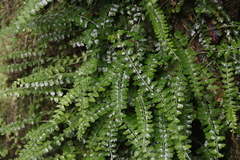 Asplenium sandersonii Sanderson's Bird's Nest Fern Photo: CC BY-SA, Tony Rebelo
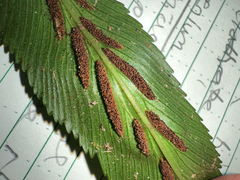 Asplenium serra Creeping spleenwort Photo: CC BY, Cy Stavros
Grown: iNaturalist's observations of the species marked captive or cultivated; "not counted" where the species list does not count it. Native ranges: Kew's World Checklist of Vascular Plants (Govaerts et al., CC BY 4.0), file of 4 June 2026. Grown: iNaturalist's observations marked captive or cultivated, counted 17 October 2026 (the species list's count). Habitat climate known: the species page has a habitat climate, read from CHELSA's monthly climate and NASA POWER's daily extremes at its well-placed wild records inside Kew's native range; each page says its own sources and days. Record low: the lowest night in NASA POWER's daily series at the habitat's typical spot, as the species page gives it, held in °C to a tenth and shown in your units; each page says its own years and day read. Counts as the reference built on 19 November 2026 holds them. The CSV holds every result, not only this page's.