Ceanothus
39 species in the reference · family Rhamnaceae · 39 with a habitat climate · 37 grown, per iNaturalist, 2 not counted
About the genus
Ceanothus is a genus of about 50–60 species of nitrogen-fixing shrubs and small trees in the buckthorn family (Rhamnaceae). Common names for members of this genus are buckbrush, California lilac, soap bush, or just ceanothus. The genus is native to North America, ranging from Canada and the United States south through Mexico to Panama, with the center of diversity in the California floristic province of the western United States and Mexico, where around ~42 species are endemic out of the roughly ~58 species in the genus. Most Ceanothus are shrubs, with some species rarely tree-like while others have a short mat-like habit. More on Wikipedia
Quoted from Wikipedia, "Ceanothus", its opening paragraph, revision 1371764446, read 2026-11-08, CC BY-SA 4.0.
Where Ceanothus is native
| California | 35 |
|---|---|
| Mexico Northwest | 16 |
| Oregon | 9 |
| Arizona | 4 |
| Mexican Pacific Is. | 4 |
| Mexico Northeast | 4 |
| Nevada | 4 |
| New Mexico | 4 |
| Texas | 4 |
| Washington | 4 |
| Colorado | 3 |
| Idaho | 3 |
Species native to each region. A species counts in every region it is native to. Native ranges: Kew's World Checklist of Vascular Plants (Govaerts et al., CC BY 4.0), file of 4 June 2026.
39 species
Ceanothus
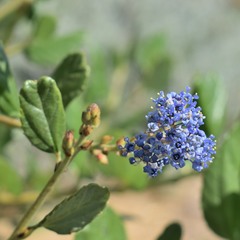 Ceanothus thyrsiflorus Blue blossom ceanothus Photo: CC0, Anne Parsons
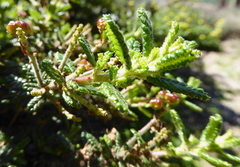 Ceanothus papillosus Wartleaf ceanothus Photo: CC BY, Rudyard
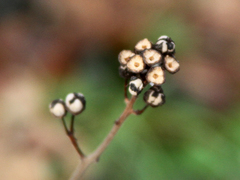 Ceanothus americanus New Jersey tea Photo: CC BY, Randy A Nonenmacher
Ceanothus impressus Santa Barbara ceanothus Photo: CC BY, Jon Sullivan
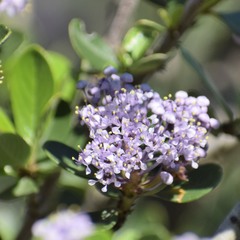 Ceanothus cuneatus Buckbrush ceanothus Photo: CC0, Anne Parsons
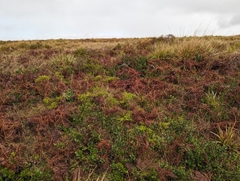 Ceanothus gloriosus Point Reyes ceanothus Photo: CC BY, Alexander Wentworth
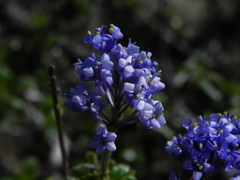 Ceanothus foliosus Wavyleaf ceanothus Photo: CC BY-SA, James C. Davis
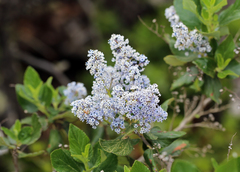 Ceanothus arboreus Felt-leaf ceanothus Photo: CC BY, Steve Matson
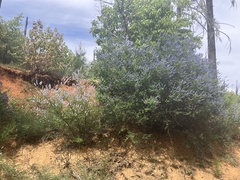 Ceanothus integerrimus Deerbrush ceanothus Photo: CC BY, Aaron Liston
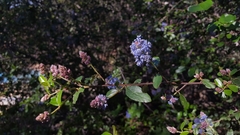 Ceanothus tomentosus Ramona Lilac Photo: CC0, Amthinkia
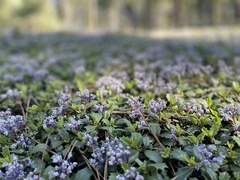 Ceanothus prostratus Mahala-mat Photo: CC BY-SA, Eli Dickerson
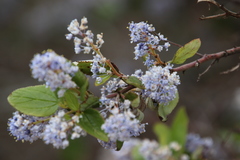 Ceanothus oliganthus Hairy ceanothus Photo: CC BY, Millie Basden
 Ceanothus velutinus Big buck-brush Photo: CC0, Patrick Sowers
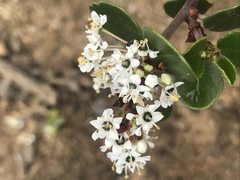 Ceanothus verrucosus Wart-stemmed ceanothus Photo: CC0, Stephanie Taylor
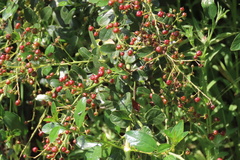 Ceanothus spinosus Greenbark ceanothus Photo: CC BY, Kat B
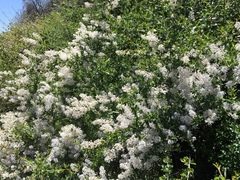 Ceanothus leucodermis Chaparral whitethorn Photo: CC BY, Casey Schreiner
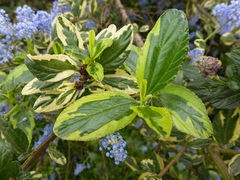 Ceanothus griseus Photo: CC BY, redrovertracy
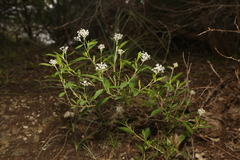 Ceanothus herbaceus Prairie redroot Photo: CC BY, Reid Hardin
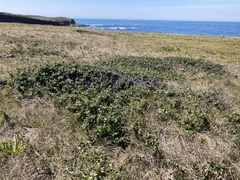 Ceanothus maritimus Maritime California-lilac Photo: CC BY, Adam J. Searcy
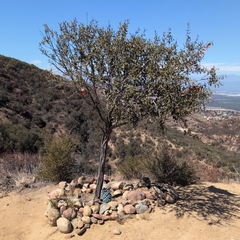 Ceanothus crassifolius Hoary-leaf ceanothus Photo: CC0, Vasily Reinkymov
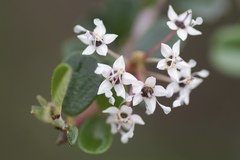 Ceanothus megacarpus Bigpod ceanothus Photo: CC0, Diego Blanco
 Ceanothus sanguineus Red-stem ceanothus Photo: CC BY, Lindsey K. Wise
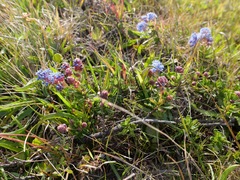 Ceanothus hearstiorum Hearst's ceanothus Photo: CC BY-SA, paulexcoff
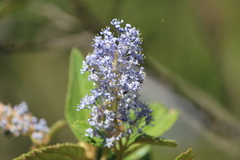 Ceanothus caeruleus Photo: CC BY, José Belem Hernández Díaz
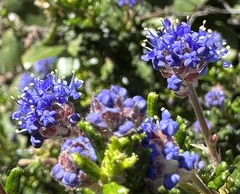 Ceanothus dentatus Sandscrub ceanothus Photo: CC BY, Henrik Kibak
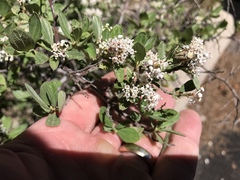 Ceanothus fendleri Fendler buckbrush Photo: CC BY, CK2AZ
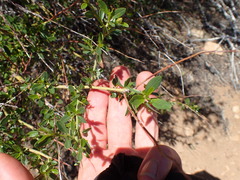 Ceanothus palmeri Palmer's ceanothus Photo: CC BY, George Williams
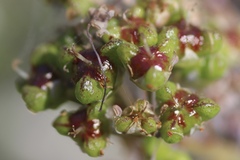 Ceanothus lemmonii Lemmon's ceanothus Photo: CC0, Diego Blanco
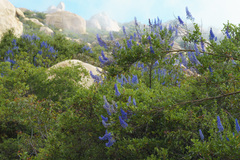 Ceanothus cyaneus Lakeside ceanothus Photo: CC BY-SA, James C. Davis
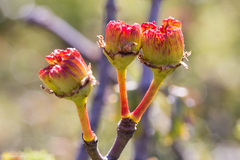 Ceanothus jepsonii Muskbrush Photo: CC BY, Ken-ichi Ueda
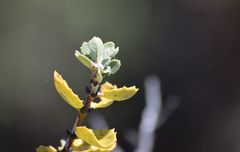 Ceanothus perplexans Cupped Leaf Ceanothus Photo: CC BY, velodrome
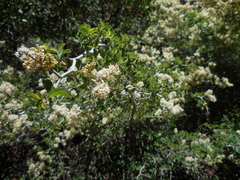 Ceanothus cordulatus Mountain whitethorn Photo: CC0, grantgrover
 Ceanothus parryi Parry's ceanothus Photo: CC0, Scott Loarie
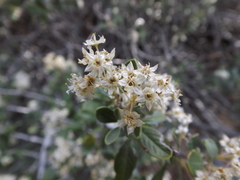 Ceanothus pauciflorus Mojave Desert Whitethorn Photo: CC BY, Amy
 Ceanothus parvifolius Littleleaf ceanothus Photo: CC BY-SA, Brian Finzel
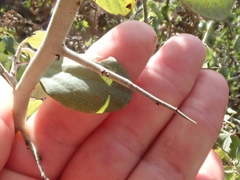 Ceanothus incanus Coast whitethorn Photo: CC BY, joergmlpts
- no open photograph on file Ceanothus × lobbianus
 Ceanothus divergens Calistoga ceanothus Photo: CC BY, Peter Warner
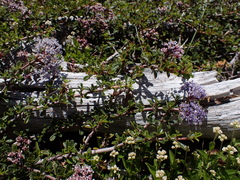 Ceanothus pumilus Siskiyou-mat Photo: CC BY, Nolan Exe
Grown: iNaturalist's observations of the species marked captive or cultivated; "not counted" where the species list does not count it. Native ranges: Kew's World Checklist of Vascular Plants (Govaerts et al., CC BY 4.0), file of 4 June 2026. Grown: iNaturalist's observations marked captive or cultivated, counted 17 October 2026 (the species list's count). Habitat climate known: the species page has a habitat climate, read from CHELSA's monthly climate and NASA POWER's daily extremes at its well-placed wild records inside Kew's native range; each page says its own sources and days. Record low: the lowest night in NASA POWER's daily series at the habitat's typical spot, as the species page gives it, held in °C to a tenth and shown in your units; each page says its own years and day read. Counts as the reference built on 19 November 2026 holds them. The CSV holds every result, not only this page's.