Frangula
11 species in the reference · family Rhamnaceae · 11 with a habitat climate · 11 grown, per iNaturalist
About the genus
Frangula is a genus of about 56 species of flowering shrubs or small trees, commonly known as buckthorn, in the buckthorn family Rhamnaceae. The common name buckthorn is also used to describe species of the closely related genus Rhamnus in the same family, and also the superficially similar but only distantly related sea-buckthorn, Hippophae rhamnoides in the Elaeagnaceae.
Quoted from Wikipedia, "Frangula", its opening paragraph, revision 1370281560, read 2026-11-08, CC BY-SA 4.0.
Where Frangula is native
| Mexico Northeast | 4 |
|---|---|
| California | 3 |
| Oregon | 3 |
| Albania | 2 |
| Arizona | 2 |
| Bulgaria | 2 |
| Colombia | 2 |
| Greece | 2 |
| Italy | 2 |
| Mexico Northwest | 2 |
| Mexico Southwest | 2 |
| Nevada | 2 |
Species native to each region. A species counts in every region it is native to. Native ranges: Kew's World Checklist of Vascular Plants (Govaerts et al., CC BY 4.0), file of 4 June 2026.
11 species
Frangula
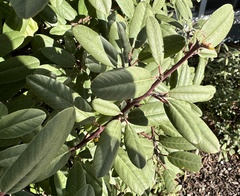 Frangula californica California buckthorn Photo: CC BY, Henrik Kibak
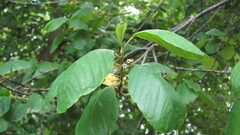 Frangula alnus Glossy buckthorn Photo: CC BY, zebedeugalinha
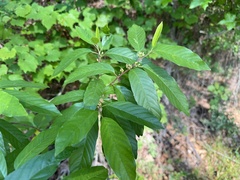 Frangula caroliniana Carolina buckthorn Photo: CC BY, Daniel Patterson
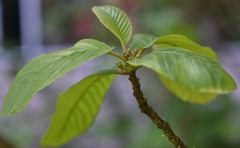 Frangula purshiana Cascara buckthorn Photo: CC BY, Gail A Baker
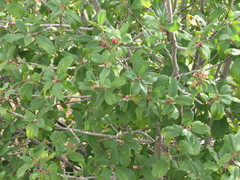 Frangula betulifolia Birch-leaf buckthorn Photo: CC BY, johnyochum
 Frangula azorica Azorean Buckthorn Photo: CC BY, Rafael Medina
 Frangula goudotiana Photo: CC BY, Nicolás Baresch Uribe
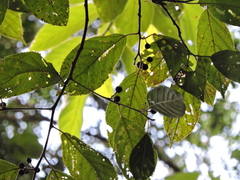 Frangula sphaerosperma West Indian buckthorn Photo: CC BY, Fabrício Mil Homens Riella
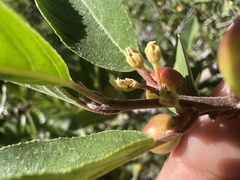 Frangula rubra Sierra coffee berry Photo: CC BY, Steve Matson
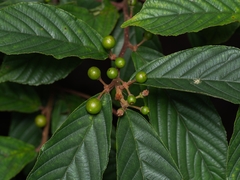 Frangula crenata Photo: CC BY, angryphyco
 Frangula rupestris Photo: CC0, viridian
Grown: iNaturalist's observations of the species marked captive or cultivated; "not counted" where the species list does not count it. Native ranges: Kew's World Checklist of Vascular Plants (Govaerts et al., CC BY 4.0), file of 4 June 2026. Grown: iNaturalist's observations marked captive or cultivated, counted 17 October 2026 (the species list's count). Habitat climate known: the species page has a habitat climate, read from CHELSA's monthly climate and NASA POWER's daily extremes at its well-placed wild records inside Kew's native range; each page says its own sources and days. Record low: the lowest night in NASA POWER's daily series at the habitat's typical spot, as the species page gives it, held in °C to a tenth and shown in your units; each page says its own years and day read. Counts as the reference built on 19 November 2026 holds them. The CSV holds every result, not only this page's.