Fritillaria
118 species in the reference · family Liliaceae · 77 with a habitat climate · 66 grown, per iNaturalist, 52 not counted
About the genus
Fritillaria (fritillaries) is a genus of spring flowering herbaceous bulbous perennial plants in the lily family (Liliaceae). The type species, Fritillaria meleagris, was first described in Europe in 1571, while other species from the Middle East and Asia were also introduced to Europe at that time. The genus has about 130–140 species divided among eight subgenera. The flowers are usually solitary, nodding and bell-shaped with bulbs that have fleshy scales, resembling those of lilies. More on Wikipedia
Quoted from Wikipedia, "Fritillaria", its opening paragraph, revision 1373504011, read 2026-11-08, CC BY-SA 4.0.
Where Fritillaria is native
| Turkey | 38 |
|---|---|
| Iran | 19 |
| California | 17 |
| Greece | 14 |
| Transcaucasus | 10 |
| Lebanon-Syria | 9 |
| Oregon | 9 |
| Kazakhstan | 8 |
| Iraq | 7 |
| North Caucasus | 7 |
| Tadzhikistan | 7 |
| Uzbekistan | 7 |
Species native to each region. A species counts in every region it is native to. Native ranges: Kew's World Checklist of Vascular Plants (Govaerts et al., CC BY 4.0), file of 4 June 2026.
118 species
Fritillaria
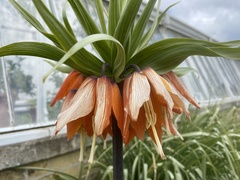 Fritillaria imperialis Imperial fritillary Photo: CC BY, John Witton
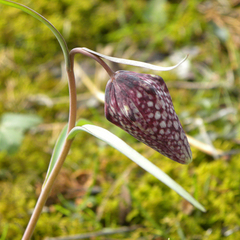 Fritillaria meleagris Fritillary Photo: CC BY, M. Whitson
 Fritillaria persica Persian fritillary Photo: CC0, Dan Horowitz
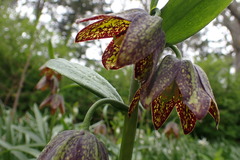 Fritillaria affinis Checker lily Photo: CC BY, Noah How
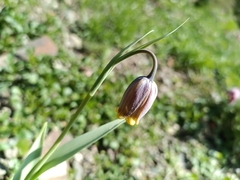 Fritillaria uva-vulpis Fox's grape fritillary Photo: CC BY, Michal Honskus
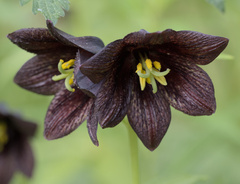 Fritillaria camschatcensis Kamchatka fritillary Photo: CC BY, abogomazova
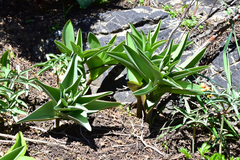 Fritillaria sewerzowii Photo: CC BY-SA, Kudaibergen Amirekul
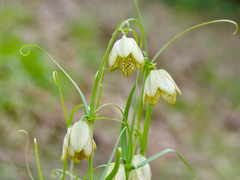 Fritillaria thunbergii Zhejiang fritillary Photo: CC BY, りなべる
 Fritillaria michailovskyi Photo: Public domain, Borealis55
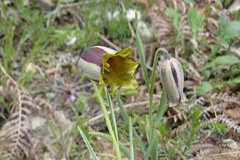 Fritillaria acmopetala Photo: CC BY, Elıas Zıade
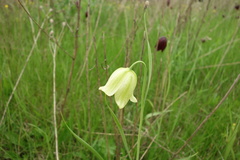 Fritillaria meleagroides Photo: CC BY, Aleksei Baushev
 Fritillaria pallidiflora Sinkiang fritillaria Photo: CC BY-SA, aha
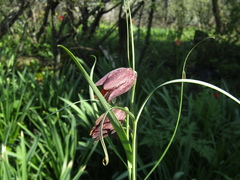 Fritillaria ruthenica Lesser Altaic Fritillary Photo: CC BY, Oleksandr Shynder
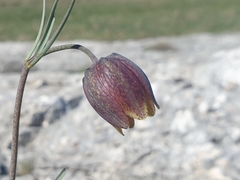 Fritillaria montana Photo: CC BY, Clément Maouche
 Fritillaria raddeana Photo: Public domain, Daderot
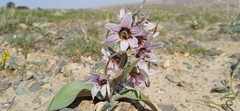 Fritillaria stenanthera Photo: CC BY, Igor Karyakin
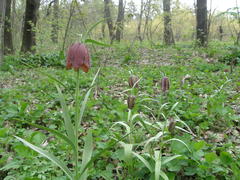 Fritillaria grandiflora Big-flowered Fritillary Photo: CC BY, Oleksandr Shynder
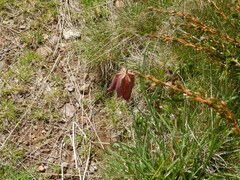 Fritillaria pyrenaica Pyrenean snake's-head Photo: CC0, pete_gateley
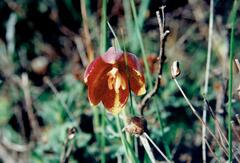 Fritillaria lusitanica Iberian Fritillary Photo: CC BY, zebedeugalinha
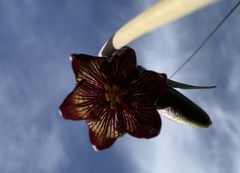 Fritillaria biflora Chocolate lily Photo: CC BY, Skyler K
 Fritillaria crassifolia Photo: CC BY-SA, Ettrig
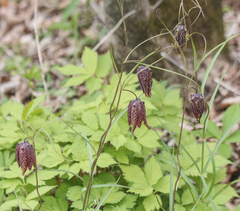 Fritillaria usuriensis Ussuri fritillary Photo: CC BY, Andrew Bazdyrev
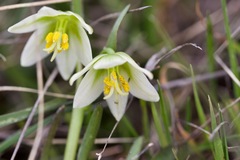 Fritillaria liliacea Fragrant fritillary Photo: CC BY, John Hibbard
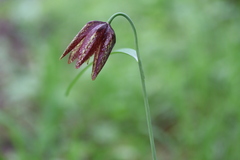 Fritillaria maximowiczii East Asian fritillary Photo: CC BY, Vsevolod Rudyi
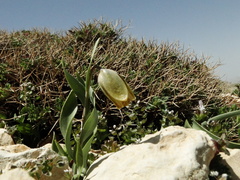 Fritillaria amana Photo: CC BY, Moustapha Itani
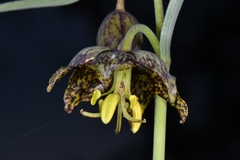 Fritillaria atropurpurea Spotted fritillary Photo: CC BY, Darrin Gobble
 Fritillaria collina Photo: CC BY, Дауд Арсанукаев
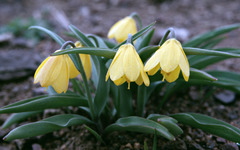 Fritillaria pudica Yellow fritillary Photo: CC BY, Tuoichen
- no open photograph on file Fritillaria lagodechiana
- no open photograph on file Fritillaria davisii
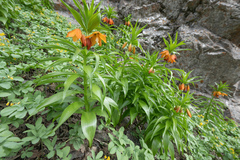 Fritillaria eduardii Photo: CC BY, Morten Ross
- no open photograph on file Fritillaria anhuiensis
 Fritillaria latifolia Photo: CC BY, Борис Георги
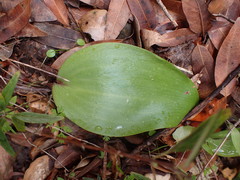 Fritillaria ojaiensis Ojai fritillary Photo: CC BY, George Williams
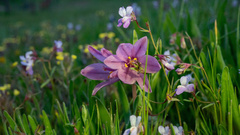 Fritillaria pluriflora Adobe-lily Photo: CC BY, wonton_soup
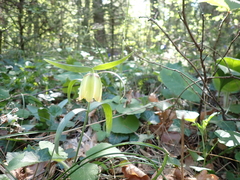 Fritillaria pontica Photo: CC BY, Skjold Søndergaard
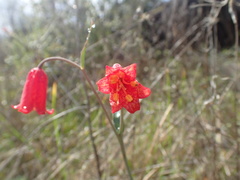 Fritillaria recurva Scarlet fritillary Photo: CC0, Scott Yarger
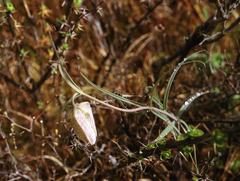 Fritillaria verticillata Photo: CC BY, Oleg Kosterin
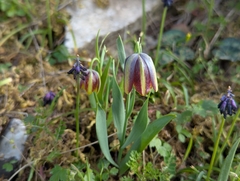 Fritillaria graeca Greek Fritillary Photo: CC BY, Elias
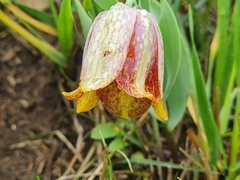 Fritillaria kurdica Photo: CC BY, Mohammad Sohrabi
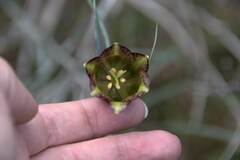 Fritillaria messanensis Photo: CC BY, Felicia Seichter
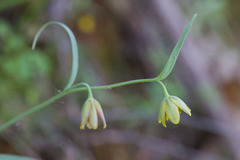 Fritillaria micrantha Brown fritillary Photo: CC BY, Arvel Hernandez
 Fritillaria orientalis Slender Fritillary Photo: CC BY-SA, Franco christophe
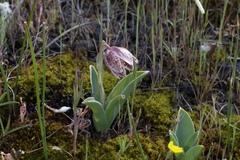 Fritillaria purdyi Purdy's fritillary Photo: CC BY, Arvel Hernandez
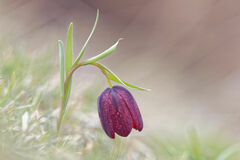 Fritillaria tubaeformis Tube Checkered Lily Photo: CC0, Thierry Arbault
- no open photograph on file Fritillaria alfredae
- no open photograph on file Fritillaria armena
 Fritillaria aurea Photo: CC0, Jean-Paul Boerekamps
Grown: iNaturalist's observations of the species marked captive or cultivated; "not counted" where the species list does not count it. Native ranges: Kew's World Checklist of Vascular Plants (Govaerts et al., CC BY 4.0), file of 4 June 2026. Grown: iNaturalist's observations marked captive or cultivated, counted 17 October 2026 (the species list's count). Habitat climate known: the species page has a habitat climate, read from CHELSA's monthly climate and NASA POWER's daily extremes at its well-placed wild records inside Kew's native range; each page says its own sources and days. Record low: the lowest night in NASA POWER's daily series at the habitat's typical spot, as the species page gives it, held in °C to a tenth and shown in your units; each page says its own years and day read. Counts as the reference built on 19 November 2026 holds them. The CSV holds every result, not only this page's.