Glycine
5 species in the reference · family Fabaceae · 5 with a habitat climate · 5 grown, per iNaturalist
About the genus
Glycine (symbol Gly or G) is an organic compound with the formula C2H5NO2, and is the simplest stable amino acid, distinguished by having a single hydrogen atom as its side chain. As one of the 20 proteinogenic amino acids, glycine is a fundamental building block of proteins in all life and is encoded by all codons starting with GG (GGU, GGC, GGA, and GGG). Because of its minimal side chain, it is the only common amino acid that is not chiral, meaning it is superimposable on its mirror image.
Quoted from Wikipedia, "Glycine", its opening paragraph, revision 1380147725, read 2026-11-08, CC BY-SA 4.0.
Where Glycine is native
| New South Wales | 4 |
|---|---|
| Queensland | 4 |
| China Southeast | 3 |
| Northern Territory | 3 |
| Taiwan | 3 |
| Victoria | 3 |
| Western Australia | 3 |
| Nansei-shoto | 2 |
| New Caledonia | 2 |
| South Australia | 2 |
| Amur | 1 |
| China North-Central | 1 |
Species native to each region. A species counts in every region it is native to. Native ranges: Kew's World Checklist of Vascular Plants (Govaerts et al., CC BY 4.0), file of 4 June 2026.
5 species
Glycine
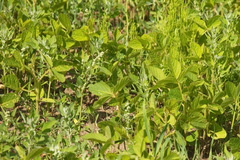 Glycine max Soya-bean Photo: CC BY, Вячеслав Юсупов
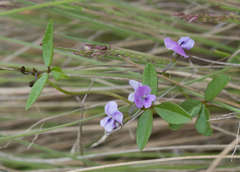 Glycine clandestina Twining glycine Photo: CC BY, Chris Clarke
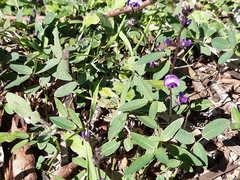 Glycine tabacina Glycine-pea Photo: CC BY, Matthew Lincoln
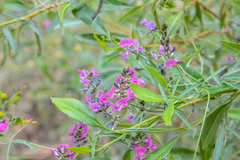 Glycine canescens Silky glycine Photo: CC0, wilmotsenaratne
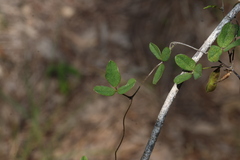 Glycine tomentella Peak Downs-clover Photo: CC BY-SA, Greg Tasney
Grown: iNaturalist's observations of the species marked captive or cultivated; "not counted" where the species list does not count it. Native ranges: Kew's World Checklist of Vascular Plants (Govaerts et al., CC BY 4.0), file of 4 June 2026. Grown: iNaturalist's observations marked captive or cultivated, counted 17 October 2026 (the species list's count). Habitat climate known: the species page has a habitat climate, read from CHELSA's monthly climate and NASA POWER's daily extremes at its well-placed wild records inside Kew's native range; each page says its own sources and days. Record low: the lowest night in NASA POWER's daily series at the habitat's typical spot, as the species page gives it, held in °C to a tenth and shown in your units; each page says its own years and day read. Counts as the reference built on 19 November 2026 holds them. The CSV holds every result, not only this page's.