Helianthus
45 species in the reference · family Asteraceae · 43 with a habitat climate · 45 grown, per iNaturalist
About the genus
Helianthus is a genus comprising around 50 species of annual and perennial flowering plants in the daisy family Asteraceae commonly known as sunflowers. The species of Helianthus are native to North America. The best-known species is the common sunflower (Helianthus annuus). This and other species, notably Jerusalem artichoke (H. tuberosus), are cultivated in temperate regions and some tropical regions, as food crops for humans, cattle, and poultry, and as ornamental plants. More on Wikipedia
Quoted from Wikipedia, "Helianthus", its opening paragraph, revision 1384141930, read 2026-11-08, CC BY-SA 4.0.
Where Helianthus is native
| Georgia | 23 |
|---|---|
| North Carolina | 22 |
| Alabama | 21 |
| South Carolina | 21 |
| Texas | 19 |
| Tennessee | 18 |
| Kentucky | 17 |
| Mississippi | 17 |
| Virginia | 17 |
| Florida | 16 |
| Illinois | 16 |
| Iowa | 16 |
Species native to each region. A species counts in every region it is native to. Native ranges: Kew's World Checklist of Vascular Plants (Govaerts et al., CC BY 4.0), file of 4 June 2026.
45 species
Helianthus
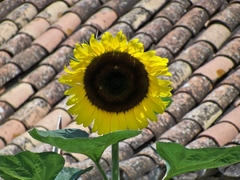 Helianthus annuus Sunflower Photo: CC BY-SA, Daniel Capilla
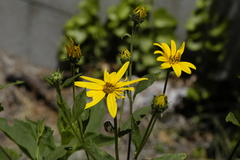 Helianthus tuberosus Jerusalem artichoke Photo: CC BY, Elliott Gordon
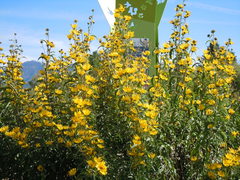 Helianthus maximiliani Maximilian sunflower Photo: CC BY, Matt Lavin
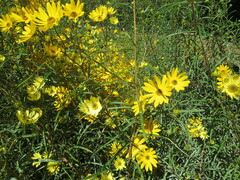 Helianthus angustifolius Swamp sunflower Photo: CC0, Nonbinary-Naturalist
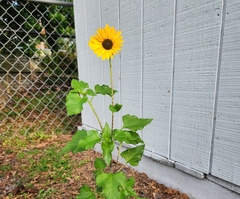 Helianthus debilis Cucumberleaf sunflower Photo: CC BY, Benjamin Tomerlin
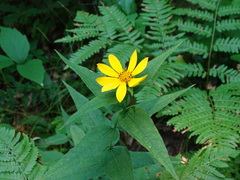 Helianthus divaricatus Woodland sunflower Photo: CC0, Reuven Martin
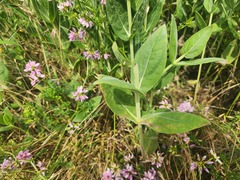 Helianthus mollis Ashy sunflower Photo: CC BY, Summit Metro Parks
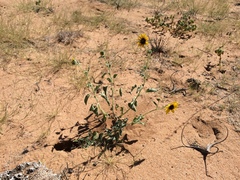 Helianthus petiolaris Lesser sunflower Photo: CC0, Cecelia Alexander
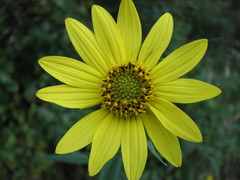 Helianthus giganteus Giant sunflower Photo: CC BY-SA, Chris Hoess
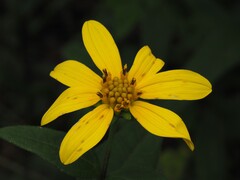 Helianthus strumosus Pale-leaved sunflower Photo: CC BY, carter
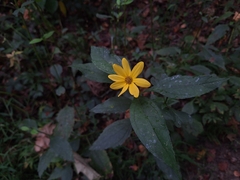 Helianthus decapetalus Thinleaf sunflower Photo: CC BY, cigazze
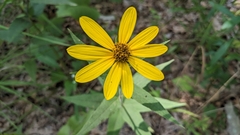 Helianthus hirsutus Hairy sunflower Photo: CC BY, Peyton Phelps
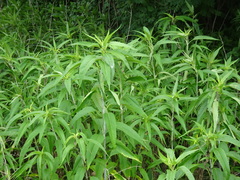 Helianthus grosseserratus Sawtooth sunflower Photo: CC BY, Thomas Koffel
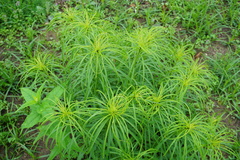 Helianthus salicifolius Willowleaf sunflower Photo: CC0, Nizar Jibrin
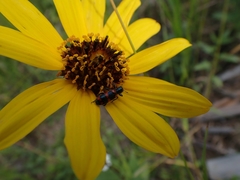 Helianthus pauciflorus Stiff sunflower Photo: CC BY, Mary Krieger
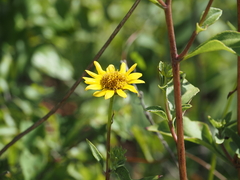 Helianthus occidentalis Fewleaf sunflower Photo: CC BY, carter
 Helianthus californicus California sunflower Photo: CC BY, joergmlpts
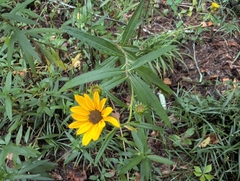 Helianthus simulans Imitative sunflower Photo: CC0, Elizabeth Johnson
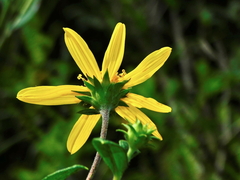 Helianthus schweinitzii Schweinitz's sunflower Photo: CC BY, Michael J. Papay
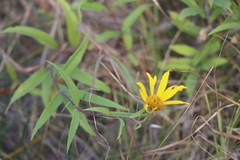 Helianthus nuttallii Nuttall's sunflower Photo: CC BY, Mary Krieger
 Helianthus argophyllus Silverleaf sunflower Photo: CC0, Tom Gulya
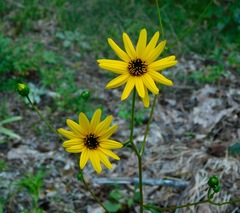 Helianthus atrorubens Purple-disk sunflower Photo: CC BY, Michael J. Papay
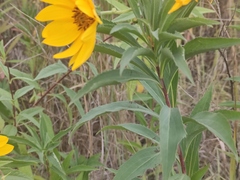 Helianthus × laetiflorus Perennial sunflower Photo: CC BY, Augustin Soulard
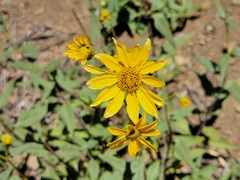 Helianthus gracilentus Slender sunflower Photo: CC0, Theo Summer
 Helianthus microcephalus Small woodland sunflower Photo: CC BY, Michael J. Papay
 Helianthus pumilus Dwarf sunflower Photo: CC0, Tom Gulya
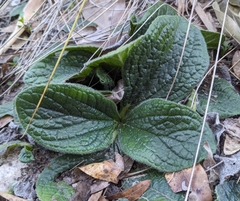 Helianthus radula Rayless sunflower Photo: CC0, natalie
 Helianthus verticillatus Whorled sunflower Photo: CC BY, Michael Ellis
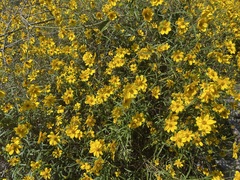 Helianthus porteri Porter's sunflower Photo: CC BY-SA, lejones417
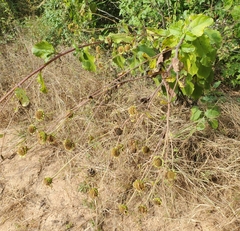 Helianthus silphioides Odorous sunflower Photo: CC BY, hr_dragonfly
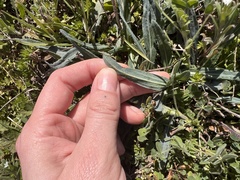 Helianthus ciliaris Texas blueweed Photo: CC BY, Frankie Simmons
 Helianthus niveus Snowy sunflower Photo: CC BY, Isaac Krone
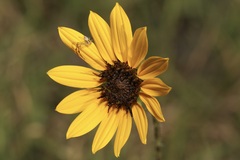 Helianthus praecox Texas sunflower Photo: CC BY, Reid Hardin
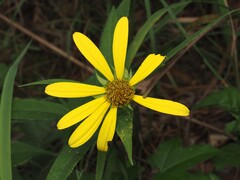 Helianthus resinosus Resin-dot sunflower Photo: CC BY, carter
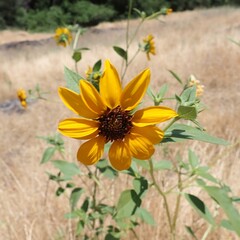 Helianthus bolanderi Bolander's sunflower Photo: CC BY, Larry Jensen
 Helianthus carnosus Fleshy sunflower Photo: CC0, Tom Gulya
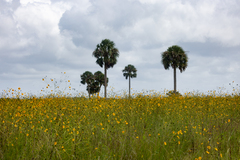 Helianthus agrestis Rural sunflower Photo: CC BY, Ryan F. Mandelbaum
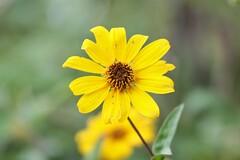 Helianthus inexpectatus Newhall sunflower Photo: CC BY, nmoorhatch
 Helianthus anomalus Sand sunflower Photo: CC BY, Patrick Cox
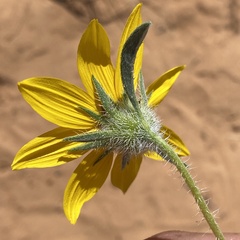 Helianthus deserticola Desert sunflower Photo: CC BY, Elliott Gordon
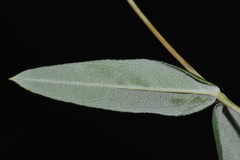 Helianthus eggertii Eggert's sunflower Photo: CC BY-SA, Brian Finzel
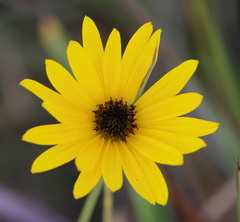 Helianthus heterophyllus Variableleaf sunflower Photo: CC BY, Lauren McLaurin
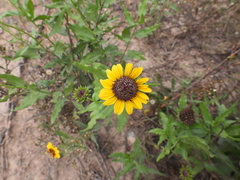 Helianthus laciniatus Alkali sunflower Photo: CC BY-SA, Leticia Jiménez Hernández
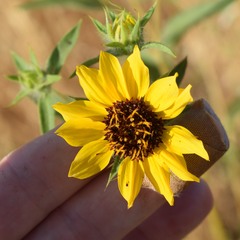 Helianthus exilis Serpentine sunflower Photo: CC0, Anne Parsons
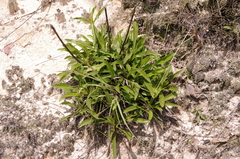 Helianthus longifolius Longleaf sunflower Photo: CC BY, Eric Knight
Grown: iNaturalist's observations of the species marked captive or cultivated; "not counted" where the species list does not count it. Native ranges: Kew's World Checklist of Vascular Plants (Govaerts et al., CC BY 4.0), file of 4 June 2026. Grown: iNaturalist's observations marked captive or cultivated, counted 17 October 2026 (the species list's count). Habitat climate known: the species page has a habitat climate, read from CHELSA's monthly climate and NASA POWER's daily extremes at its well-placed wild records inside Kew's native range; each page says its own sources and days. Record low: the lowest night in NASA POWER's daily series at the habitat's typical spot, as the species page gives it, held in °C to a tenth and shown in your units; each page says its own years and day read. Counts as the reference built on 19 November 2026 holds them. The CSV holds every result, not only this page's.