Solanum
165 species in the reference · family Solanaceae · 155 with a habitat climate · 153 grown, per iNaturalist, 12 not counted
About the genus
Solanum is a large and diverse genus of flowering plants, which include three food crops of high economic importance: the potato, the tomato and the eggplant (aubergine, brinjal). It is the largest genus in the nightshade family Solanaceae, comprising around 1,500 species. It also contains the so-called horse nettles (unrelated to the genus of true nettles, Urtica), as well as numerous plants cultivated for their ornamental flowers and fruit.
Quoted from Wikipedia, "Solanum", its opening paragraph, revision 1376636869, read 2026-11-08, CC BY-SA 4.0.
Where Solanum is native
| Peru | 51 |
|---|---|
| Bolivia | 42 |
| Colombia | 39 |
| Ecuador | 39 |
| Mexico Northeast | 35 |
| Mexico Southwest | 30 |
| Mexico Gulf | 29 |
| Argentina Northwest | 28 |
| Mexico Central | 28 |
| Mexico Southeast | 27 |
| Argentina Northeast | 25 |
| Brazil Southeast | 24 |
Species native to each region. A species counts in every region it is native to. Native ranges: Kew's World Checklist of Vascular Plants (Govaerts et al., CC BY 4.0), file of 4 June 2026.
165 species
Solanum
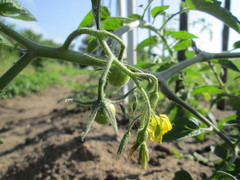 Solanum lycopersicum Tomato Photo: CC BY-SA, Andreas Rockstein
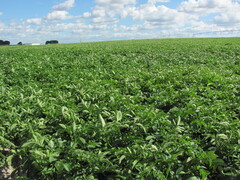 Solanum tuberosum Potato Photo: CC BY, zebedeugalinha
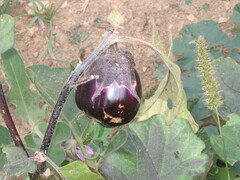 Solanum melongena Eggplant Photo: CC BY, zebedeugalinha
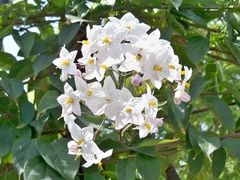 Solanum laxum Jasmine nightshade Photo: CC BY-SA, Daniel Capilla
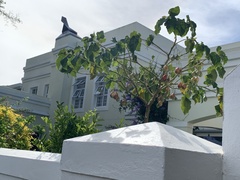 Solanum betaceum Tree tomato Photo: CC BY, Dave Richardson
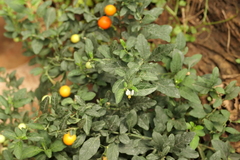 Solanum pseudocapsicum Jerusalem cherry Photo: CC BY-SA, Dinesh Valke
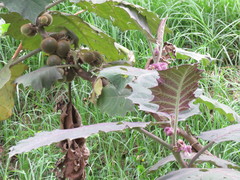 Solanum quitoense Quito-orange Photo: CC BY, Juan Carlos Caicedo Hernández
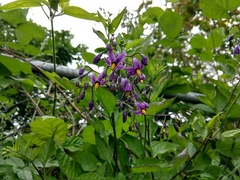 Solanum dulcamara Woody nightshade Photo: CC0, Alexie
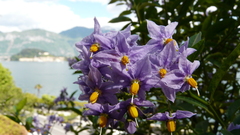 Solanum crispum Chilean nightshade Photo: CC BY, Bob
 Solanum muricatum Peruvian pepino Photo: CC BY, Oleksandr Shynder
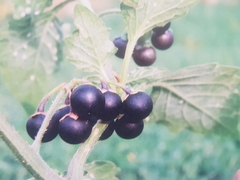 Solanum nigrum Black nightshade Photo: CC BY, Yoav Daniel Bar-Ness
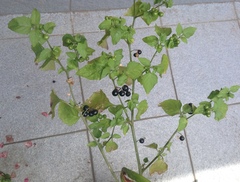 Solanum americanum American black nightshade Photo: CC BY, Diego López
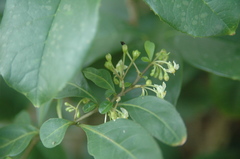 Solanum diphyllum Twoleaf nightshade Photo: CC0, 哈爸
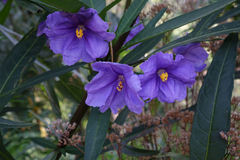 Solanum laciniatum Kangaroo-apple Photo: CC BY, John Barkla
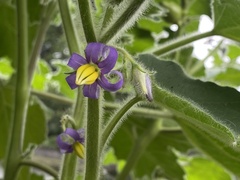 Solanum mammosum Nipplefruit Photo: CC0, 古淑玲
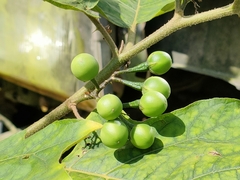 Solanum torvum Turkeyberry Photo: CC BY-SA, Ong Jyh Seng
 Solanum aethiopicum Chinese scarlet eggplant Photo: CC BY, Diogo Luiz
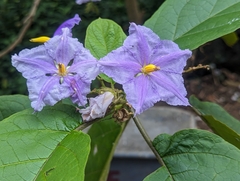 Solanum wrightii Brazilian potato-tree Photo: CC BY, Alan Rockefeller
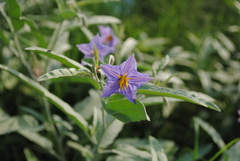 Solanum elaeagnifolium Bull-nettle Photo: CC BY, Bere Mata
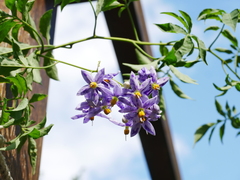 Solanum seaforthianum Brazilian nightshade Photo: CC BY, Jacy Chen
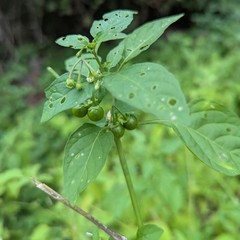 Solanum emulans Eastern black nightshade Photo: CC BY-SA, KB DiAngelo
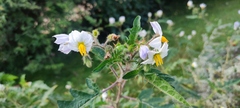 Solanum sisymbriifolium Red buffalo-bur Photo: CC BY, fmunoz
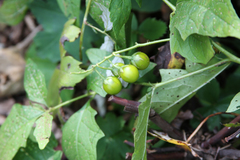 Solanum carolinense Horse-nettle Photo: CC BY, Randy A Nonenmacher
 Solanum mauritianum Earleaf nightshade Photo: CC BY-SA, Dinesh Valke
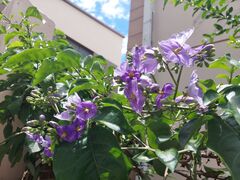 Solanum wendlandii Giant potato-creeper Photo: CC0, Mateo Tapia
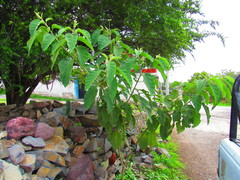 Solanum erianthum Potato-tree Photo: CC BY-SA, Oscar Alejandro Morales Juárez
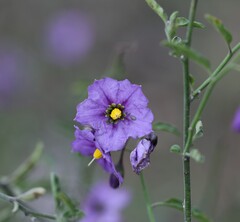 Solanum umbelliferum Bluewitch nightshade Photo: CC BY, nmoorhatch
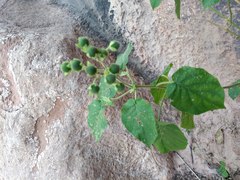 Solanum abutiloides Dwarf Tamarillo Photo: CC0, Naturalist Tours
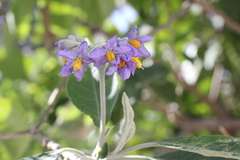 Solanum granulosoleprosum Photo: CC BY, Romi Galeota Lencina
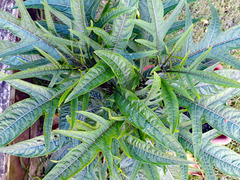 Solanum aviculare New Zealand nightshade Photo: CC0, Peter de Lange
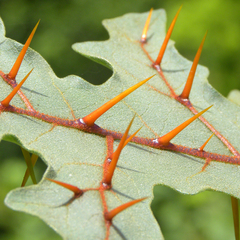 Solanum pyracanthos Porcupine-tomato Photo: CC BY, M. Whitson
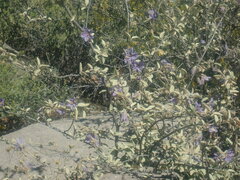 Solanum hindsianum Hinds' nightshade Photo: CC0, Lynn Harper
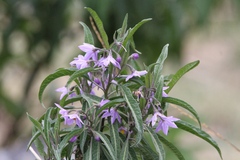 Solanum nitidum Photo: CC BY, capacoscar
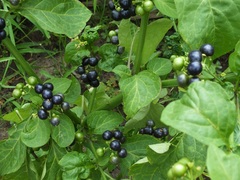 Solanum scabrum Garden huckleberry Photo: CC BY, Иван Пристрем
 Solanum macrocarpon African eggplant Photo: CC BY-SA, Marco Schmidt
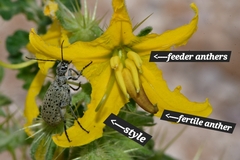 Solanum rostratum Buffalo bur Photo: CC BY, Joey Santore
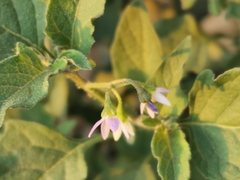 Solanum nigrescens Divine nightshade Photo: CC BY-SA, Juan Carlos Pérez Magaña
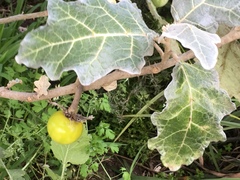 Solanum marginatum Purple African nightshade Photo: CC0, Al Kordesch
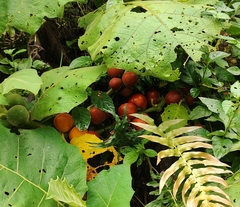 Solanum sessiliflorum Cocona Photo: CC BY, Cajá-manga
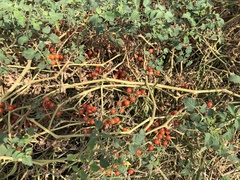 Solanum pimpinellifolium Currant tomato Photo: CC BY, Antonio W. Salas
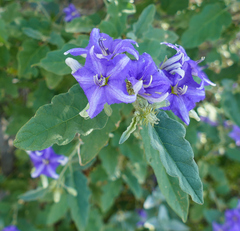 Solanum houstonii Photo: CC BY, Wendy McCrady
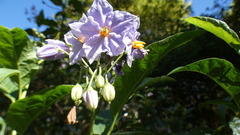 Solanum bonariense Photo: CC BY, Bob
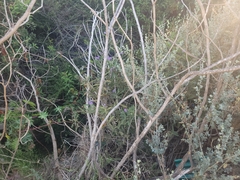 Solanum lanceolatum Orangeberry nightshade Photo: CC0, Alexander Antero Peñaflor
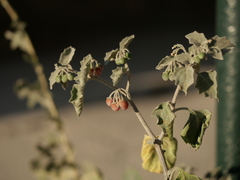 Solanum villosum Red nightshade Photo: CC BY, Alexis Tinker-Tsavalas
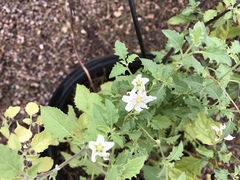 Solanum douglasii Greenspot nightshade Photo: CC BY, CK2AZ
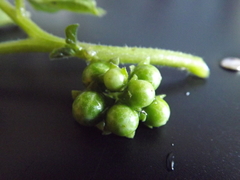 Solanum nitidibaccatum Hairy nightshade Photo: CC0, Силаева Татьяна Борисовна
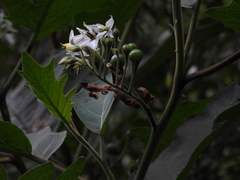 Solanum stellatiglandulosum Photo: CC BY, Carlos Torrente
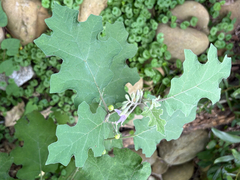 Solanum violaceum Photo: CC BY, 黃美滿
Grown: iNaturalist's observations of the species marked captive or cultivated; "not counted" where the species list does not count it. Native ranges: Kew's World Checklist of Vascular Plants (Govaerts et al., CC BY 4.0), file of 4 June 2026. Grown: iNaturalist's observations marked captive or cultivated, counted 17 October 2026 (the species list's count). Habitat climate known: the species page has a habitat climate, read from CHELSA's monthly climate and NASA POWER's daily extremes at its well-placed wild records inside Kew's native range; each page says its own sources and days. Record low: the lowest night in NASA POWER's daily series at the habitat's typical spot, as the species page gives it, held in °C to a tenth and shown in your units; each page says its own years and day read. Counts as the reference built on 19 November 2026 holds them. The CSV holds every result, not only this page's.