Spondias
7 species in the reference · family Anacardiaceae · 7 with a habitat climate · 7 grown, per iNaturalist
About the genus
Spondias is a genus of flowering plants in the cashew family, Anacardiaceae. The genus consists of 18 described species, eleven of which are native to the tropical Americas, six to Asia and one to Madagascar. They are commonly named hog plums, Spanish plums, Ciruelas in Cuba, libas in Bikol and in some cases golden apples for their brightly colored fruit which resemble an apple or small plum at a casual glance. They are only distantly related to apple and plum trees, however. More on Wikipedia
Quoted from Wikipedia, "Spondias", its opening paragraph, revision 1343767662, read 2026-11-08, CC BY-SA 4.0.
Where Spondias is native
| Brazil Northeast | 4 |
|---|---|
| Brazil Southeast | 3 |
| Belize | 2 |
| Colombia | 2 |
| Costa Rica | 2 |
| El Salvador | 2 |
| Guatemala | 2 |
| Honduras | 2 |
| Jamaica | 2 |
| Maluku | 2 |
| Mexico Central | 2 |
| Mexico Gulf | 2 |
Species native to each region. A species counts in every region it is native to. Native ranges: Kew's World Checklist of Vascular Plants (Govaerts et al., CC BY 4.0), file of 4 June 2026.
7 species
Spondias
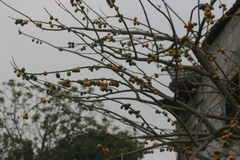 Spondias purpurea Purple mombin Photo: CC BY-SA, Obed Palagot Echavarria
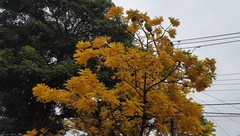 Spondias dulcis Ambarella Photo: CC BY-SA, alessandradalia
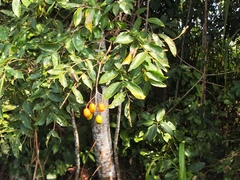 Spondias mombin Hog plum Photo: CC BY, Silvia Ten
 Spondias bahiensis Photo: CC BY-SA, cristianol1456
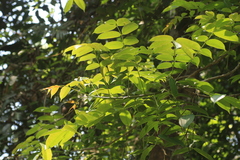 Spondias pinnata Common hog-plum Photo: CC BY, madhavan a.p
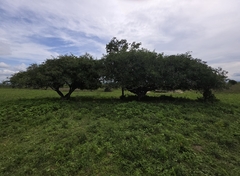 Spondias tuberosa Hog-plum Photo: CC BY, Marcello Mastroianni Albuquerque Araújo
 Spondias venulosa Photo: CC BY-SA, Steve Fitzgerald
Grown: iNaturalist's observations of the species marked captive or cultivated; "not counted" where the species list does not count it. Native ranges: Kew's World Checklist of Vascular Plants (Govaerts et al., CC BY 4.0), file of 4 June 2026. Grown: iNaturalist's observations marked captive or cultivated, counted 17 October 2026 (the species list's count). Habitat climate known: the species page has a habitat climate, read from CHELSA's monthly climate and NASA POWER's daily extremes at its well-placed wild records inside Kew's native range; each page says its own sources and days. Record low: the lowest night in NASA POWER's daily series at the habitat's typical spot, as the species page gives it, held in °C to a tenth and shown in your units; each page says its own years and day read. Counts as the reference built on 19 November 2026 holds them. The CSV holds every result, not only this page's.