Tulipa
52 species in the reference · family Liliaceae · 40 with a habitat climate · 39 grown, per iNaturalist, 13 not counted
About the genus
Tulips are spring-blooming perennial herbaceous bulbiferous geophytes in the Tulipa genus. Their flowers are usually large, showy, and brightly coloured, generally red, orange, pink, yellow, or white. They often have a different coloured blotch at the base of the tepals, internally. Because of a degree of variability within the populations and a long history of cultivation, classification has been complex and controversial. More on Wikipedia
Quoted from Wikipedia, "Tulip", its opening paragraph, revision 1382805293, read 2026-11-08, CC BY-SA 4.0.
Where Tulipa is native
| Kazakhstan | 20 |
|---|---|
| Kirgizistan | 19 |
| Uzbekistan | 19 |
| Tadzhikistan | 16 |
| Iran | 15 |
| Turkey | 14 |
| Xinjiang | 11 |
| Afghanistan | 9 |
| Transcaucasus | 7 |
| Lebanon-Syria | 6 |
| Greece | 5 |
| North Caucasus | 5 |
Species native to each region. A species counts in every region it is native to. Native ranges: Kew's World Checklist of Vascular Plants (Govaerts et al., CC BY 4.0), file of 4 June 2026.
52 species
Tulipa
 Tulipa gesneriana Garden tulip Photo: CC BY, kirinzi
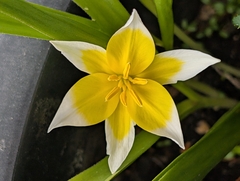 Tulipa tarda Photo: CC BY-SA, Dolores Portalatin
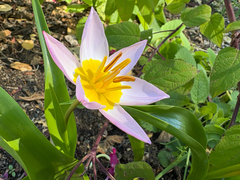 Tulipa saxatilis Cretan Tulip Photo: CC BY, Annette Herz
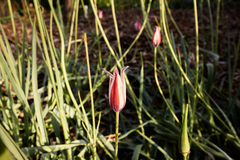 Tulipa clusiana Lady tulip Photo: CC BY, average_plant_enjoyer
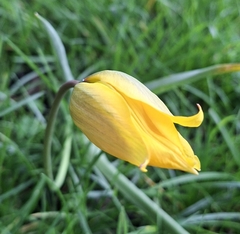 Tulipa sylvestris Wild tulip Photo: CC BY, Jochen Essig
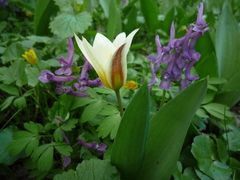 Tulipa kaufmanniana Water-lily tulip Photo: CC BY, Oleksandr Shynder
 Tulipa bifloriformis Photo: CC BY, Oleksandr Shynder
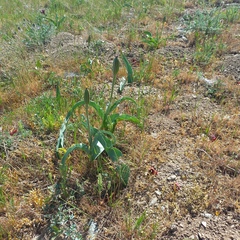 Tulipa greigii Photo: CC BY, Alexander Dubynin
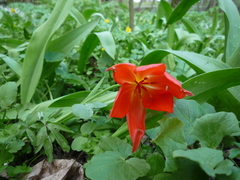 Tulipa praestans Photo: CC BY, Oleksandr Shynder
 Tulipa humilis Crocus tulip Photo: CC BY, Oleksandr Shynder
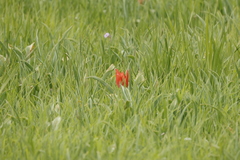 Tulipa agenensis Eyed Tulip Photo: CC0, Philip Precey
 Tulipa linifolia Bokhara Tulip Photo: CC BY-SA, Ghislain118…
 Tulipa turkestanica Photo: CC0, John Sankey
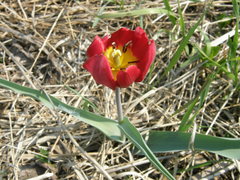 Tulipa suaveolens Duc van Thol-Tulip Photo: CC BY, Oleksandr Shynder
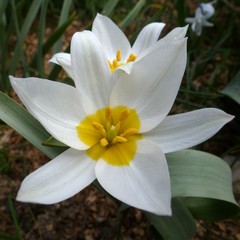 Tulipa biflora Biflora tulip Photo: CC BY, Юрий Данилевский (Yuriy Danilevsky)
 Tulipa fosteriana Photo: CC BY, Oleksandr Shynder
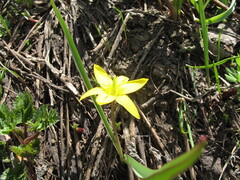 Tulipa dasystemon Photo: CC BY, Artem Abdukakharov
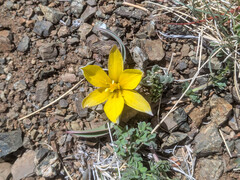 Tulipa uniflora Photo: CC BY, Tom Field
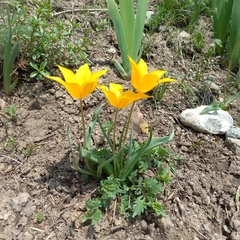 Tulipa ostrowskiana Photo: CC BY, Alexander Dubynin
 Tulipa sprengeri Photo: CC BY, Oleksandr Shynder
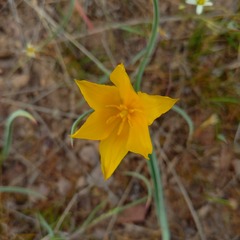 Tulipa kolpakowskiana Photo: CC BY, Alexander Dubynin
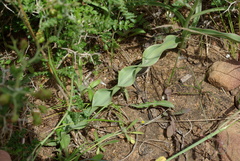 Tulipa orphanidea Orange Wild Tulip Photo: CC BY, gwynmwilliams
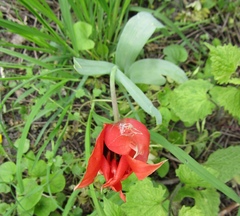 Tulipa undulatifolia Photo: CC BY, Oleksandr Shynder
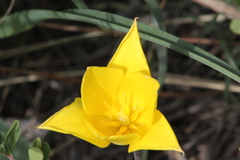 Tulipa altaica Photo: CC BY, Maxim Shashkov
 Tulipa hungarica Photo: CC BY, Motohiro Sunouchi
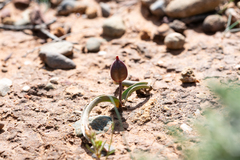 Tulipa cretica Cretan Tulip Photo: CC BY, Eleftherios Katsillis
- no open photograph on file Tulipa heweri
- no open photograph on file Tulipa scharipovii
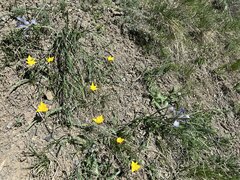 Tulipa tetraphylla Photo: CC BY, dschigel
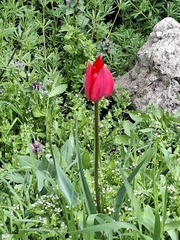 Tulipa julia Photo: CC BY, gzdeyllw
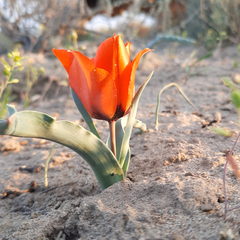 Tulipa lehmanniana Photo: CC BY-SA, Kudaibergen Amirekul
 Tulipa × tschimganica Photo: CC BY-SA, Łukasz Szczurowski
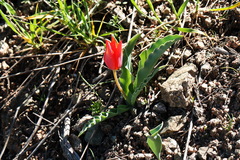 Tulipa vvedenskyi Photo: CC BY, Вячеслав Юсупов
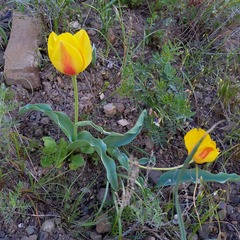 Tulipa alberti Photo: CC BY, Alexander Dubynin
 Tulipa armena Armenian Tulip Photo: CC BY-SA, Chaojoker
- no open photograph on file Tulipa ferganica
 Tulipa iliensis Photo: CC BY-SA, Łukasz Szczurowski
 Tulipa montana Photo: CC BY-SA, Burkhard Mücke
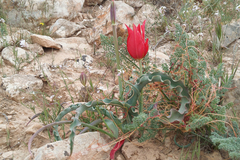 Tulipa systola Photo: CC BY, Kristof Zyskowski
 Tulipa aleppensis Photo: CC0, Dûrzan
- no open photograph on file Tulipa anisophylla
- no open photograph on file Tulipa carinata
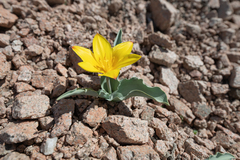 Tulipa dubia Photo: CC BY, Morten Ross
- no open photograph on file Tulipa foliosa
 Tulipa heteropetala Photo: CC BY-SA, Ettrig
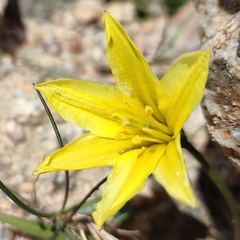 Tulipa heterophylla Photo: CC0, Federico Biguzzi
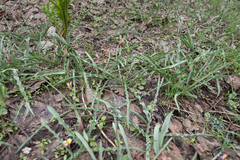 Tulipa hissarica Photo: CC BY, Morten Ross
- no open photograph on file Tulipa hoogiana
Grown: iNaturalist's observations of the species marked captive or cultivated; "not counted" where the species list does not count it. Native ranges: Kew's World Checklist of Vascular Plants (Govaerts et al., CC BY 4.0), file of 4 June 2026. Grown: iNaturalist's observations marked captive or cultivated, counted 17 October 2026 (the species list's count). Habitat climate known: the species page has a habitat climate, read from CHELSA's monthly climate and NASA POWER's daily extremes at its well-placed wild records inside Kew's native range; each page says its own sources and days. Record low: the lowest night in NASA POWER's daily series at the habitat's typical spot, as the species page gives it, held in °C to a tenth and shown in your units; each page says its own years and day read. Counts as the reference built on 19 November 2026 holds them. The CSV holds every result, not only this page's.