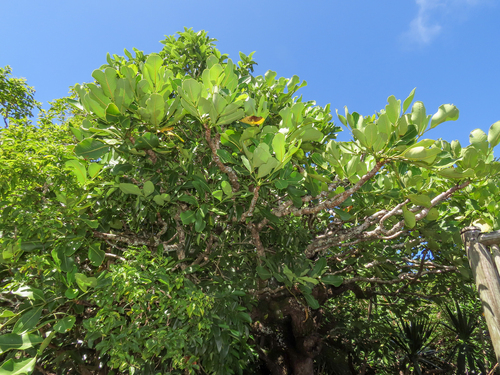
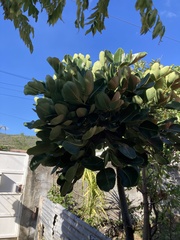
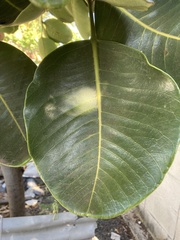
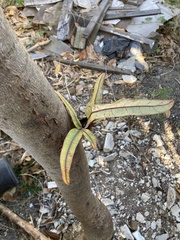
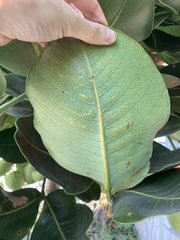
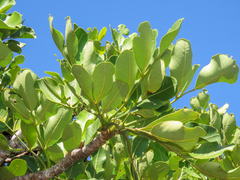
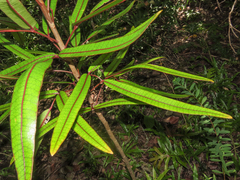
 14 photographs ›
Summary
Polyscias maraisiana is a species of plant in the family Araliaceae, formerly named Gastonia mauritiana.
Quoted from Wikipedia, "Polyscias maraisiana", CC BY-SA 4.0.
About the genus · Polyscias
Polyscias is a genus of flowering plants in the family Araliaceae with a natural distribution from tropical Africa through Southeast Asia and Australia to islands of the Pacific. As of February 2026, Plants of the World Online recognises 28 synonyms and about 180 species for the genus.
Quoted from Wikipedia, "Polyscias", CC BY-SA 4.0.
Cultivation
Grouped as a tropical foliage plant, listed under the genus Polyscias in the archetype table, and Kew describes it as “shrub or tree”, “wet tropical”.
How this section is made
Each card states this species' habitat figures with their sources, and what two fixed rules read from them; nothing here says what the plant does, wants or tolerates. The rules · the terms.
Group. Listed under the genus Polyscias in the archetype table, and Kew describes it as “shrub or tree”, “wet tropical”. A group is taken only where Kew's description of the species agrees with the table's listing. The table gives no figure and no prose; the cold floor is the habitat's alone.
Climate across the habitat
Natural habitat
How this section is made
Photographs
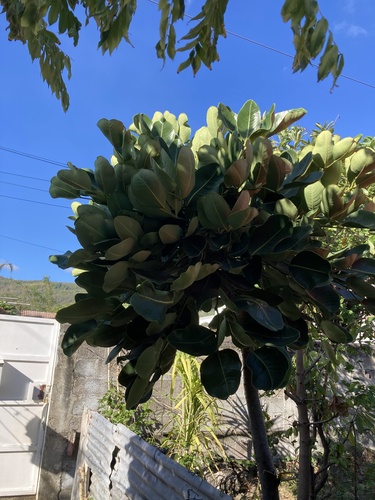
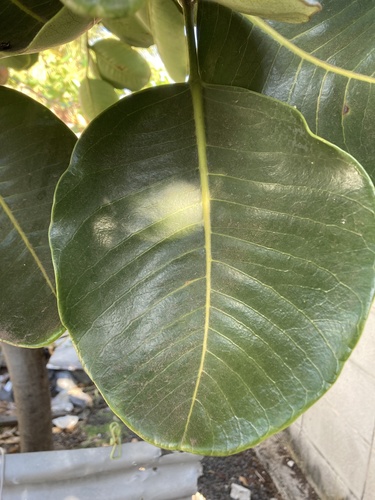
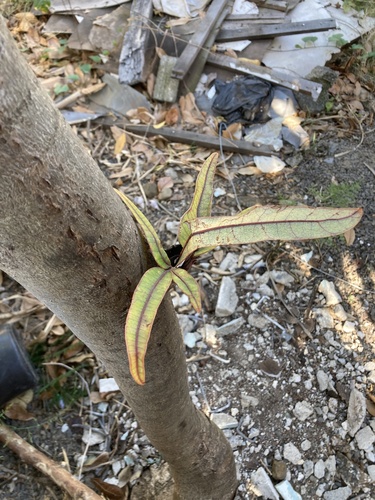
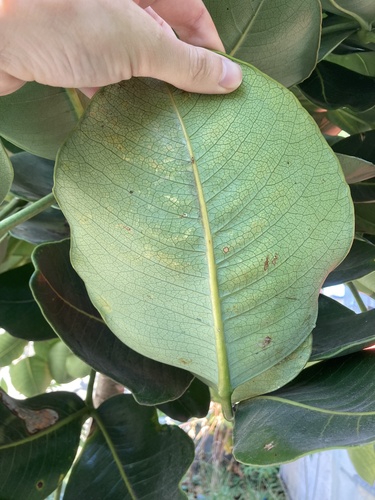
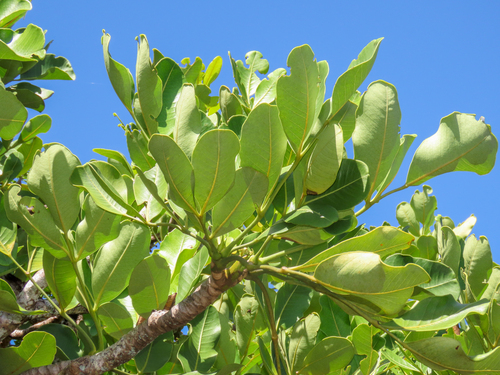
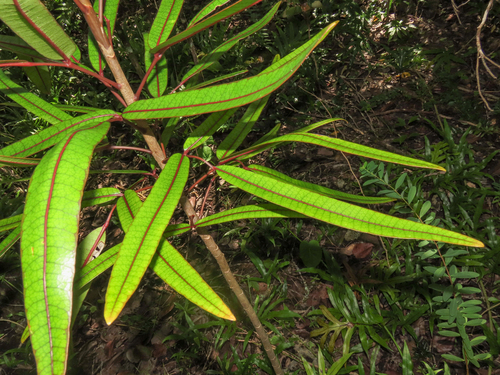
Photographs: (c) Matthew Morgan, some rights reserved (CC BY) (4); (c) Emanuele Santarelli, some rights reserved (CC BY-SA) (2).
Related
Other Polyscias 18 in the reference
 Polyscias balfouriana Balfour Aralia Photo: CC BY-SA, Ong Jyh Seng
 Polyscias crenata Araliaceae Photo: CC BY-SA, vanessa_147
 Polyscias cumingiana Fern-leaf aralia Photo: CC BY-SA, Mokkie
 Polyscias cutispongia Araliaceae Photo: CC BY-SA, Yoli
 Polyscias elegans Mowbulan whitewood Photo: CC BY-SA, Greg Tasney
 Polyscias filicifolia Araliaceae Photo: CC BY, Forest & Kim Starr
 Polyscias fruticosa Ming aralia Photo: CC BY, Diogo Luiz
 Polyscias fulva Araliaceae Photo: CC BY, jeanjacquesgodon
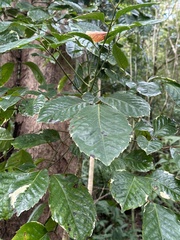 Polyscias guilfoylei Geranium aralia Photo: CC BY, Tara Severns
 Polyscias hawaiensis Hawai'i 'ohe Photo: Public domain, Daderot Polyscias lallanii Araliaceae
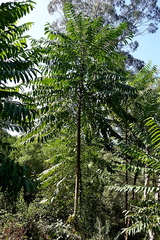 Polyscias murrayi Pencil Cedar Photo: CC BY, Max Campbell all 19 ›
Names & registers
Also known as Gastonia elegans; Gastonia mauritiana; Terminalia elegans. (GBIF Backbone)
The record
Every figure here is derived from public data by a stated rule and names its source; nothing about this species is written for its page by a person or by AI, apart from the marked, credited quotations. How →
Where this page came from built 2026-10-22
gbif.species answeredasked 2026-10-22gbif.synonyms answeredasked 2026-10-22gbif.vernacular answeredasked 2026-10-22names fetched 2026-10-22wcvp.distribution answeredas of 2026-06-04gbif.occurrences answeredas of 2026-10-21GBIF occurrence download https://doi.org/10.15468/dl.hbdw64, of 2026-10-21; 1 record within 1 km of a botanic garden, herbarium or zoo left out (1 at a botanic garden or arboretum; Wikidata's list)climate nothing to reportasked 2026-10-2216 in-range records, none placed to within 10 kmwikidata answeredasked 2026-10-22wikipedia answeredasked 2026-10-22inat.photos.wild answeredasked 2026-10-22from iNaturalist's open data of 2026-09-27: research-grade observations with an open-licence photograph, the 24 whose photographs iNaturalist received last (the open data holds no votes); filled 2026-10-22inat.photos.cultivated not askedgbif.media answeredasked 2026-10-22none of the photographs on this page is credited to GBIF: those shown are other sources', and GBIF's were the same photographs or were set aside by the photograph rulesopenalex not askednot yet asked for this reference; a later fill takes the papers from OpenAlex's snapshotEvery source is recorded as having answered, reported nothing, refused, failed, not been asked, or answered twice where one answer is taken (“not taken: two items answered”), and, for a source asked when this page was built, when: the figures are as the source held them that day; a source read from a file (Kew's World Checklist, a GBIF download) says "as of" the file's day instead; a row carried from an earlier build of the page names that build instead. Only “nothing to report” is ever shown as an absence. Records came from 7 datasets via GBIF.org; each carries its own licence.