Asplenium
85 species in the reference · family Aspleniaceae · 75 with a habitat climate · 68 grown, per iNaturalist, 17 not counted
About the genus
Asplenium is a genus of about 700 species of ferns, often treated as the only genus in the family Aspleniaceae, though other authors consider Hymenasplenium separate, based on molecular phylogenetic analysis of DNA sequences, a different chromosome count, and structural differences in the rhizomes. The type species for the genus is Asplenium marinum.
Quoted from Wikipedia, "Asplenium", its opening paragraph, revision 1361858615, read 2026-11-08, CC BY-SA 4.0.
Where Asplenium is native
| China South-Central | 16 |
|---|---|
| Italy | 15 |
| Taiwan | 15 |
| France | 14 |
| Morocco | 14 |
| Tanzania | 14 |
| Tibet | 14 |
| China Southeast | 13 |
| Japan | 13 |
| Kenya | 13 |
| Mexico Southwest | 13 |
| New Zealand North | 13 |
Species native to each region. A species counts in every region it is native to. Native ranges: Kew's World Checklist of Vascular Plants (Govaerts et al., CC BY 4.0), file of 4 June 2026.
85 species
Asplenium
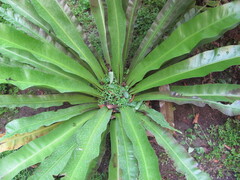 Asplenium nidus Hawai'i birdnest fern Photo: CC BY, zebedeugalinha
 Asplenium scolopendrium Hart's-tongue fern Photo: CC BY-SA, harum.koh
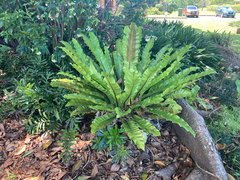 Asplenium australasicum Bird's-nest fern Photo: CC BY, Samuel Cooper
 Asplenium antiquum Bird’s-nest fern Photo: CC BY, Cheng-Te Hsu
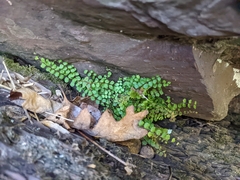 Asplenium trichomanes Maidenhair spleenwort Photo: CC BY, Alina Martin
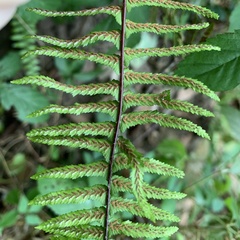 Asplenium platyneuron Ebony spleenwort Photo: CC BY, Laura Clark
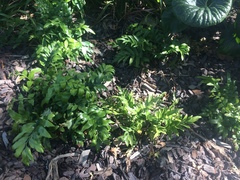 Asplenium oblongifolium Photo: CC BY, Alice Shanks
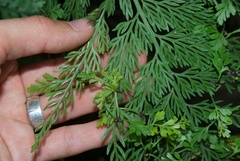 Asplenium bulbiferum Hen-and-chickens Photo: CC BY, Jon Sullivan
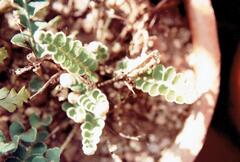 Asplenium ceterach Rustyback Photo: CC BY, zebedeugalinha
Asplenium gracillimum Photo: CC BY, Alice Shanks
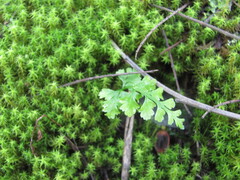 Asplenium adiantum-nigrum Black spleenwort Photo: CC BY, zebedeugalinha
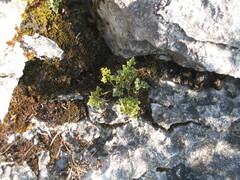 Asplenium ruta-muraria Wall-rue Photo: CC BY, zebedeugalinha
 Asplenium setoi Photo: CC BY, chiuluan
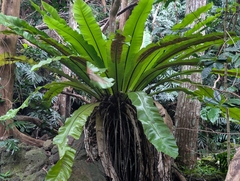 Asplenium musifolium Photo: CC0, Damien Wallace
 Asplenium serratum Wild birdnest fern Photo: CC BY, fern Wildtruth
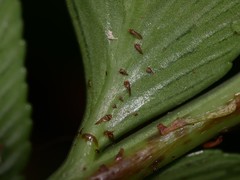 Asplenium obtusatum Photo: CC BY, Leon Perrie
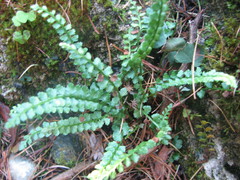 Asplenium viride Green spleenwort Photo: CC BY-SA, Chris Hoess
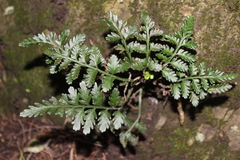 Asplenium appendiculatum Photo: CC BY, Joe Dillon
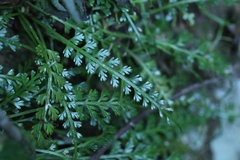 Asplenium prolongatum Protruding spleenwort Photo: CC0, Agnes Trekker
 Asplenium daucifolium Mauritius spleenwort Photo: CC BY-SA, Jerzy Opioła
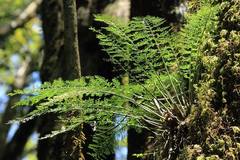 Asplenium rutifolium Buchu Spleenwort Photo: CC BY, dhfischer
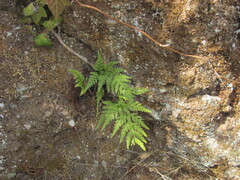 Asplenium onopteris Irish Spleenwort Photo: CC BY, zebedeugalinha
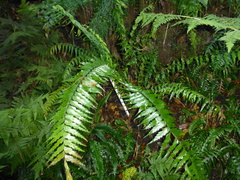 Asplenium polyodon Sickle speenwort Photo: CC BY, Murray NZ
 Asplenium monanthes Single-sorus spleenwort Photo: CC BY, Ricardo Betancourt Sánchez
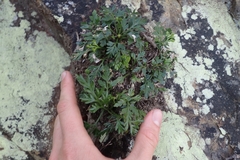 Asplenium flaccidum Makawe O Raukatauri Photo: CC BY, Oscar Dove
 Asplenium aethiopicum Egyptian spleenwort Photo: CC BY, Saryu Mae 前 朝琉
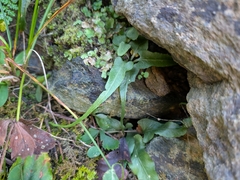 Asplenium rhizophyllum Walking fern Photo: CC BY, Devin Floyd
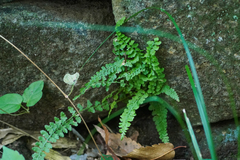 Asplenium incisum Long-tail spleenwort Photo: CC BY, WATANABE Hitoshi 渡辺仁
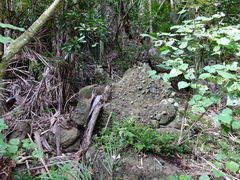 Asplenium lamprophyllum Photo: CC BY, Jacqui Geux
 Asplenium nitidum Photo: CC BY, scallions
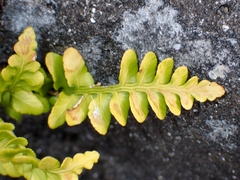 Asplenium marinum Sea Spleenwort Photo: CC BY, Dan Schofield
 Asplenium haurakiense Hauraki Gulf Spleenwort Photo: CC0, Peter de Lange
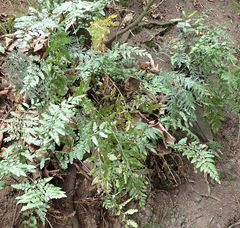 Asplenium lyallii Limestone Spleenwort Photo: CC BY, John Steel
 Asplenium montanum Mountain spleenwort Photo: CC BY, Michael J. Papay
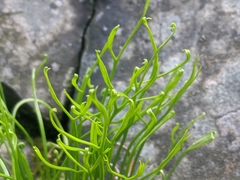 Asplenium septentrionale Forked spleenwort Photo: CC0, Zoltán Stekkelpak
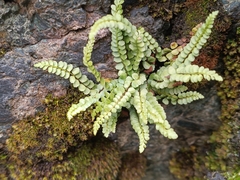 Asplenium adulterinum Corrupt spleenwort Photo: CC BY, Daniel Buczkiewicz
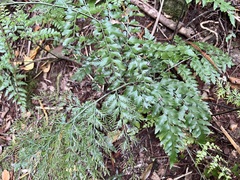 Asplenium dimorphum Three-in-one fern Photo: CC BY, Sue Carnahan
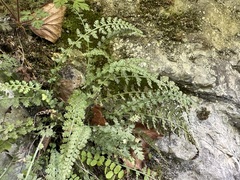 Asplenium fontanum Smooth rock-spleenwort Photo: CC BY, Jason Grant
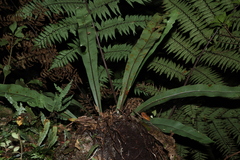 Asplenium harmanii Photo: CC BY-SA, Greg Tasney
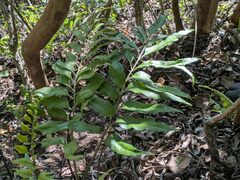 Asplenium kaulfussii Kaulfuss' spleenwort Photo: CC BY, Kevin Faccenda
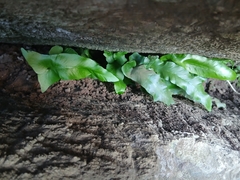 Asplenium sagittatum Photo: CC BY, Anis Dris
 Asplenium thunbergii Photo: CC BY, Tim Park
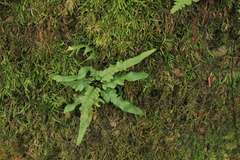 Asplenium tutwilerae Dragontail Fern Photo: CC BY, Noah Yawn
- no open photograph on file Asplenium delavayi
- no open photograph on file Asplenium dielmannii Mann's island spleenwort
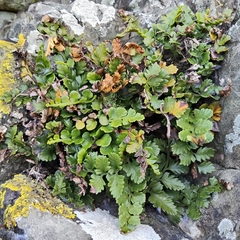 Asplenium difforme Coastal fern Photo: CC BY, John Barkla
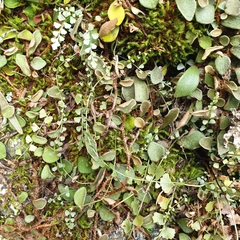 Asplenium flabellifolium Photo: CC BY, Shelomi Doyle
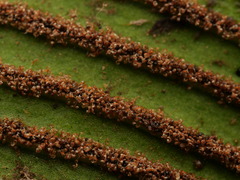 Asplenium hemionitis Ivy fern Photo: CC BY, Borja Fierro-Leva
Grown: iNaturalist's observations of the species marked captive or cultivated; "not counted" where the species list does not count it. Native ranges: Kew's World Checklist of Vascular Plants (Govaerts et al., CC BY 4.0), file of 4 June 2026. Grown: iNaturalist's observations marked captive or cultivated, counted 17 October 2026 (the species list's count). Habitat climate known: the species page has a habitat climate, read from CHELSA's monthly climate and NASA POWER's daily extremes at its well-placed wild records inside Kew's native range; each page says its own sources and days. Record low: the lowest night in NASA POWER's daily series at the habitat's typical spot, as the species page gives it, held in °C to a tenth and shown in your units; each page says its own years and day read. Counts as the reference built on 19 November 2026 holds them. The CSV holds every result, not only this page's.