Brachychiton
13 species in the reference · family Malvaceae · 12 with a habitat climate · 13 grown, per iNaturalist
About the genus
Brachychiton (kurrajong, bottletree) is a genus of 31 species of trees and large shrubs, native to Australia (the centre of diversity, with 30 species) and New Guinea (one species). Fossils from New South Wales and New Zealand are estimated to be 50 million years old, corresponding to the Paleogene.
Quoted from Wikipedia, "Brachychiton", its opening paragraph, revision 1375547139, read 2026-11-08, CC BY-SA 4.0.
Where Brachychiton is native
| Queensland | 10 |
|---|---|
| New South Wales | 4 |
| Northern Territory | 4 |
| Western Australia | 2 |
| New Guinea | 1 |
| South Australia | 1 |
| Victoria | 1 |
Species native to each region. A species counts in every region it is native to. Native ranges: Kew's World Checklist of Vascular Plants (Govaerts et al., CC BY 4.0), file of 4 June 2026.
13 species
Brachychiton
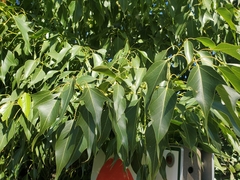 Brachychiton populneus Kurrajong Photo: CC0, John Cowles
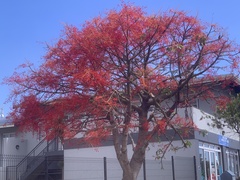 Brachychiton acerifolius Illawarra Flame Tree Photo: CC BY, Dave Richardson
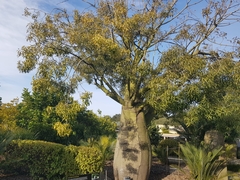 Brachychiton rupestris Queensland Bottle Tree Photo: CC BY, Lek Khauv
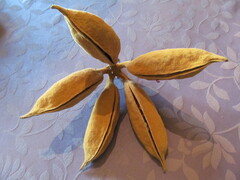 Brachychiton discolor Hat-tree Photo: CC BY, zebedeugalinha
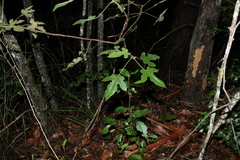 Brachychiton bidwillii Little kurrajong Photo: CC BY-SA, Greg Tasney
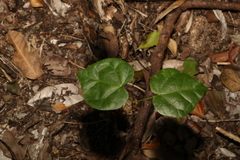 Brachychiton australis Broadleaf bottletree Photo: CC BY-SA, Greg Tasney
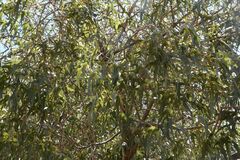 Brachychiton gregorii Desert Kurrajong Photo: CC BY, Em Lamond
 Brachychiton compactus Photo: CC BY, Queensland Herbarium
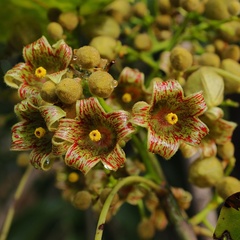 Brachychiton diversifolius Northern kurrajong Photo: CC BY, Roland Muench
- no open photograph on file Brachychiton × excellens
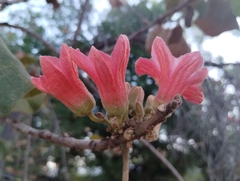 Brachychiton paradoxus Red-flower kurrajong Photo: CC BY-SA, Karl Tattersall
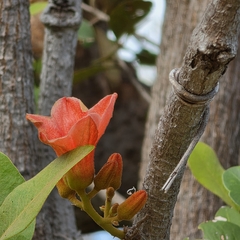 Brachychiton megaphyllus Red-flowering kurrajong Photo: CC BY, Martin Rady
 Brachychiton velutinosus Brush kurrajong Photo: CC BY-SA, Steve Fitzgerald
Grown: iNaturalist's observations of the species marked captive or cultivated; "not counted" where the species list does not count it. Native ranges: Kew's World Checklist of Vascular Plants (Govaerts et al., CC BY 4.0), file of 4 June 2026. Grown: iNaturalist's observations marked captive or cultivated, counted 17 October 2026 (the species list's count). Habitat climate known: the species page has a habitat climate, read from CHELSA's monthly climate and NASA POWER's daily extremes at its well-placed wild records inside Kew's native range; each page says its own sources and days. Record low: the lowest night in NASA POWER's daily series at the habitat's typical spot, as the species page gives it, held in °C to a tenth and shown in your units; each page says its own years and day read. Counts as the reference built on 19 November 2026 holds them. The CSV holds every result, not only this page's.