Crotalaria
27 species in the reference · family Fabaceae · 23 with a habitat climate · 26 grown, per iNaturalist, 1 not counted
About the genus
Crotalaria is a genus of flowering plants in the family Fabaceae (subfamily Faboideae) commonly known as rattlepods. The genus includes over 700 species of herbaceous plants and shrubs. Africa is the continent with the majority of Crotalaria species (approximately 400 species), which are mainly found in damp grassland, especially in floodplains, depressions and along edges of swamps and rivers, but also in deciduous bush land, roadsides and fields. Some species of Crotalaria are grown as ornamentals. More on Wikipedia
Quoted from Wikipedia, "Crotalaria", its opening paragraph, revision 1381308669, read 2026-11-08, CC BY-SA 4.0.
Where Crotalaria is native
| India | 11 |
|---|---|
| Assam | 9 |
| Laos | 9 |
| Myanmar | 9 |
| Taiwan | 9 |
| Thailand | 9 |
| Vietnam | 9 |
| Bangladesh | 8 |
| China Southeast | 8 |
| East Himalaya | 8 |
| Guatemala | 8 |
| Honduras | 8 |
Species native to each region. A species counts in every region it is native to. Native ranges: Kew's World Checklist of Vascular Plants (Govaerts et al., CC BY 4.0), file of 4 June 2026.
27 species
Crotalaria
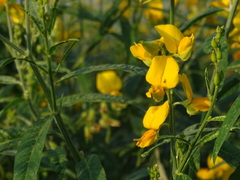 Crotalaria juncea Sunn hemp Photo: CC BY, 雲一百香果
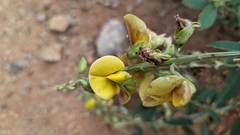 Crotalaria retusa Rattleweed Photo: CC BY, Ravuri Krishna Chaitanya
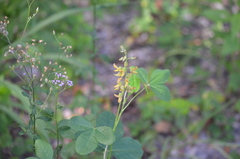 Crotalaria pallida Smooth rattlebox Photo: CC BY, Josiah Londerée
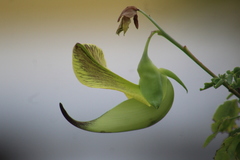 Crotalaria agatiflora Canarybird-bush Photo: CC BY, GERMAN LEONEL SARMIENTO CRUZ
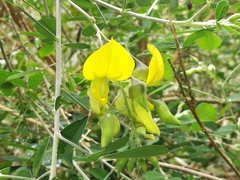 Crotalaria capensis Cape Rattle-Pod Photo: CC BY, chrishorak
 Crotalaria spectabilis Showy rattlebox Photo: CC BY, Tyler Bishop
 Crotalaria cunninghamii Parrot pea Photo: CC BY, dhfischer
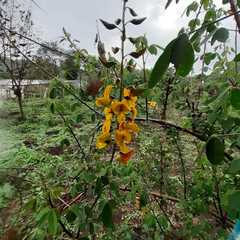 Crotalaria longirostrata Longbeak rattlebox Photo: CC BY, Saban-Sequén, E.A.
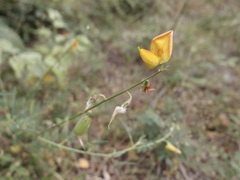 Crotalaria pumila Low rattlebox Photo: CC BY, Sue Carnahan
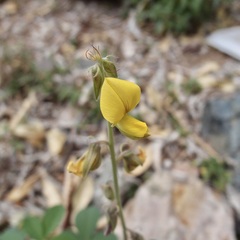 Crotalaria incana Shakeshake Photo: CC BY, Sue Carnahan
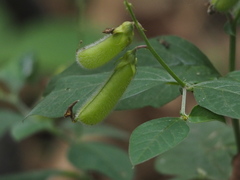 Crotalaria verrucosa Blue rattlesnake Photo: CC0, 葉子
- no open photograph on file Crotalaria rosenii
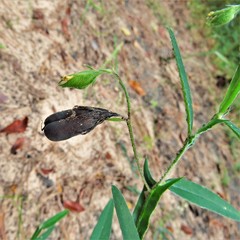 Crotalaria sagittalis Arrowhead rattlebox Photo: CC BY, Annika Lindqvist
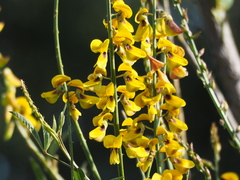 Crotalaria trichotoma West Indian rattlebox Photo: CC0, 葉子
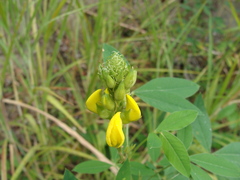 Crotalaria micans Caracas rattlebox Photo: CC BY, Alexis López Hernández
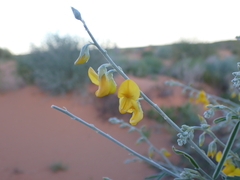 Crotalaria eremaea Bluebush pea Photo: CC BY, Nina Kerr
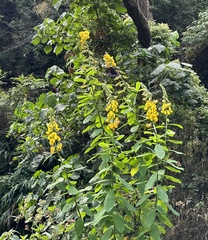 Crotalaria sericea Photo: CC BY, Jaw-Jian La
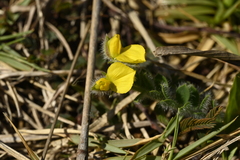 Crotalaria similis Photo: CC BY, 曾昱承 Yu-Cheng Zeng
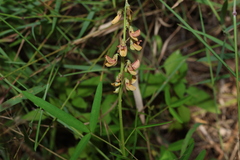 Crotalaria lanceolata Lanceleaf rattlebox Photo: CC BY-SA, Greg Tasney
 Crotalaria sessiliflora Purple-flower rattlebox Photo: CC BY, Licheng Shih
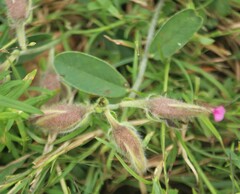 Crotalaria calycina Hairy Rattlepod Photo: CC0, Haneesh K M
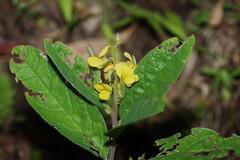 Crotalaria mitchellii Yellow rattlepod Photo: CC BY-SA, Greg Tasney
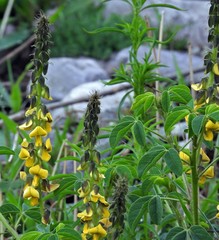 Crotalaria maypurensis Photo: CC0, Hugo Hulsberg
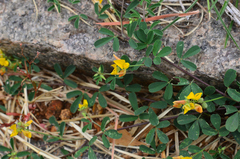 Crotalaria medicaginea Trefoil rattlepod Photo: CC BY, Chandu Bandi
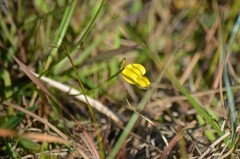 Crotalaria rotundifolia Rabbitbells Photo: CC BY, Josiah Londerée
 Crotalaria semperflorens Photo: CC BY-SA, Dinesh Valke
 Crotalaria nitens Photo: CC BY, Dick Culbert from Gibsons, B.C., Canada
Grown: iNaturalist's observations of the species marked captive or cultivated; "not counted" where the species list does not count it. Native ranges: Kew's World Checklist of Vascular Plants (Govaerts et al., CC BY 4.0), file of 4 June 2026. Grown: iNaturalist's observations marked captive or cultivated, counted 17 October 2026 (the species list's count). Habitat climate known: the species page has a habitat climate, read from CHELSA's monthly climate and NASA POWER's daily extremes at its well-placed wild records inside Kew's native range; each page says its own sources and days. Record low: the lowest night in NASA POWER's daily series at the habitat's typical spot, as the species page gives it, held in °C to a tenth and shown in your units; each page says its own years and day read. Counts as the reference built on 19 November 2026 holds them. The CSV holds every result, not only this page's.