Felicia
15 species in the reference · family Asteraceae · 14 with a habitat climate · 15 grown, per iNaturalist
About the genus
The name Felicia derives from the Latin adjective felix, meaning "happy, lucky", though in the neuter plural form felicia it literally means "happy things" and often occurred in the phrase tempora felicia, "happy times". The sense of it as a feminine personal name appeared in post-Classical use and is of uncertain origin. It is associated with saints, poets, astronomical objects, plant genera, fictional characters, and animals, especially cats.
Quoted from Wikipedia, "Felicia", its opening paragraph, revision 1375740059, read 2026-11-08, CC BY-SA 4.0.
Where Felicia is native
| Cape Provinces | 14 |
|---|---|
| KwaZulu-Natal | 6 |
| Lesotho | 5 |
| Free State | 4 |
| Northern Provinces | 4 |
| Namibia | 2 |
| Swaziland | 2 |
| Angola | 1 |
| Botswana | 1 |
| Kenya | 1 |
| Zimbabwe | 1 |
Species native to each region. A species counts in every region it is native to. Native ranges: Kew's World Checklist of Vascular Plants (Govaerts et al., CC BY 4.0), file of 4 June 2026.
15 species
Felicia
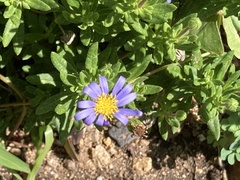 Felicia amelloides Blue marguerite Photo: CC BY, Marc Riera
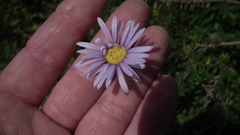 Felicia echinata Dune Felicia Photo: CC BY, Shaun Swanepoel
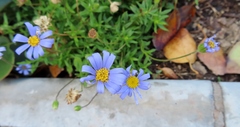 Felicia aethiopica African Felicia Photo: CC BY, linkie
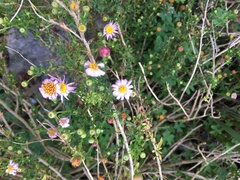 Felicia erigeroides Michaelmas Felicia Photo: CC BY, Caroline Voget
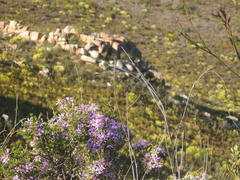 Felicia filifolia Fine Felicia Photo: CC0, Di Turner
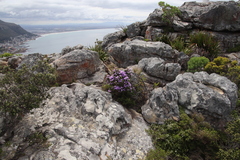 Felicia fruticosa Bush Felicia Photo: CC BY-SA, Tony Rebelo
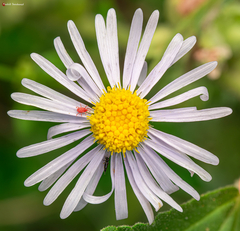 Felicia muricata Pale Felicia Photo: CC BY-SA, Rudolph Steenkamp
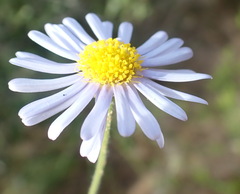 Felicia amoena Soft Felicia Photo: CC BY-SA, Nicola van Berkel
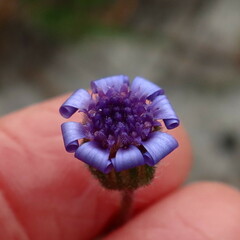 Felicia heterophylla Pureblue Felicia Photo: CC BY, Diana Studer
 Felicia bergeriana Kingfisher daisy Photo: CC BY-SA, Noeleen du Toit
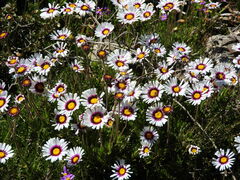 Felicia elongata Saldanha Bay Daisy Photo: CC BY-SA, Noeleen du Toit
 Felicia tenella Bristle Felicia Photo: CC BY-SA, Tony Rebelo
 Felicia petiolata Lesotho Felicia Photo: CC BY-SA, yakovlev.alexey from Moscow, Russia
 Felicia rosulata Natal Felicia Photo: CC BY-SA, Steve Law
 Felicia uliginosa Photo: CC BY-SA, peganum
Grown: iNaturalist's observations of the species marked captive or cultivated; "not counted" where the species list does not count it. Native ranges: Kew's World Checklist of Vascular Plants (Govaerts et al., CC BY 4.0), file of 4 June 2026. Grown: iNaturalist's observations marked captive or cultivated, counted 17 October 2026 (the species list's count). Habitat climate known: the species page has a habitat climate, read from CHELSA's monthly climate and NASA POWER's daily extremes at its well-placed wild records inside Kew's native range; each page says its own sources and days. Record low: the lowest night in NASA POWER's daily series at the habitat's typical spot, as the species page gives it, held in °C to a tenth and shown in your units; each page says its own years and day read. Counts as the reference built on 19 November 2026 holds them. The CSV holds every result, not only this page's.