Arisaema
53 species in the reference · family Araceae · 43 with a habitat climate · 32 grown, per iNaturalist, 21 not counted
About the genus
Arisaema is a large and diverse genus of the flowering plant family Araceae. The largest concentration of species is in China and Japan, with other species native to other parts of southern Asia as well as eastern and central Africa, Mexico and eastern North America. Asiatic species are often called cobra lilies, while western species are often called jack-in-the-pulpit; both names refer to the distinctive appearance of the flower, which consists of an erect central spadix rising from a spathe.
Quoted from Wikipedia, "Arisaema", its opening paragraph, revision 1371763962, read 2026-11-08, CC BY-SA 4.0.
Where Arisaema is native
| China South-Central | 24 |
|---|---|
| Tibet | 18 |
| East Himalaya | 17 |
| Nepal | 15 |
| Japan | 14 |
| Myanmar | 14 |
| China Southeast | 12 |
| Assam | 11 |
| West Himalaya | 10 |
| China North-Central | 7 |
| Korea | 6 |
| India | 5 |
Species native to each region. A species counts in every region it is native to. Native ranges: Kew's World Checklist of Vascular Plants (Govaerts et al., CC BY 4.0), file of 4 June 2026.
53 species
Arisaema
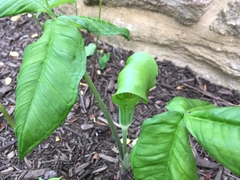 Arisaema triphyllum Jack-in-the-pulpit Photo: CC0, Ben Sims
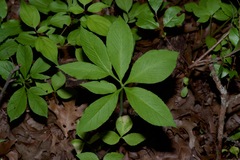 Arisaema dracontium Green dragon Photo: CC BY, Michelle W. (鍾偉瑋)
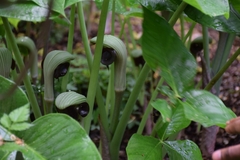 Arisaema ringens Japanese cobra lily Photo: CC BY, Andres Garcia
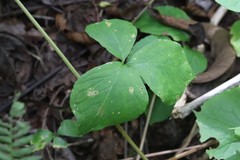 Arisaema amurense Amur jack-in-the-pulpit Photo: CC BY, Nina Filippova
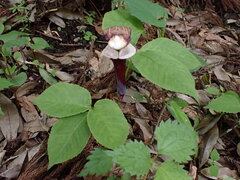 Arisaema sikokianum Japanese Jack-in-the-Pulpit Photo: CC0, Ellyne Geurts
 Arisaema consanguineum Himalayan cobra lily Photo: CC BY, Cheng-Tao Lin
 Arisaema heterophyllum Dancing Crane Cobra Lily Photo: CC0, 葉子
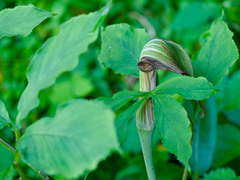 Arisaema serratum Japanese arisaema Photo: CC BY, りなべる
 Arisaema quinatum Photo: CC BY, John P Friel
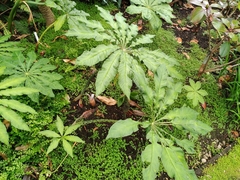 Arisaema taiwanense Taiwan Cobra Lily Photo: CC BY, Leon Perrie
 Arisaema thunbergii Asian jack-in-the-pulpit Photo: CC BY-SA, harum.koh
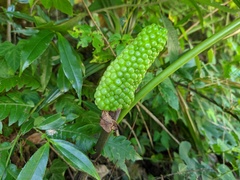 Arisaema bockii Photo: CC BY, Jiao Sun (孙娇)
 Arisaema candidissimum Photo: CC BY-SA, peganum
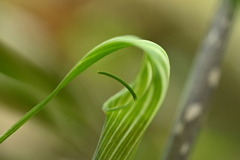 Arisaema formosanum Photo: CC BY, 曾昱承 Yu-Cheng Zeng
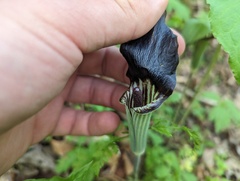 Arisaema pusillum Small Jack-in-the-pulpit Photo: CC BY, Ryan Sorrells
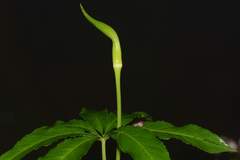 Arisaema tortuosum Photo: CC0, S.MORE
 Arisaema fargesii Photo: CC BY-SA, Krzysztof Ziarnek, Kenraiz
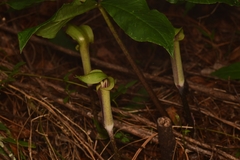 Arisaema macrospathum Photo: CC0, macro_biologist
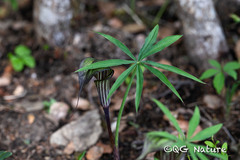 Arisaema ciliatum Photo: CC BY, Wang.QG
 Arisaema nepenthoides Photo: CC BY, Jean Jacques Godon
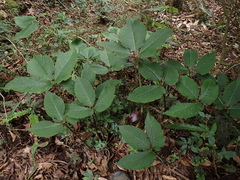 Arisaema speciosum Cobra-lily Photo: CC BY, Sagnik Dutta Roy
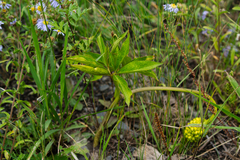 Arisaema flavum Yellow Cobra Lily Photo: CC0, observe-syz
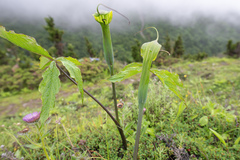 Arisaema jacquemontii Jacquemont's Cobra-Lily Photo: CC BY, Morten Ross
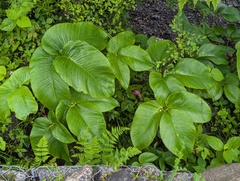 Arisaema costatum Photo: CC BY, Sagnik Dutta Roy
 Arisaema erubescens Photo: CC BY-SA, Agnieszka Kwiecień, Nova
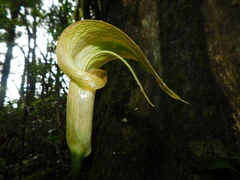 Arisaema filiforme Photo: CC BY, Ganjar Cahyadi
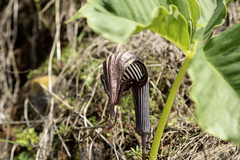 Arisaema franchetianum Photo: CC0, observe-syz
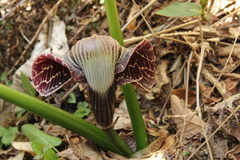 Arisaema griffithii Photo: CC BY, Barry Stewart
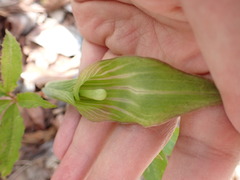 Arisaema japonicum Japanese arisaema Photo: CC BY, W Rao
 Arisaema polyphyllum Photo: CC BY-SA, Raabbustamante
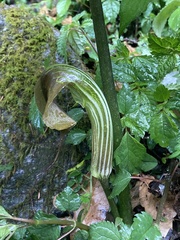 Arisaema utile Photo: CC0, John Kenrick Gibson
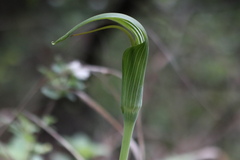 Arisaema yunnanense Photo: CC BY, Jiao Sun (孙娇)
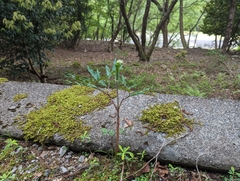 Arisaema angustatum Photo: CC BY, Alexander Wentworth
- no open photograph on file Arisaema aridum
- no open photograph on file Arisaema asperatum
- no open photograph on file Arisaema auriculatum
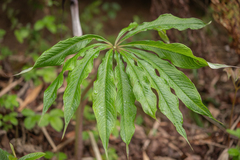 Arisaema concinnum Photo: CC BY, Morten Ross
 Arisaema cucullatum Photo: CC BY-SA, Qwert1234
- no open photograph on file Arisaema decipiens
- no open photograph on file Arisaema echinatum
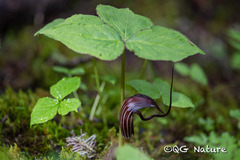 Arisaema elephas Photo: CC BY, Wang.QG
 Arisaema exappendiculatum Photo: CC BY-SA, Dinkum
- no open photograph on file Arisaema intermedium
- no open photograph on file Arisaema kiushianum
- no open photograph on file Arisaema lobatum
 Arisaema ovale Photo: CC BY-SA, Qwert1234
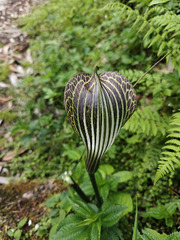 Arisaema propinquum Wallich's Cobra Lily Photo: CC BY, Jiao Sun (孙娇)
 Arisaema sazensoo Photo: CC BY, sunoochi
Grown: iNaturalist's observations of the species marked captive or cultivated; "not counted" where the species list does not count it. Native ranges: Kew's World Checklist of Vascular Plants (Govaerts et al., CC BY 4.0), file of 4 June 2026. Grown: iNaturalist's observations marked captive or cultivated, counted 17 October 2026 (the species list's count). Habitat climate known: the species page has a habitat climate, read from CHELSA's monthly climate and NASA POWER's daily extremes at its well-placed wild records inside Kew's native range; each page says its own sources and days. Record low: the lowest night in NASA POWER's daily series at the habitat's typical spot, as the species page gives it, held in °C to a tenth and shown in your units; each page says its own years and day read. Counts as the reference built on 19 November 2026 holds them. The CSV holds every result, not only this page's.