Cotoneaster
104 species in the reference · family Rosaceae · 24 with a habitat climate · 71 grown, per iNaturalist, 33 not counted
About the genus
Cotoneaster is a genus of flowering plants in the rose family, Rosaceae, native to the Palaearctic region (temperate Asia, Europe, north Africa), with a strong concentration of diversity in the genus in the mountains of southwestern China and the Himalayas. They are related to hawthorns (Crataegus), firethorns (Pyracantha), photinias (Photinia), and rowans (Sorbus).
Quoted from Wikipedia, "Cotoneaster", its opening paragraph, revision 1373906117, read 2026-11-08, CC BY-SA 4.0.
Where Cotoneaster is native
| China South-Central | 66 |
|---|---|
| Tibet | 31 |
| China North-Central | 21 |
| East Himalaya | 20 |
| West Himalaya | 19 |
| Myanmar | 18 |
| Nepal | 14 |
| Inner Mongolia | 12 |
| Assam | 11 |
| Kirgizistan | 11 |
| Kazakhstan | 10 |
| China Southeast | 9 |
Species native to each region. A species counts in every region it is native to. Native ranges: Kew's World Checklist of Vascular Plants (Govaerts et al., CC BY 4.0), file of 4 June 2026.
104 species
Cotoneaster
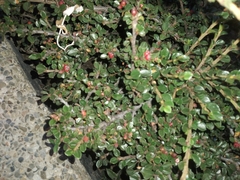 Cotoneaster horizontalis Wall cotoneaster Photo: CC0, Alfredo F. Fuentes Claros
 Cotoneaster acutifolius Peking cotoneaster Photo: CC BY, Oleksandr Shynder
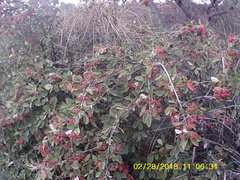 Cotoneaster coriaceus Late cotoneaster Photo: CC BY, Михаил Орлов
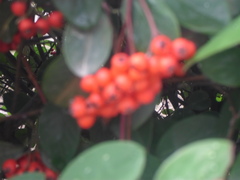 Cotoneaster pannosus Silverleaf cotoneaster Photo: CC BY, Andrés Ramírez-Barrera
 Cotoneaster dammeri Bearberry cotoneaster Photo: CC BY, Oleksandr Shynder
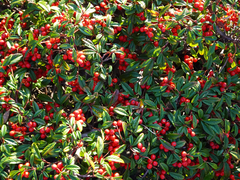 Cotoneaster salicifolius Willow-leaved cotoneaster Photo: CC BY, Theivaprakasham Hari
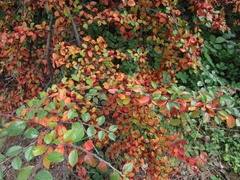 Cotoneaster divaricatus Spreading cotoneaster Photo: CC BY, Oleksandr Shynder
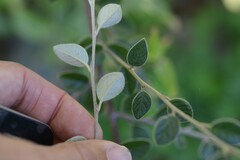 Cotoneaster franchetii Franchet's cotoneaster Photo: CC BY, Jon Sullivan
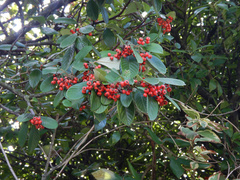 Cotoneaster glaucophyllus Glaucous cotoneaster Photo: CC BY, Jon Sullivan
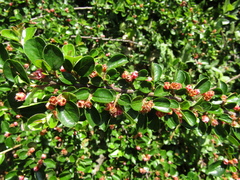 Cotoneaster hjelmqvistii Hjelmqvist's cotoneaster Photo: CC BY, Oleksandr Shynder
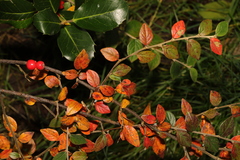 Cotoneaster simonsii Himalayan cotoneaster Photo: CC0, Stephen James McWilliam
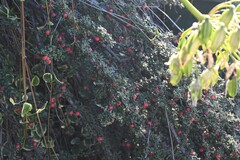 Cotoneaster microphyllus Small-leaved Cotoneaster Photo: CC BY, Jon Sullivan
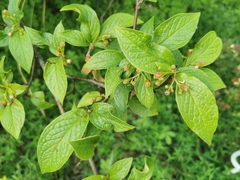 Cotoneaster rehderi Photo: CC BY, Tina Ellegaard Poulsen
 Cotoneaster multiflorus Many-flowered cotoneaster Photo: CC BY, Oleksandr Shynder
 Cotoneaster bullatus Hollyberry cotoneaster Photo: CC BY, Wolfgang Jauch
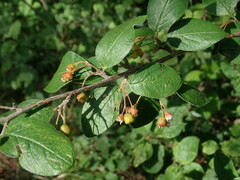 Cotoneaster laxiflorus Black-fruit cotoneaster Photo: CC BY, Daniel Cahen
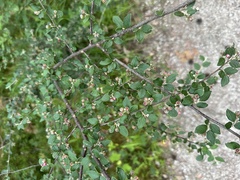 Cotoneaster dielsianus Diels's cotoneaster Photo: CC BY, Katrin Simon
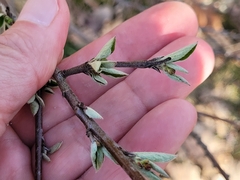 Cotoneaster integerrimus Common cotoneaster Photo: CC BY, ahabo
 Cotoneaster wardii Photo: CC BY-SA, Jerzy Opioła
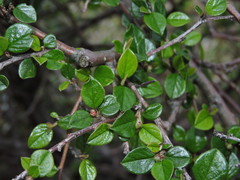 Cotoneaster apiculatus Cranberry cotoneaster Photo: CC BY, Jacy Chen
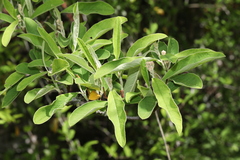 Cotoneaster frigidus Photo: CC0, Stephen James McWilliam
 Cotoneaster adpressus Creeping cotoneaster Photo: Public domain, Daderot
 Cotoneaster morrisonensis Photo: CC BY, Cheng-Te Hsu
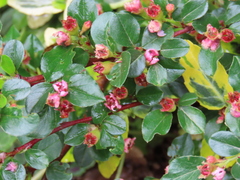 Cotoneaster nan-shan Photo: CC BY, Oleksandr Shynder
- no open photograph on file Cotoneaster hodjingensis
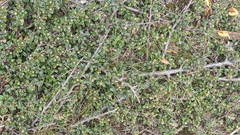 Cotoneaster integrifolius Entire-leaved cotoneaster Photo: CC BY, Sandra Stewart
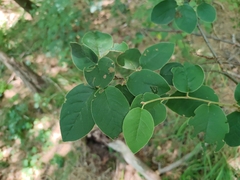 Cotoneaster tomentosus Photo: CC BY, Ljaž
- no open photograph on file Cotoneaster buxifolius Box-leaved Cotoneaster
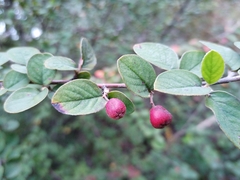 Cotoneaster fangianus Photo: CC BY, Michal Honskus
 Cotoneaster hebephyllus Graceful Cotoneaster Photo: CC BY, Jon Sullivan
 Cotoneaster nitens Few-flowered cotoneaster Photo: CC BY, Oleksandr Shynder
- no open photograph on file Cotoneaster splendens
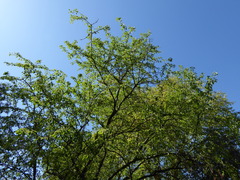 Cotoneaster affinis Purpleberry cotoneaster Photo: CC BY, jamie-aa
 Cotoneaster nummularius Photo: CC BY, Oleksandr Shynder
 Cotoneaster racemiflorus Cluster-flower cotoneaster Photo: CC BY-SA, El Grafo
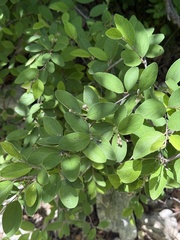 Cotoneaster zabelii Cherryred cotoneaster Photo: CC BY, Jane Charlen
 Cotoneaster cochleatus Photo: CC BY-SA, Krzysztof Ziarnek, Kenraiz
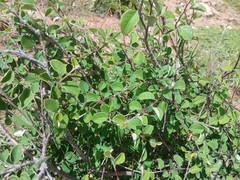 Cotoneaster granatensis Photo: CC BY, Anis Dris
 Cotoneaster obscurus Obscure cotoneaster Photo: CC BY-SA, Krzysztof Golik
 Cotoneaster foveolatus Photo: CC BY-SA, Chrumps
 Cotoneaster nebrodensis Brickberry Cotoneaster Photo: CC BY-SA, Salicyna
Cotoneaster niger Photo: CC BY, Rune Zakariassen
 Cotoneaster radicans Photo: CC BY-SA, Salicyna
 Cotoneaster roseus Pink Cotoneaster Photo: CC BY-SA, Agnieszka Kwiecień, Nova
- no open photograph on file Cotoneaster submultiflorus
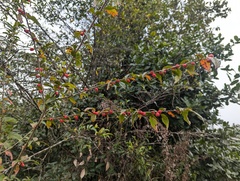 Cotoneaster acuminatus Acuminate cotoneaster Photo: CC BY, Sagnik Dutta Roy
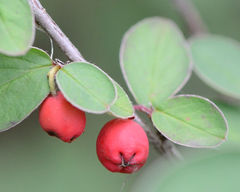 Cotoneaster alaunicus Photo: CC BY, Fyodor Pudovikov
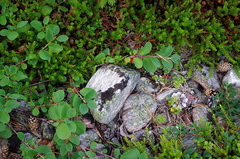 Cotoneaster cinnabarinus Photo: CC BY, Георгий Виноградов (Georgy Vinogradov)
Grown: iNaturalist's observations of the species marked captive or cultivated; "not counted" where the species list does not count it. Native ranges: Kew's World Checklist of Vascular Plants (Govaerts et al., CC BY 4.0), file of 4 June 2026. Grown: iNaturalist's observations marked captive or cultivated, counted 17 October 2026 (the species list's count). Habitat climate known: the species page has a habitat climate, read from CHELSA's monthly climate and NASA POWER's daily extremes at its well-placed wild records inside Kew's native range; each page says its own sources and days. Record low: the lowest night in NASA POWER's daily series at the habitat's typical spot, as the species page gives it, held in °C to a tenth and shown in your units; each page says its own years and day read. Counts as the reference built on 19 November 2026 holds them. The CSV holds every result, not only this page's.